

Welcome to our blog. We are a professional manufacturer of ductile iron and composite resin manhole covers, supplying infrastructure products for municipal and industrial projects worldwide.
- 👉 Follow us on Facebook for the latest product updates, industry news, and project cases.
- 👉 If you have any project requirements or need a quotation, feel free to contact our team directly for fast support and customized solutions.
Please continue reading our blog for more industry insights and product information
Table of Contents
Introduction

Urban drainage systems are no longer simple water discharge channels—they are now a critical part of smart city infrastructure, climate resilience planning, and traffic safety engineering. As urbanization accelerates globally, cities are facing increasing pressure from extreme rainfall events, surface runoff overload, and aging underground drainage networks.
According to the World Bank Urban Infrastructure Report (2023), more than 55% of urban flooding events are caused by insufficient drainage capacity at surface inlets rather than underground pipeline failure. This highlights the importance of high-performance inlet protection systems such as the cast iron drain grate.
In engineering terms, the drainage cover is not just a protective lid—it is a load-bearing structural interface between traffic systems and hydraulic systems. It must simultaneously handle:
- Dynamic vehicle loads (up to 40 tons in highway conditions)
- Hydraulic inflow during peak rainfall events
- Long-term corrosion and fatigue resistance
This is why cast iron remains the dominant material in municipal drainage systems worldwide.
Cast Iron Drain Grate in Urban Infrastructure Systems
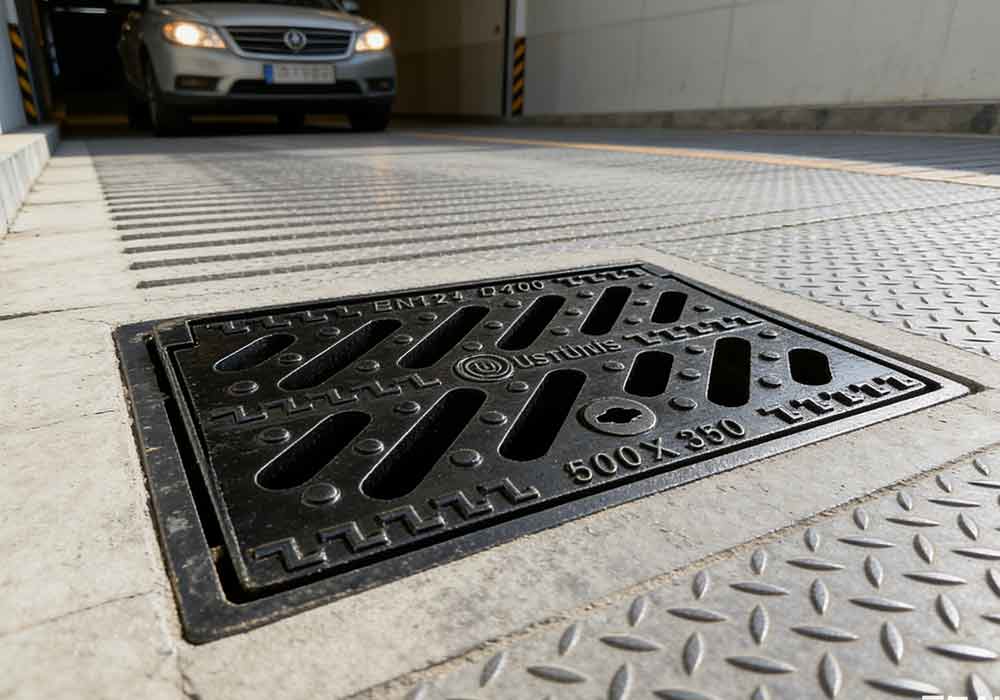
Engineering Role of Cast Iron Drain Grate
A cast iron drain grate is designed as a dual-function structural component:
- Hydraulic function – allows stormwater entry into underground systems
- Structural function – supports surface loads from vehicles and pedestrians
Unlike lightweight alternatives, cast iron distributes stress through its graphite microstructure, making it suitable for high-impact urban environments.
Why Cast Iron Dominates Municipal Drainage
Key engineering advantages:
- High compressive strength (up to 600–1200 MPa depending on grade)
- Excellent vibration resistance under traffic loads
- Long lifecycle performance (20–50 years)
- Stable deformation resistance under thermal cycling
Municipal procurement data from Europe shows that over 72% of highway drainage covers are still specified using cast iron or ductile iron systems.
International Standards for Cast Iron Drain Grate Systems
EN 124 Standard (Europe)
The EN 124 classification defines load classes:
| Class | Load Capacity | Application |
|---|---|---|
| A15 | 1.5 tons | Pedestrian zones |
| B125 | 12.5 tons | Parking areas |
| C250 | 25 tons | Urban roads |
| D400 | 40 tons | Highways |
This standard is widely adopted in EU infrastructure projects.
ASTM Standards (United States)
- ASTM A48 – Gray cast iron material specification
- ASTM A536 – Ductile iron specification
- AASHTO M306 – Highway drainage structure requirements
These ensure performance consistency in North American municipal systems.
ISO Engineering Framework
ISO 1083 defines material grades for ductile iron, commonly used in modern reinforced drain grates to improve impact resistance.
Structural Engineering of Cast Iron Drain Grate
Load Transfer Mechanism
When vehicles pass over a drain grate, forces are transferred through:
- Surface contact zone
- Frame anchoring system
- Sub-base concrete structure
This prevents localized failure and ensures even load distribution.
Stress Distribution Behavior
Cast Iron Microstructure Advantage
Graphite flakes in cast iron act as internal damping structures, reducing vibration propagation.
Fatigue Resistance
Repeated load cycles (over 1 million cycles in highway testing conditions) show minimal deformation in properly designed systems.
Hydrodynamic Flow Design
Modern drain grates optimize water intake using:
- Slot angle engineering (15°–45° optimized range)
- Anti-clogging geometry
- Debris separation channels
Comparative Analysis: Drainage Material Performance
| Feature | Cast Iron Drain Grate | Ductile Iron | Composite Polymer | Stainless Steel |
|---|---|---|---|---|
| Load Strength | High | Very High | Medium | High |
| Cost Efficiency | High lifecycle value | Medium | Low initial cost | High |
| Corrosion Resistance | Medium | High | Very High | Very High |
| Lifespan | 20–50 years | 30–60 years | 5–15 years | 20–40 years |
| Urban Road Suitability | Excellent | Excellent | Limited | Good |
Global Urban Case Studies
London Metropolitan Drainage Upgrade Program
London replaced over 18,000 drainage covers using EN 124 D400-rated cast iron systems to reduce flooding incidents by 22% within 3 years.
Singapore Smart Drainage System
Singapore integrates cast iron drainage with:
- Real-time rainfall sensors
- Automated flood monitoring systems
- Smart blockage detection AI
Result: reduced flash flooding response time by 40%.
New York City Road Drainage Rehabilitation
NYC DOT reported that upgraded cast iron drain grates reduced maintenance frequency by 35% in high-traffic zones like Manhattan and Brooklyn.
Engineering Design Considerations
Load Class Selection Strategy
Incorrect classification leads to:
- Structural cracking
- Frame displacement
- Traffic hazard risks
Engineers select based on:
- Road category
- Traffic volume (AADT index)
- Heavy vehicle ratio
Hydraulic Capacity Optimization
Drain inlet capacity is influenced by:
- Opening area ratio
- Surface slope gradient (1%–3%)
- Debris load factor
Thermal Expansion Behavior
Cast iron exhibits low thermal expansion coefficient, ensuring:
- Stability in extreme heat
- No warping under freeze-thaw cycles
Installation Engineering Process
Step 1: Foundation Preparation
Concrete reinforcement ensures load transfer efficiency and prevents settlement.
Step 2: Frame Embedding
Precision leveling ensures flush alignment with road surface to avoid vehicle impact stress.
Step 3: Mechanical Fixing
Bolted or anchored systems prevent displacement under dynamic loads.
Step 4: Load Certification Testing
Testing includes:
- Static load test
- Dynamic impact simulation
- Water flow validation
Maintenance and Lifecycle Management
Preventive Maintenance System
Recommended schedule:
- Highways: monthly inspection
- Urban roads: quarterly inspection
- Residential areas: biannual inspection
Common Failure Modes
Frame Loosening
Caused by poor installation or vibration fatigue.
Surface Wear
Due to abrasive traffic and debris accumulation.
Blockage Accumulation
Leaves, plastics, and sediment reduce flow efficiency.
Digital Maintenance Trends
Smart cities are adopting:
- IoT-based water level sensors
- Predictive maintenance AI
- GIS drainage mapping systems
Cost Analysis and Economic Performance
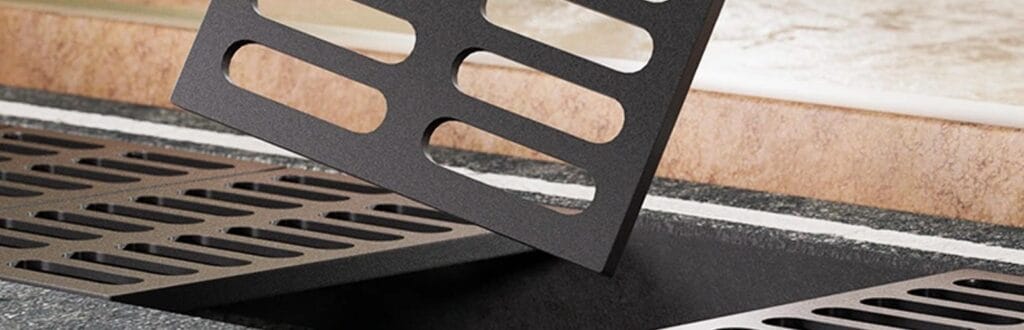
Lifecycle Cost Model (30 Years)
| Component | Cost Impact |
|---|---|
| Installation | Medium |
| Maintenance | Low |
| Replacement | Very low |
| Downtime Loss | Minimal |
Cast iron systems provide up to 35–45% lower total lifecycle cost compared to composite alternatives.
Sustainability and Environmental Impact
Recyclability Advantage
Cast iron is 100% recyclable, reducing environmental footprint in urban infrastructure renewal projects.
Carbon Efficiency Improvements
Modern foundries use:
- Electric induction furnaces
- Low-emission casting processes
- Recycled scrap iron ratios above 80%
Future Trends in Drainage Systems
Smart Infrastructure Integration
Future systems will integrate:
- AI flood prediction
- Real-time blockage alerts
- Automated drainage routing
High-Performance Alloy Cast Iron
Next-generation materials include:
- Nodular graphite reinforcement
- Anti-corrosion nano-coatings
- Lightweight structural optimization
Modular Drainage Design
Cities are shifting toward modular systems for:
- Faster installation
- Easier maintenance
- Scalability in urban expansion
Conclusion
The cast iron drain grate remains one of the most reliable and essential components in urban drainage engineering. Its superior load-bearing capacity, long service life, and compliance with international standards make it indispensable in modern city infrastructure.
As urban environments become more complex and climate challenges intensify, the future of drainage systems will depend on combining traditional cast iron durability with smart monitoring technologies and advanced material science.
This evolution ensures safer roads, more resilient cities, and more efficient stormwater management systems worldwide.
FAQ
Why is cast iron still used in modern drainage systems?
Because it offers unmatched load strength, durability, and long-term cost efficiency compared to alternatives.
What is the lifespan of a cast iron drain grate?
Typically 20–50 years depending on traffic load and maintenance frequency.
Can cast iron drain grates handle heavy trucks?
Yes, D400-rated systems are designed for highway and heavy industrial traffic loads.
Is cast iron better than plastic drainage covers?
Yes for high-load urban environments; plastic is only suitable for light-duty applications.
How do cities prevent drain grate failure?
Through correct load classification, proper installation, and scheduled maintenance programs.