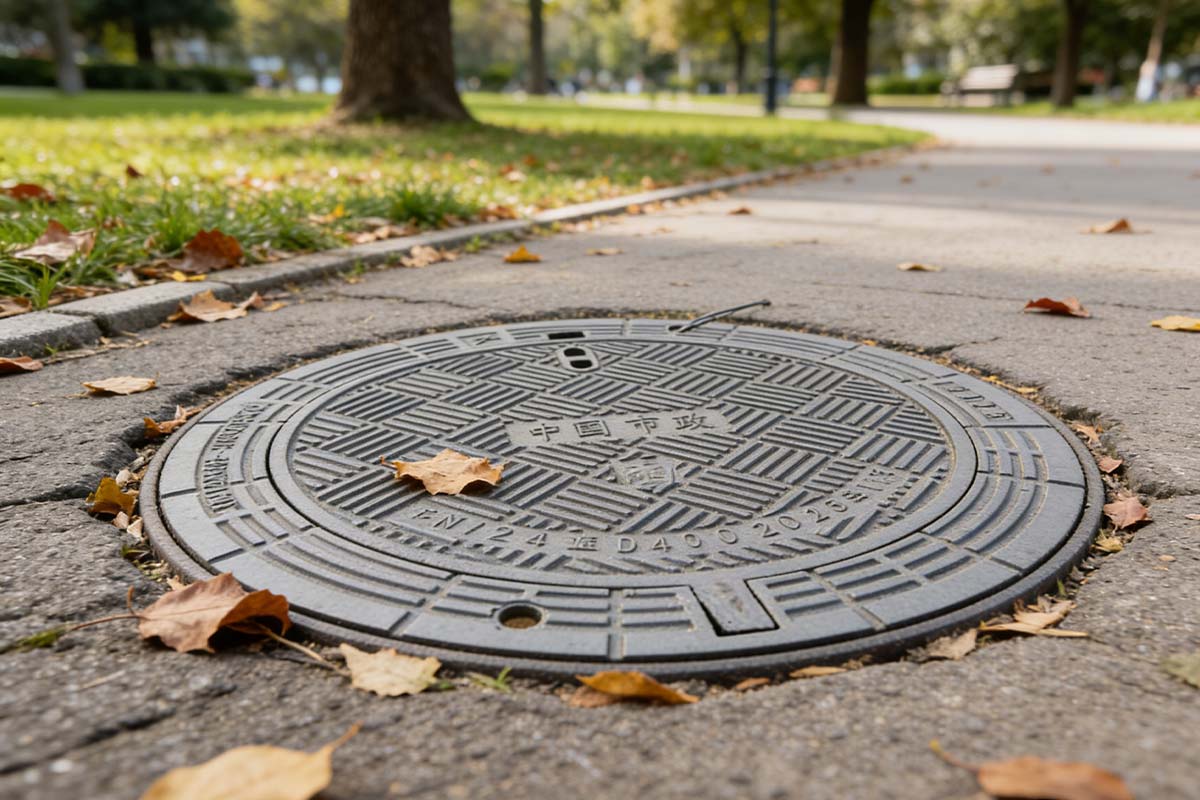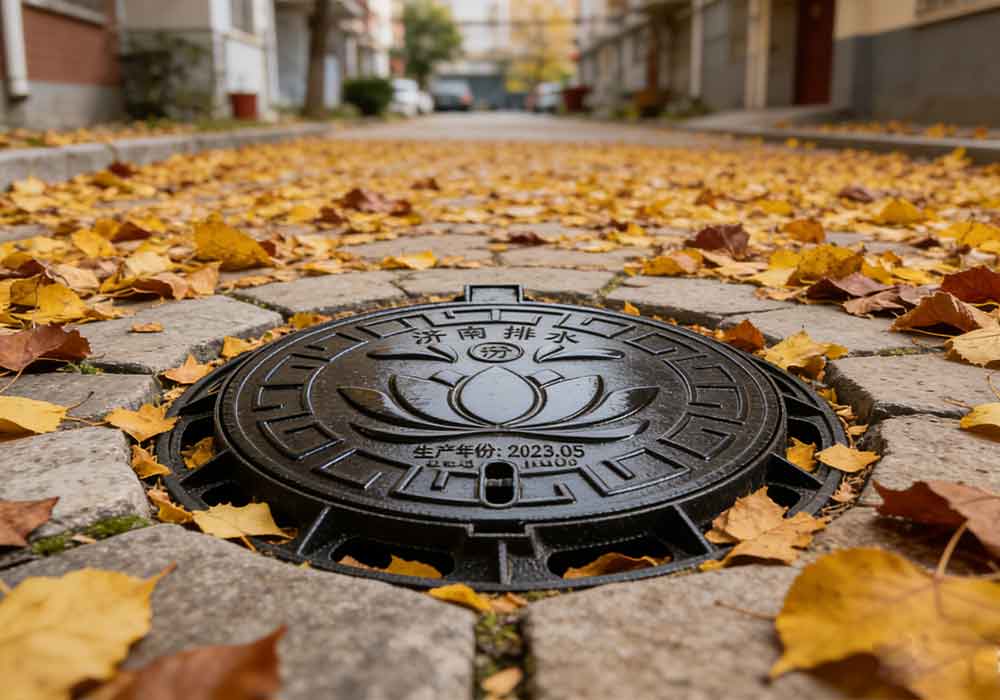


Welcome to our blog. We are a professional manufacturer of ductile iron and composite resin manhole covers, supplying infrastructure products for municipal and industrial projects worldwide.
- 👉 Follow us on Facebook for the latest product updates, industry news, and project cases.
- 👉 If you have any project requirements or need a quotation, feel free to contact our team directly for fast support and customized solutions.
Please continue reading our blog for more industry insights and product information
Table of Contents
Executive Overview: Why FRP Manhole Cover Is Transforming Infrastructure in 2026
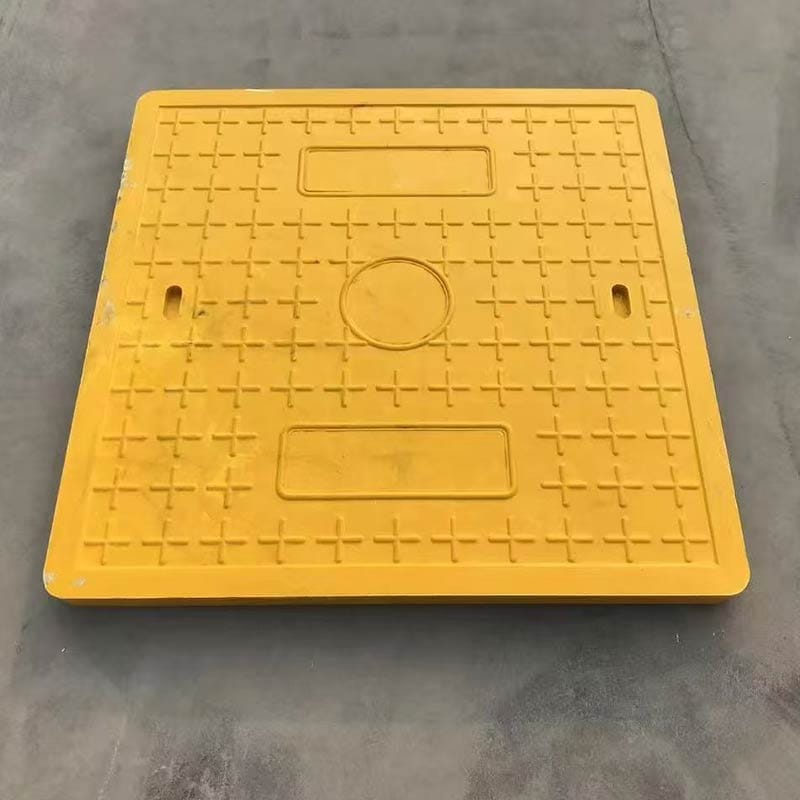
Urban infrastructure is entering a new material era. As cities face increasing pressure from traffic load growth, corrosion challenges, and smart city integration, traditional cast iron solutions are no longer sufficient in many scenarios.
The FRP manhole cover has emerged as a next-generation composite infrastructure component designed to solve three core engineering problems:
- Excessive maintenance cost of metallic covers
- High theft rate of recyclable iron materials
- Corrosion failure in coastal, chemical, and high-moisture environments
According to a 2025 infrastructure materials report by global civil engineering associations, composite manhole cover adoption is increasing at a compound annual growth rate (CAGR) of 8.7% globally, with Asia-Pacific leading adoption due to rapid urbanization.
This guide provides a deep technical breakdown covering:
- Engineering structure
- International standards
- Load classification systems
- Material science
- Real-world case studies
- Procurement strategy for 2026
FRP Manhole Cover Material Science and Structural Engineering
Fiber Reinforced Polymer Composition System
An FRP manhole cover is typically composed of:
- 30–60% fiberglass reinforcement
- Thermoset resin matrix (unsaturated polyester, vinyl ester, or epoxy)
- Additives (UV stabilizers, flame retardants, anti-slip fillers)
This composite structure creates a material that behaves differently from metals under stress.
Mechanical Behavior Model
Unlike cast iron, which fails through brittle fracture, FRP systems fail gradually through fiber pull-out and matrix cracking. This provides:
- Predictable failure behavior
- Higher safety margins under overload conditions
- Reduced catastrophic breakage risk
Density and Strength Comparison
| Material | Density (g/cm³) | Tensile Strength (MPa) | Corrosion Resistance |
|---|---|---|---|
| Cast Iron | 7.1–7.3 | 150–300 | Low |
| Steel | 7.8 | 400–550 | Medium |
| FRP Composite | 1.6–2.0 | 200–600 (directional) | Very High |
FRP achieves a weight reduction of up to 75% compared to cast iron while maintaining competitive structural performance.
FRP Manhole Cover Global Standards and Certification Systems
EN124: European Load Classification Standard
The EN124 system remains the most widely adopted benchmark:
- A15: pedestrian areas
- B125: sidewalks and parking zones
- C250: curbside traffic areas
- D400: highways and main roads
- E600: industrial heavy load zones
- F900: airport and military applications
ASTM and ISO Frameworks
In addition to EN124, manufacturers also comply with:
- ASTM D790: flexural properties of plastics
- ASTM D256: impact resistance (Izod test)
- ISO 9001: quality management systems
- ISO 1461 (indirectly for corrosion comparison benchmarking)
Load Testing Engineering Methodology
Testing includes:
- Static load compression test (up to 900 kN for F900 class)
- Dynamic fatigue simulation (1 million+ cycles)
- Drop impact testing (50–150 kg impact from defined height)
FRP Manhole Cover Performance Engineering Parameters
Key Performance Indicators (KPI)
- Load deflection rate (<2.5% under rated load)
- Water absorption rate (<0.5%)
- UV degradation resistance (>3000 hours accelerated testing)
- Slip resistance coefficient (>0.6 wet condition minimum)
Thermal Expansion Advantage
FRP exhibits lower thermal expansion compared to steel:
- FRP: 8–12 ×10⁻⁶ /°C
- Steel: 11–13 ×10⁻⁶ /°C
This reduces deformation in extreme climate conditions.
FRP Manhole Cover vs Cast Iron vs Ductile Iron
Engineering Comparison Matrix
| Feature | FRP Manhole Cover | Cast Iron | Ductile Iron |
|---|---|---|---|
| Weight | Very Light | Heavy | Heavy |
| Theft Risk | None | High | High |
| Corrosion Resistance | Excellent | Poor | Medium |
| Installation Speed | Fast | Slow | Moderate |
| Maintenance Cycle | 10–15 years | 3–5 years | 5–8 years |
| Lifecycle Cost | Low | High | Medium |
Engineering Insight
While metal covers provide high compressive strength, FRP covers excel in:
- Lifecycle cost optimization
- Chemical resistance
- Installation efficiency
- Safety under failure conditions
FRP Manhole Cover Lifecycle Cost (LCC) Analysis
Comprehensive Cost Components Model
Lifecycle cost (LCC) provides a holistic financial evaluation of FRP manhole covers over their operational life. It incorporates multiple cost factors beyond the initial purchase, including:
- Initial Procurement Cost: Raw material, manufacturing, and transport expenses. FRP composite materials generally cost 20–30% more than ductile iron initially but provide long-term savings.
- Installation Labor Cost: FRP covers are lighter (up to 60% less than traditional cast iron), reducing crane or manual labor time and allowing for faster installation.
- Maintenance Cycles: Traditional metal covers require periodic cleaning, anti-rust treatment, or repainting; FRP covers typically need minimal maintenance due to corrosion resistance.
- Replacement Frequency: Standard ductile iron covers often last 7–10 years in harsh environments; FRP composites can extend service life to 15–20 years under similar conditions.
- Theft Loss Risk: FRP covers’ low scrap value significantly reduces theft-related replacement costs.
10-Year Cost Simulation Example
In a municipal deployment scenario, comparing total costs over a decade provides a clear view of economic efficiency:
| Material Type | Total Cost Index | Notes |
|---|---|---|
| Cast Iron | 100 | Frequent anti-rust treatment required |
| Ductile Iron | 82 | Better corrosion resistance, still prone to theft |
| FRP Composite | 58 | Minimal maintenance, theft-resistant, extended lifespan |
This simulation demonstrates up to 42% lifecycle cost reduction when deploying FRP manhole cover systems compared with traditional cast iron.
FRP Manhole Cover Real Engineering Case Studies
Case Study 1: Coastal City Infrastructure Upgrade
Location
Southeast Asia coastal urban highway project
Problem
- Severe salt corrosion
- Annual replacement of iron covers
- Traffic disruption due to maintenance
Solution
Deployment of D400-class FRP manhole cover systems
Results
- 78% reduction in maintenance frequency
- Zero corrosion-related failures after 3 years
- 35% reduction in road closure incidents
Case Study 2: Chemical Industrial Zone
Problem
- Acidic wastewater exposure
- Rapid metal degradation
- High replacement cost
Result
FRP covers achieved:
- 5-year zero-failure operation
- Chemical resistance stability improvement >90%
- Maintenance cost reduced by 60%
Case Study 3: Smart City Sensor Integration Project
Innovation Aspect
FRP covers do not interfere with electromagnetic signals.
Outcome
- Seamless IoT sensor integration
- No signal shielding issues
- Improved smart drainage monitoring accuracy
FRP Manhole Cover Manufacturing Process Engineering
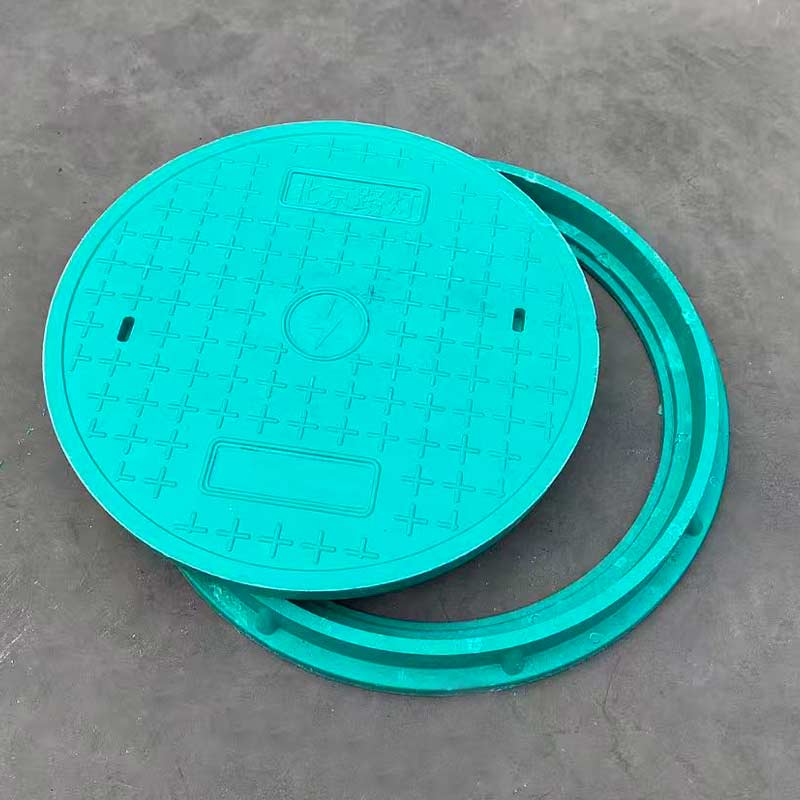
Step 1: Mold Preparation
High-precision steel molds guarantee dimensional consistency with ±0.5 mm tolerance, ensuring covers fit standard frames and prevent installation gaps.
Step 2: Fiber Layup Process
Fiberglass layers are oriented crosswise to optimize load distribution, enhance impact resistance, and improve structural rigidity. Each layer undergoes ultrasonic inspection for defects.
Step 3: Resin Injection System
Vacuum-assisted resin transfer molding (VARTM) enhances:
- Fiber saturation for uniform load distribution
- Structural uniformity to prevent warping
- Void reduction (<2%), improving tensile and compressive strength
Step 4: Curing and Post-Processing
- Controlled thermal curing at 120–160°C
- Surface finishing and anti-slip texturing
FRP Manhole Cover Installation Engineering Guide
Installation Best Practices
- Ensure concrete frame leveling tolerance ≤3 mm
- Use polymer bedding for vibration absorption
- Avoid point load stress during placement
- Conduct initial load test before road opening
Installation Time Comparison
| Material | Avg Installation Time |
|---|---|
| FRP | 15–25 minutes |
| Cast Iron | 40–60 minutes |
| Ductile Iron | 35–55 minutes |
FRP Manhole Cover Engineering Failure Modes
Common Failure Types
- Fiber delamination under extreme overload
- UV degradation in low-grade products
- Edge impact cracking due to poor installation
Prevention Engineering
- Use UV-stabilized resin systems
- Reinforced edge rib design
- Proper load class selection (EN124 compliance)
FRP Manhole Cover Market Trends 2026 White Paper Insight
Global Demand Drivers
- Smart city expansion projects
- Infrastructure modernization programs
- Green building material regulations
- Anti-theft municipal requirements
Regional Growth Forecast
- Asia-Pacific: +9.3% CAGR
- Middle East: +7.1% CAGR
- Europe: +6.4% CAGR
- North America: +5.8% CAGR
FRP Manhole Cover Selection Framework (Engineering Procurement Model)
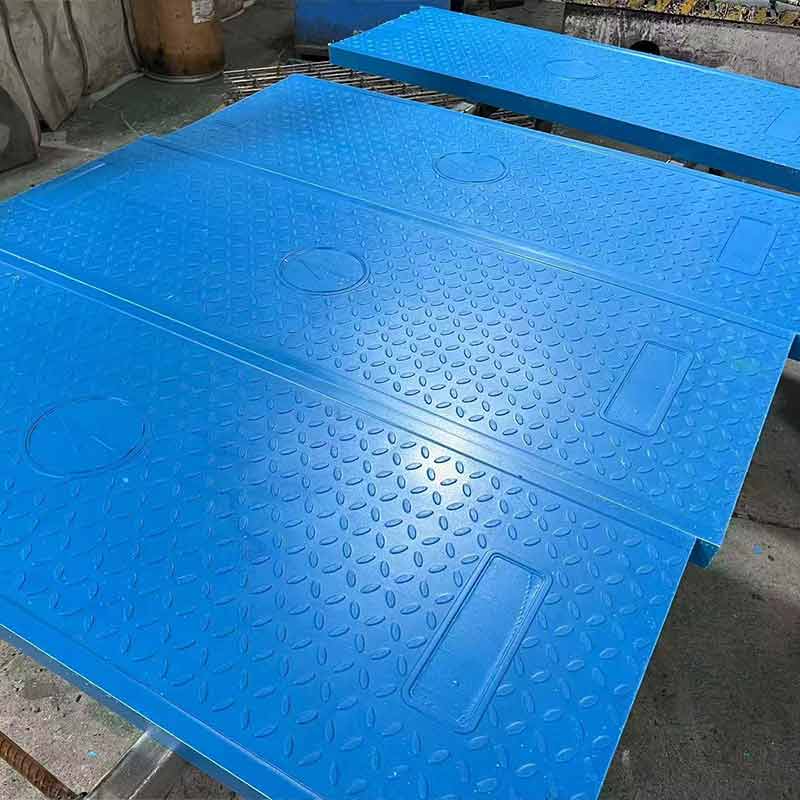
Step 1: Load Classification Selection
Match EN124 class with real traffic conditions.
Step 2: Environmental Stress Evaluation
- Salt exposure
- Chemical exposure
- Temperature cycles
Step 3: Safety Requirements
- Anti-slip grade
- Fire resistance rating (optional)
- Electrical insulation level
Conclusion
The FRP manhole cover represents a structural shift in global infrastructure engineering. It is not simply a replacement for cast iron, but a redesigned system component optimized for:
- Lifecycle cost efficiency
- Smart city compatibility
- Environmental resilience
- Installation speed optimization
- Long-term infrastructure sustainability
By 2026 and beyond, FRP-based composite covers are expected to become a dominant standard in municipal, industrial, and coastal engineering applications worldwide.
FAQ
Why is FRP manhole cover considered safer than metal covers?
Because it eliminates electrical conductivity risks and reduces injury from sudden brittle fracture.
Can FRP manhole cover handle highway traffic?
Yes, D400–F900 class products are engineered for highways, ports, and airports.
Does FRP degrade under sunlight?
Only low-quality products degrade; UV-stabilized FRP maintains performance for 20+ years.
What is the biggest advantage of FRP over iron?
The combination of corrosion resistance, lightweight design, and zero theft value.
Is FRP environmentally friendly?
Yes, it reduces metal mining demand and has lower lifecycle carbon emissions.