

Welcome to our blog. We are a professional manufacturer of ductile iron and composite resin manhole covers, supplying infrastructure products for municipal and industrial projects worldwide.
- 👉 Follow us on Facebook for the latest product updates, industry news, and project cases.
- 👉 If you have any project requirements or need a quotation, feel free to contact our team directly for fast support and customized solutions.
Please continue reading our blog for more industry insights and product information
Table of Contents
Introduction
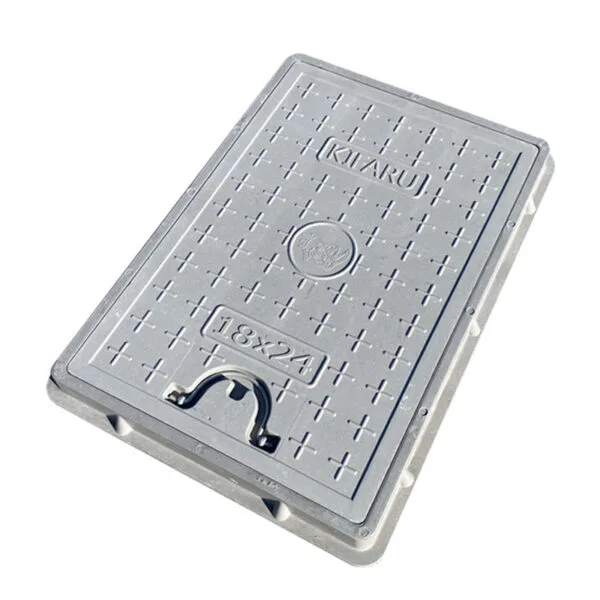
Manhole covers are often overlooked in urban planning, but they play a critical role in infrastructure safety, traffic management, and utility maintenance. A poorly chosen cover can lead to accidents, increased maintenance costs, and even legal liabilities. Rectangular manhole covers have become increasingly popular in modern cities and industrial areas due to their ability to maximize space efficiency, fit non-circular utility openings, and integrate advanced safety features.
Key Takeaways in This Blog
- Definition, applications, and importance of manhole cover rectangles.
- Detailed guide on materials, including cast iron, ductile iron, steel, and composite materials.
- Design considerations: load rating, anti-slip features, surface patterns, and structural stability.
- Installation best practices for urban, industrial, and high-traffic environments.
- Maintenance strategies, inspection standards, and safety compliance.
- Industry trends: smart city integration, lightweight materials, and sustainability.
- Cost vs quality analysis with professional case studies and real-world examples.
- Comparison with round manhole covers to understand pros and cons.
- FAQs addressing user concerns and practical selection tips.
- Future innovations and technological advancements in manhole cover design.
Understanding Manhole Cover Rectangle
Definition and Concept
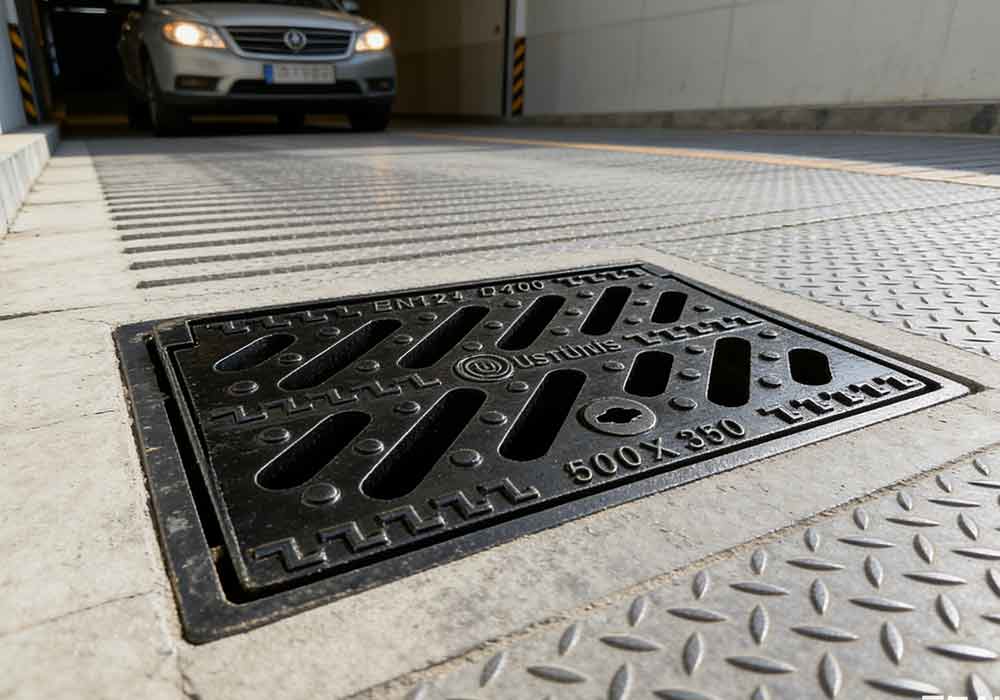
A manhole cover rectangle is a rectangular lid designed to protect underground access points, including sewer lines, electrical conduits, and water utilities. Unlike round covers, rectangular designs can better accommodate linear utility layouts, providing easier installation and maintenance.
Applications
- Urban Infrastructure: Sidewalks, streets, plazas, and parks often use rectangular covers for grid-aligned utility access.
- Industrial Facilities: Factories and plants benefit from rectangular covers for machinery service points and drainage access.
- Smart Utilities: Rectangular covers allow integration of sensors for real-time monitoring of water, electricity, or gas lines.
Advantages of Rectangular Covers
- Space Optimization: Fits rectangular utility openings precisely.
- Load Distribution: Can be engineered to handle heavy vehicle traffic.
- Customization: Easier to integrate locks, anti-slip surfaces, or monitoring devices.
Materials for Manhole Cover Rectangle
Common Materials and Standards
| Material | Strength | Durability | Typical Use | Compliance Standards |
|---|---|---|---|---|
| Cast Iron | High | Very High | Urban streets | ASTM A48 |
| Ductile Iron | Very High | Very High | Industrial & heavy traffic | ASTM A536, EN 124 |
| Composite (Fiberglass/Resin) | Medium | High | Pedestrian areas, corrosive environments | ISO 9001 |
| Steel | Medium-High | Medium | Temporary or lightweight zones | AASHTO |
Material Selection Tips:
- Cast Iron: Affordable and durable, ideal for moderate urban traffic.
- Ductile Iron: Stronger than cast iron and less brittle; suitable for industrial zones or highways.
- Composite Materials: Resistant to corrosion, lightweight, and ideal for pedestrian-heavy areas.
- Steel: Budget-friendly and suitable for temporary access, but needs corrosion protection.
Data Insight: According to ASTM A536, ductile iron used in manhole covers must have a minimum tensile strength of 60,000 psi, ensuring the ability to handle heavy loads without cracking.
Design Considerations
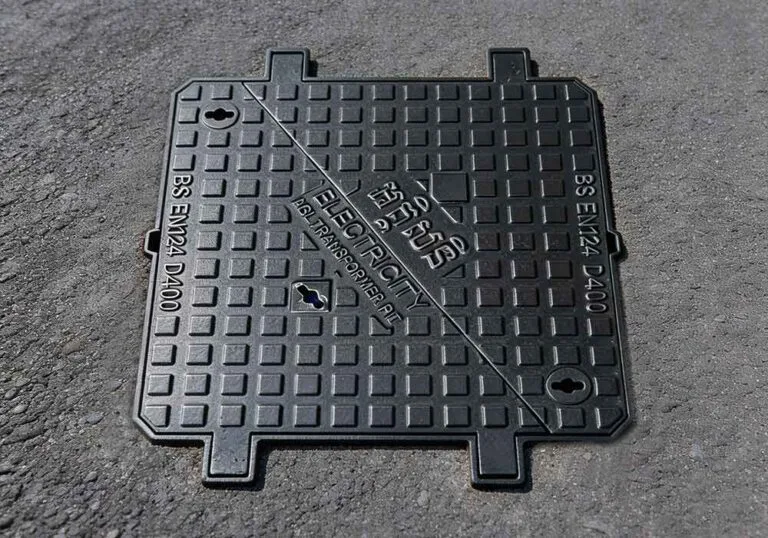
Load Rating and Compliance
- Class A: Pedestrian only (1.5 tons)
- Class B: Light vehicles (3–12 tons)
- Class D: Heavy traffic (40+ tons)
Global Standards:
- EN 124 (Europe): Specifies load-bearing classifications, testing methods, and installation recommendations.
- AASHTO (US): Defines minimum load-bearing and material requirements for municipal road covers.
- ISO 9001 & ISO 14001: Quality and environmental management for manufacturing.
Surface and Safety Features
- Raised patterns or textured surfaces for anti-slip performance.
- Water drainage grooves to prevent ponding.
- Integration with smart city sensors for monitoring underground utilities.
Comparison Between Rectangular and Round Covers
| Feature | Rectangular | Round |
|---|---|---|
| Space Fit | Optimized for linear utility openings | Limited to circular access points |
| Safety | Less likely to roll | Cannot fall into the opening |
| Cost | Higher due to die complexity | Lower, easier manufacturing |
| Load Distribution | Requires corner reinforcement | Uniform stress distribution |
Installation Best Practices
Frame Preparation
- Ensure concrete or steel reinforcement for high-traffic areas.
- Verify that the frame is level to prevent cover wobbling.
Correct Placement
- Align edges precisely with frame.
- Leave a small tolerance (~2–3 mm) to accommodate expansion and prevent rattling.
Securing and Fastening
- Bolts, latches, or lock mechanisms prevent theft and unauthorized access.
- Proper torque ensures stability and long-term performance.
Safety Tip
- Regularly verify that the cover is flush with surrounding pavement to prevent tripping hazards.
Maintenance and Inspection
Routine Inspection
- Check for cracks, corrosion, surface wear, and structural deformities.
- Clean debris from the frame and surrounding area to ensure proper fit.
Load Testing
- Conduct periodic load tests, especially in industrial or heavy traffic zones.
- Follow EN 124 or local standards for verification.
Longevity Recommendations
- Apply anti-corrosion coatings to steel and cast iron covers.
- Replace damaged covers promptly to avoid accidents or utility damage.
White Paper Reference: According to the International Journal of Civil Engineering (2023), proactive inspection and coating maintenance can extend manhole cover lifespan by 25–30 years in urban settings.
Industry Trends and Innovations
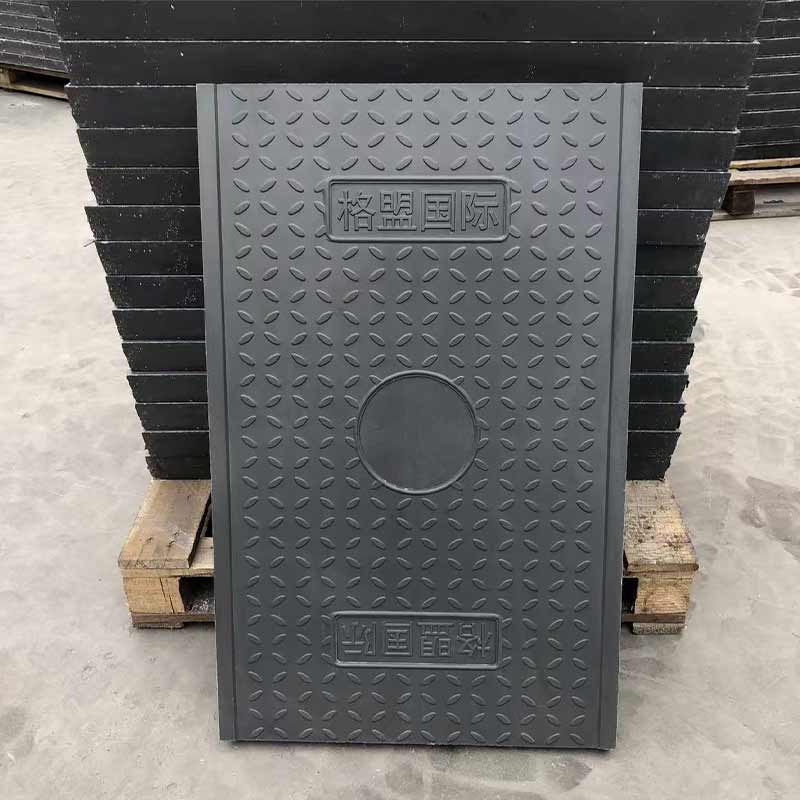
Smart City Integration
- IoT sensors in manhole covers monitor access, detect unauthorized entry, and track utility conditions in real-time.
- Predictive maintenance reduces downtime and emergency repair costs.
Lightweight and Composite Materials
- Fiberglass and polymer composite covers reduce weight without compromising strength.
- Increasingly used in pedestrian zones and corrosion-prone areas.
Sustainability Practices
- Closed-loop recycling of cast iron and steel components.
- Low-emission manufacturing processes for environmental compliance.
News Example: Singapore’s Land Transport Authority deployed sensor-integrated composite manhole covers in 2025, reducing maintenance costs by 25% and improving safety monitoring.
Case Studies
New York City Urban Redevelopment
- Application: Installed ductile iron rectangular covers in intersections.
- Results: 30% longer lifespan compared to previous cast iron covers.
Industrial Chemical Plant, Germany
- Application: Composite covers in corrosive environments.
- Results: Maintenance intervals extended from 6 to 18 months.
Lessons Learned
- Material selection must align with local environmental conditions.
- Installation and frame quality are equally critical for longevity.
Cost vs Quality Analysis
| Material | Cost | Durability | Maintenance Needs | Best Use |
|---|---|---|---|---|
| Cast Iron | $150–$250 | High | Low | Urban streets |
| Ductile Iron | $200–$300 | Very High | Low | Industrial zones |
| Composite | $120–$200 | Medium-High | Medium | Pedestrian zones |
| Steel | $100–$180 | Medium | High | Temporary or light load |
Professional Insight: Investing in ductile iron or high-quality composite covers reduces long-term maintenance costs, improves safety, and ensures compliance with modern urban standards.
FAQ
1. Why choose a rectangular manhole cover?
Optimizes space for utility access, fits linear grids, and allows for integration of sensors or locking systems.
2. Best material for heavy traffic zones?
Ductile iron or cast iron rated to EN 124 Class D or equivalent AASHTO standards.
3. Inspection frequency?
Twice a year for high-traffic areas, or after major events like flooding or construction.
4. Can composite covers withstand vehicles?
Yes, if rated for traffic; otherwise, limited to pedestrian areas.
5. Are locking options available?
Yes, bolt or latch mechanisms prevent theft and unauthorized access.
6. How to select proper size?
Measure frame opening accurately and allow a small tolerance for expansion.
Conclusion
Selecting the best manhole cover rectangle requires a comprehensive approach. It is not just about picking a material or shape; it is about ensuring long-term durability, safety, compliance with international standards, and suitability for specific environments. Municipalities, industrial planners, and construction engineers must consider:
- Material Performance: Cast iron and ductile iron remain the top choices for heavy-duty applications, while composite materials are ideal for lightweight, corrosion-prone, or pedestrian areas.
- Design and Safety: Anti-slip surfaces, secure fastening, and proper frame alignment are critical for public safety.
- Compliance with Standards: Ensure adherence to EN 124, AASHTO, or local standards for load-bearing and durability.
- Maintenance and Inspection: Routine inspections, load testing, and cleaning extend the lifespan of manhole covers and prevent accidents.
- Sustainability and Innovation: Choosing materials and manufacturing processes that minimize environmental impact is increasingly important.
By carefully balancing cost, quality, and safety, cities and industrial projects can optimize performance while minimizing long-term operational costs. Modern manhole cover rectangles are no longer simple infrastructure components; they are engineered solutions that combine functionality, safety, and technological integration.