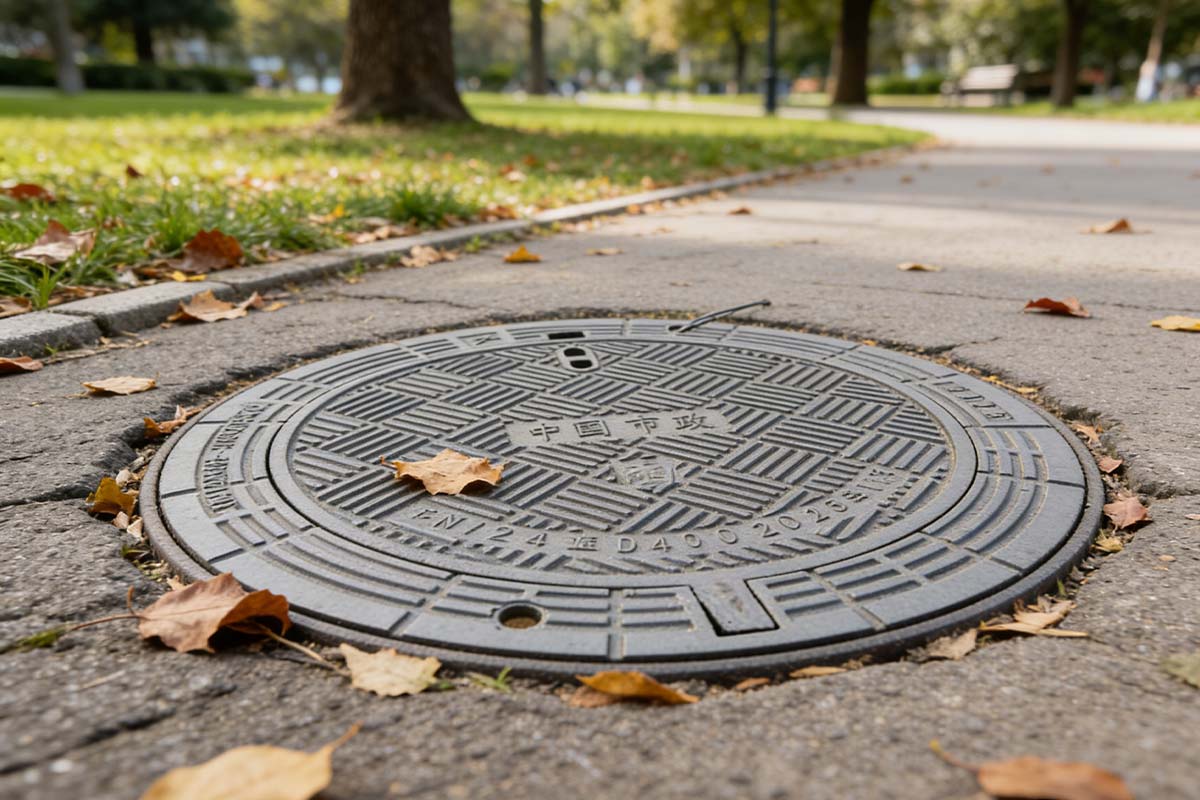


Welcome to our blog. We are a professional manufacturer of ductile iron and composite resin manhole covers, supplying infrastructure products for municipal and industrial projects worldwide.
- 👉 Follow us on Facebook for the latest product updates, industry news, and project cases.
- 👉 If you have any project requirements or need a quotation, feel free to contact our team directly for fast support and customized solutions.
Please continue reading our blog for more industry insights and product information.
Table of Contents
In modern urban infrastructure development, manhole covers are no longer just simple access lids—they are critical load-bearing safety components that directly affect road safety, drainage efficiency, and long-term maintenance cost. As cities expand and traffic loads increase, engineers and procurement teams are increasingly comparing traditional cast manhole cover systems with newer composite alternatives.
Global infrastructure reports show that roadway access covers are exposed to millions of load cycles over their service life, especially in urban highways and industrial zones. A single heavy-duty road section can experience axle loads exceeding 10–20 tons per vehicle, repeated thousands of times per day. This makes material selection not only a cost decision but a structural engineering requirement.
At the same time, environmental conditions such as corrosion, flooding, chemical exposure, and temperature variation continue to influence product performance. As a result, both cast manhole cover and composite systems have evolved into highly engineered solutions, each optimized for specific use cases rather than direct replacement of one another.
This guide provides a structured, engineering-level comparison to help buyers, contractors, and municipal planners make informed decisions based on performance, standards, lifecycle cost, and application scenarios.
- Understand what cast manhole cover and composite covers are
- Learn material science and structural engineering differences
- Compare EN124 load classes and real engineering performance
- Analyze lifecycle cost, installation, and maintenance factors
- Review global standards and compliance requirements
- Explore real project applications and case-based usage
- Use technical comparison tables for procurement decisions
- Understand failure modes and durability behavior
- Get structured FAQ based on real buyer search intent
What Is a Cast Manhole Cover?
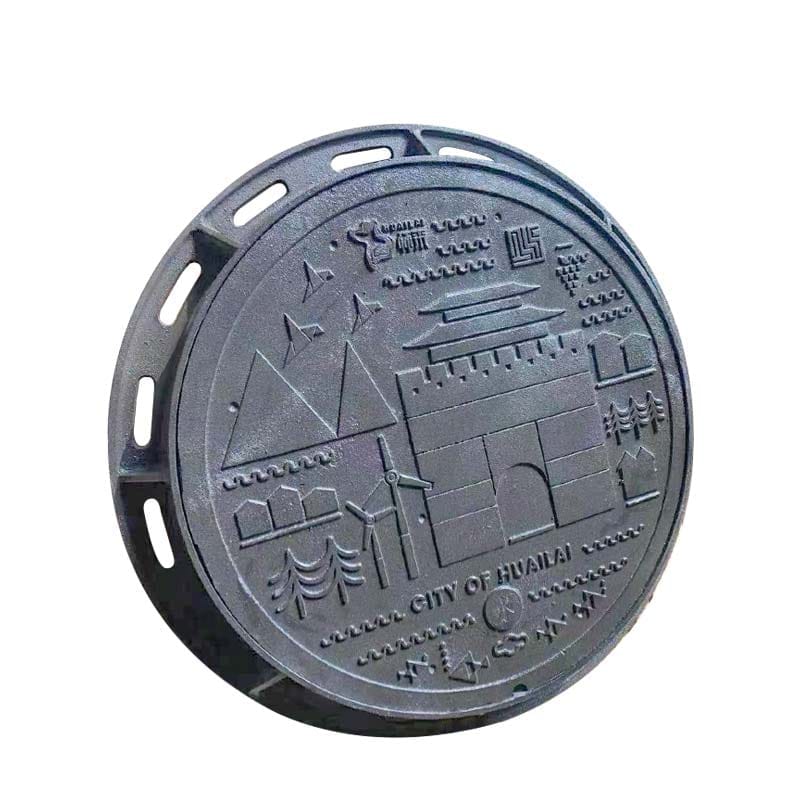
A cast manhole cover is a structural access cover manufactured primarily from cast iron or ductile iron materials, designed to withstand heavy mechanical loads and harsh environmental conditions.
Most modern infrastructure uses ductile iron variants rather than traditional grey cast iron due to significantly improved tensile strength and impact resistance. Ductile iron typically offers tensile strength values above 420 MPa, making it suitable for high-load traffic environments.
Cast manhole cover systems are widely used in:
- Urban highways
- Industrial parks
- Ports and logistics centers
- Airport service roads
- Heavy-duty drainage systems
They are typically manufactured using sand casting processes followed by heat treatment, machining, and surface coating (bitumen or epoxy) to improve corrosion resistance.
What Is a Composite Manhole Cover?
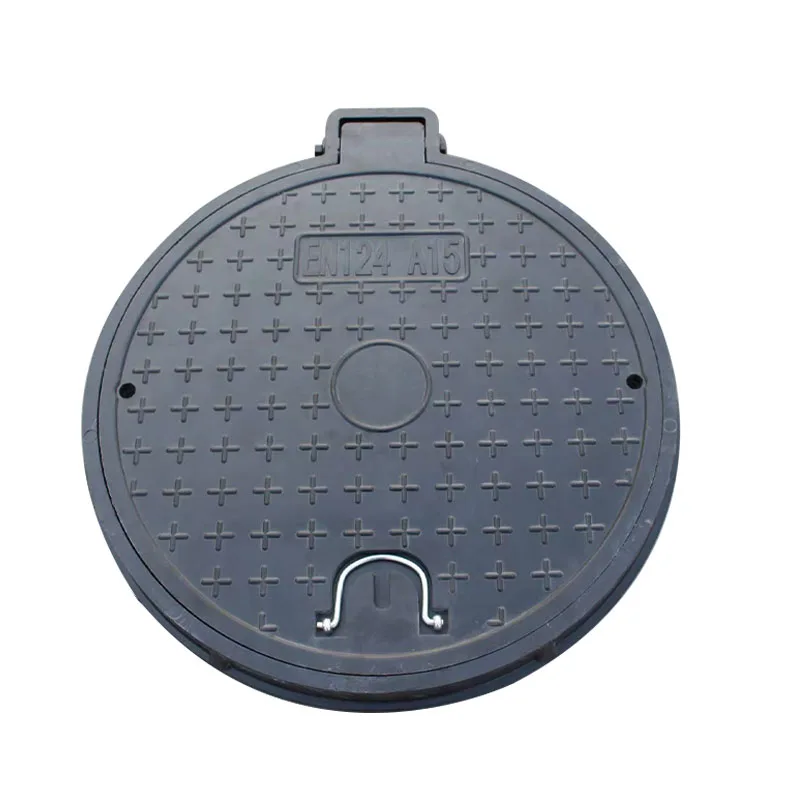
A composite manhole cover is a non-metallic access cover made from engineered polymer resins, fiberglass reinforcement, and thermoplastic compounds.
Unlike metallic systems, composite covers rely on fiber-reinforced structural layers to achieve load resistance. These materials are engineered to distribute stress across a wider surface area rather than concentrating it at a single structural point.
Composite covers are commonly used in:
- Residential communities
- Pedestrian walkways
- Green infrastructure projects
- Coastal corrosion zones
- Electrical and communication utility areas
Key advantage lies in corrosion resistance and lightweight installation, which reduces labor and handling risks.
Engineering Structure of Cast Manhole Cover Systems
Metallurgical Composition
Ductile iron used in cast manhole cover production contains spheroidal graphite structures, improving ductility and reducing brittleness compared to traditional cast iron.
Typical composition:
- Carbon: 3.2%–3.8%
- Silicon: 2.2%–2.8%
- Magnesium treatment for nodular graphite formation
This structure enhances impact resistance under dynamic traffic loads.
Load Transfer Mechanism
Cast covers distribute load through rigid structural continuity, allowing them to withstand direct wheel pressure without significant deformation.
This makes them suitable for EN124 F900 class applications, which are designed for airport and industrial heavy-load zones.
Surface Protection Systems
To improve durability, coatings such as:
- Bituminous coating
- Epoxy resin coating
- Zinc-based anti-corrosion layers
are applied to prevent oxidation in humid or saline environments.
Engineering Structure of Composite Manhole Cover Systems
Fiber Reinforcement Technology
Composite covers rely on glass fiber reinforcement (GFRP) or similar materials embedded within resin matrices.
This creates a layered stress distribution system that absorbs impact energy rather than resisting it purely through rigidity.
Non-Metallic Behavior Advantages
Because composite materials are non-metallic:
- No rust formation occurs
- No electrical conductivity risk exists
- Chemical resistance is significantly higher
This makes them suitable for chemical plants and coastal environments.
Weight Optimization Principle
Composite covers typically weigh 40%–70% less than cast iron equivalents, improving installation efficiency and reducing transportation cost.
Cast Manhole Cover vs Composite: Engineering Comparison
Load Distribution Behavior
Cast systems rely on rigid structural strength, while composite systems rely on distributed fiber stress absorption.
Structural Response Under Traffic
- Cast iron: minimal deformation, high rigidity
- Composite: slight elastic response under load
Both behaviors are engineered and acceptable within their design limits.
Environmental Adaptability
- Cast iron performs best under mechanical stress environments
- Composite performs best under corrosion-prone environments
EN124 Standard Classification (Critical for Buyers)
European standard EN124 defines load classes for manhole covers:
| Class | Load Capacity | Application |
|---|---|---|
| A15 | 1.5 tons | Pedestrian areas |
| B125 | 12.5 tons | Parking areas |
| C250 | 25 tons | Roadside gutters |
| D400 | 40 tons | Roads & highways |
| E600 | 60 tons | Industrial areas |
| F900 | 90 tons | Airports, ports |
Cast manhole cover systems are commonly used in D400–F900 ranges, while composite covers are typically used in A15–C250 ranges depending on reinforcement design.
Cast Manhole Cover vs Composite Comparison Table (Engineering View)
| Feature | Cast Manhole Cover | Composite Manhole Cover |
|---|---|---|
| Material Type | Ductile iron / cast iron | Resin + fiberglass |
| Load Class Range | A15–F900 | A15–C250 (some reinforced up to D400) |
| Tensile Strength | Very High (≥420 MPa) | Medium (fiber dependent) |
| Weight | Heavy | Lightweight |
| Corrosion Resistance | Medium (coated) | High |
| Electrical Conductivity | Yes | No |
| Installation Cost | Higher | Lower |
| Maintenance Cycle | Long-term inspection required | Minimal maintenance |
| Best Application | Heavy traffic infrastructure | Light-medium load environments |
Lifecycle Cost Analysis
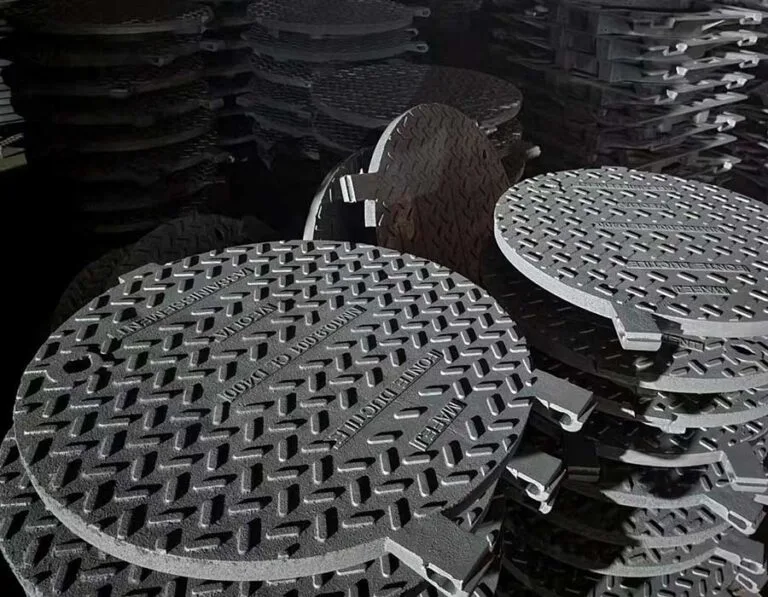
Cast Manhole Cover Lifecycle Cost
Although initial cost is higher, cast systems offer:
- Long service life (20–40 years in many applications)
- High structural reliability
- Lower replacement frequency
However, transportation and installation costs are higher due to weight.
Composite Lifecycle Cost
Composite systems offer:
- Lower installation cost
- Reduced manpower requirements
- Corrosion-free operation
But may require replacement earlier in high-load environments if misapplied.
Real Engineering Case Studies
Case Study 1: European Highway Upgrade Project
A highway renovation project replaced mixed cover systems with EN124 D400 ductile iron covers.
Results:
- 35% reduction in maintenance interventions
- Improved load stability under heavy truck traffic
- Extended service inspection interval to 10 years
Case Study 2: Coastal City Infrastructure (Southeast Asia)
Composite covers were used in a coastal drainage system exposed to saltwater corrosion.
Results:
- Zero corrosion-related failures after 5 years
- 40% reduction in installation time
- Improved worker safety due to reduced weight
Case Study 3: Industrial Chemical Plant
Hybrid usage approach:
- Cast covers in heavy machinery zones
- Composite covers in chemical exposure zones
Result: optimized lifecycle cost and performance balance.
Failure Modes and Risk Analysis
Cast Manhole Cover Failure Modes
- Corrosion under coating damage
- Fatigue cracking under extreme overload
- Improper installation leading to rocking or displacement
Composite Failure Modes
- Fiber delamination under extreme point load
- UV degradation in low-quality materials
- Improper load class selection
Installation Considerations
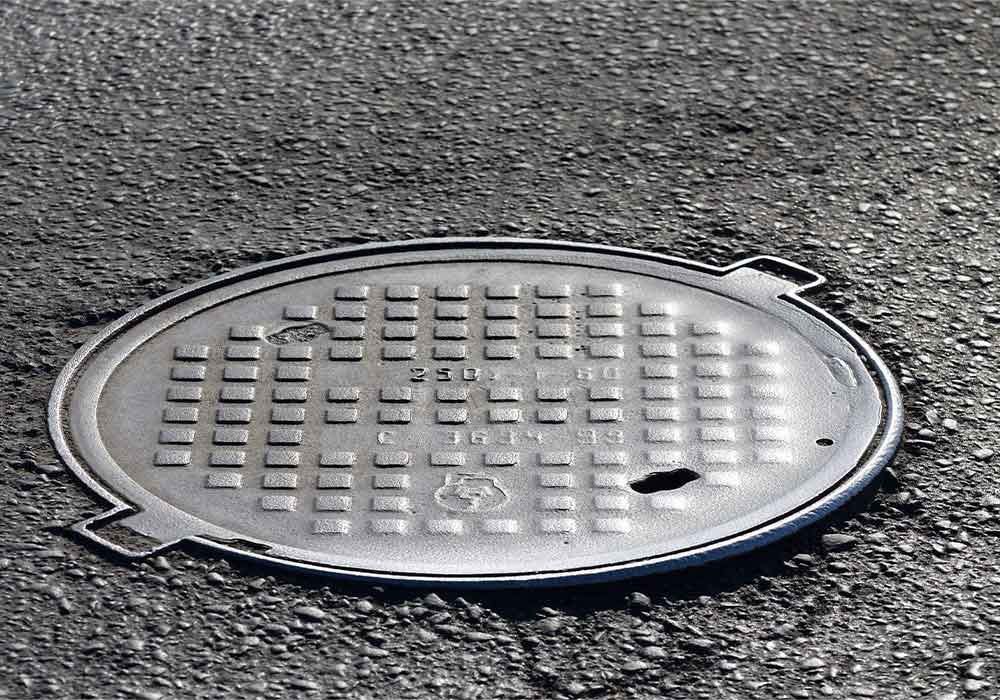
Cast Manhole Cover Installation
Requires:
- Mechanical lifting equipment in many cases
- Proper bedding and frame alignment
- Load testing after installation
Composite Installation
Requires:
- Manual placement possible
- Minimal equipment requirement
- Faster deployment cycles
Industry Trends and Market Insights
Recent infrastructure reports highlight:
- Increasing adoption of composite systems in smart city projects
- Continued dominance of ductile iron covers in heavy-load transport networks
- Growing hybrid deployment strategy in modern engineering design
- Rising demand for EN124-certified products in global export markets
Urbanization and infrastructure expansion in Africa, the Middle East, and Southeast Asia are major drivers of market growth.
Selection Guide: Which One Should You Choose?
Choose Cast Manhole Cover If:
- High traffic load is expected
- Industrial or highway environment
- Long-term structural stability is critical
Choose Composite Manhole Cover If:
- Corrosion resistance is priority
- Lightweight installation is required
- Pedestrian or light traffic zones
FAQ
What is the main difference between cast and composite manhole covers?
Cast covers rely on metal strength, while composite covers use fiber-reinforced materials.
Which is stronger, cast or composite manhole cover?
Cast iron is generally stronger under heavy load conditions.
Are composite manhole covers safe for roads?
Yes, but typically used in light to medium traffic applications depending on design class.
Do cast manhole covers rust?
They can corrode if coatings are damaged, but proper treatment reduces risk.
Which is more cost-effective long term?
It depends on application; cast is better for heavy-duty longevity, composite for low maintenance environments.
Can composite covers replace cast covers completely?
No, they complement each other depending on engineering requirements.
Conclusion
Both cast manhole cover and composite systems are essential components in modern infrastructure engineering. Rather than competing technologies, they represent different engineering solutions optimized for specific load conditions, environmental factors, and lifecycle cost strategies.
Cast iron systems dominate heavy-load infrastructure due to their superior structural strength, while composite systems offer advantages in corrosion resistance, lightweight installation, and modern urban applications.
Selecting the right system requires balancing mechanical performance, environmental conditions, and total lifecycle cost rather than focusing on material alone.