

สารบัญ
Drain grate lifting points need to be identified before a crew chooses a hook or inserts a bar through a convenient slot. An opening intended for water entry is not automatically a handling attachment, and a visible lifting feature may be inaccessible after installation beside a curb or wall. The task is to connect the exact grate with a permitted tool and a controlled movement. This guide helps owners inspect the interface, coordinate it with retention hardware and record a practical lifting arrangement that remains usable when the inlet requires cleaning.
Ask which features are actually intended for handling
Request the manufacturer's drawing or instructions identifying the lifting features for the exact grate model. Distinguish dedicated sockets, holes or attachments from ordinary drainage slots and decorative recesses. The product may provide more than one permitted handling method, but each needs an explicit basis. Do not infer suitability from the fact that a hook fits or that another contractor has used the same opening on a different grate.
Record the intended function of each feature. A recess for initially releasing a seated grate may differ from an attachment intended to carry it through the full movement. A retaining clip or hinge is also a separate component unless the instructions assign it a handling role. Clarifying these distinctions at procurement prevents a crew from applying an unintended force through the wrong local feature when the grate is dirty or difficult to move.
Match the tool geometry to the engagement detail
Obtain the compatible tool reference and the engagement requirements. Check tip shape, insertion space and the movement needed to secure the connection. A nominal hole dimension does not describe every contact surface inside a lifting socket. Similar-looking hooks can engage differently. The maintenance team should verify the tool actually available to it rather than approving an interface on the assumption that the correct tool can be found later.
Where mechanical equipment or an accessory is proposed, have the competent planner confirm compatibility and applicable capacity for the actual configuration. Do not add an unapproved adapter because it appears stronger or easier to source. The tool, attachment point and grate form one handling interface. A suitable device rating alone does not establish the local connection on the grate or the appropriateness of the angle at which it will be loaded.
Check access with the grate closed and fully installed
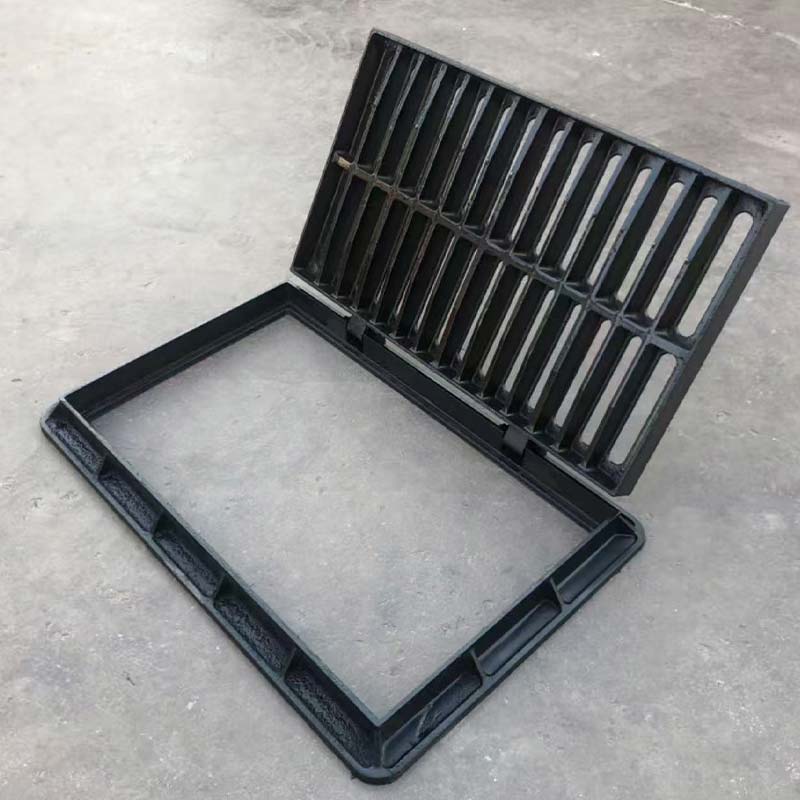
Locate the lifting points relative to the curb, frame, paving and nearby fixtures. Include the operator's approach and the space needed to insert and turn the tool. A feature that is visible from above can still be unusable when a wall prevents full engagement. Check whether the finished surface covers a recess or leaves only a restricted approach. The installation drawing should preserve the operating access that the tool requires.
Consider deposits and normal cleaning before engagement. Obtain the approved method for clearing the lifting point without damaging its profile. Do not plan to restore access by enlarging a hole or grinding an edge at each visit. If grit repeatedly blocks the feature, record the condition and review the maintenance or product arrangement. The tool connection needs a reliable inspection and preparation process, not a last-minute guess based on partial insertion.
Release restraints before the lifting points carry the task
Identify locks, bolts, clips and any other features that must be released in the prescribed sequence. The lift plan should make it clear how the crew confirms those steps are complete. Applying a larger lifting force is not a sound way to discover an overlooked restraint. A reluctant grate may also be bound by deposits or surrounding material, so the failed-movement response needs a controlled inspection rather than progressively more force.
Check the relationship between release access and tool placement. One tool may obstruct another, or a lock component may move into the lifting path. Resolve these interfaces using the actual assembly. If the grate is hinged, confirm which lifting action is permitted and how the leaf remains controlled. A dedicated lifting point does not automatically authorize pulling in any direction or treating the hinge as a free-rotation joint beyond its intended travel.
| Interface check | What to verify | Shortcut to avoid |
|---|---|---|
| Feature identity | The point is designated for the intended handling action | Using any slot that accepts a hook |
| Tool engagement | Correct geometry and full prescribed connection | Approving a tool by appearance alone |
| Installed access | Clear approach beside curb and frame | Assuming visible means usable |
| Controlled movement | Restraints released and put-down area available | Increasing force to test what remains attached |
Plan the movement and temporary support
Draw the path from the seated position to the approved open or storage position. Include the grate's shape, projections and possible rotation. Determine where the operator and equipment will be throughout that movement. A lifting point can be correctly engaged while the overall task is still obstructed by traffic, a basket or an inadequate put-down area. Plan the complete operation rather than stopping the review at the moment the grate leaves its seat.
HSE's guidance on planning lifting operations identifies attachment, visibility, location, equipment suitability and responsibilities as relevant considerations. Use the applicable workplace requirements and a competent plan for the actual task. Do not prescribe a universal safe manual weight or assume that two people solve every constrained lift. The handling method needs to reflect the configured grate and the working environment, including where it will be supported without instability or obstruction.
อ้างอิงทางเทคนิค: HSE guidance on lifting-operation planning and attachment.
Inspect local attachment condition before use
Include the lifting feature and its surrounding material in the approved pre-use check. Look for contamination, damage, deformation or other findings relevant to the prescribed method. Record uncertainty when an internal profile cannot be assessed adequately. Do not use an uncertain point just because the rest of the grate looks sound. The owner should have an escalation route for a damaged or inaccessible connection and an assessed alternative where necessary.
If a replaceable insert or attachment is used, confirm the correct part and installation requirements. A substituted fitting can change engagement even when its outside dimensions appear similar. Repairs to cast features need an authorized disposition rather than field welding, drilling or bending by default. Preserve evidence before modification. The inspection is intended to establish whether the approved interface is available for the task, not to improvise a new one at the edge of an open drain.
Trial the actual tool at a representative inlet
Before accepting a new model across several locations, demonstrate engagement, release coordination, controlled movement and restoration using the intended equipment. Include the final surrounding geometry or a representative mock-up of its important restrictions. Label the conditions the trial actually represents. An unobstructed yard demonstration may establish basic engagement while leaving curb access, basket interference and storage space unanswered.
Ask the maintenance operator to perform the approved sequence with suitable supervision rather than relying only on a supplier familiar with the sample. Record tool and component references, observations and any revised detail. If the trial identifies a problem, resolve the affected interface before the batch is released. A short repeat demonstration of the changed step can be more useful than collecting additional photographs of an unchanged, fully open grate.
Keep replacement tools and grates within the accepted pairing
Shengxin's cast iron drain grate range provides a relevant starting point for discussing handling features. Send the tool inventory and installed access constraints with the enquiry. Request the exact lifting-point drawing and approved operating method for the offered configuration. Confirm whether tools or attachments are included and how replacements are identified. Do not infer compatibility from a general product photograph or an undefined statement that standard tools may be used.
Retain the accepted tool reference in the asset record and the contractor's equipment list. If a new tool or grate variant is proposed, review the interface before use. A substitute may be acceptable with confirmation, but it should not inherit approval merely because the earlier tool is unavailable. This is especially important when a production change affects a hidden socket profile that looks unchanged from the surface.
Verify restoration and preserve the operating evidence
After maintenance, return the grate through the approved movement and check its intended seating and retention. Ensure tools and loose accessories have been removed or stowed as required. Record any attachment damage discovered during the task and obtain the appropriate disposition before the next visit. A completed cleaning record should not conceal a lifting interface that is no longer suitable for another operation.
Keep the installed photographs, tool references and demonstrated procedure with the asset. The record should explain which feature is used and how access is maintained, so new crews do not revert to a convenient drainage slot. A reliable lifting-point specification gives the owner a repeatable handling interface that survives changes in personnel and tools. It connects a small local feature on the casting with the complete maintenance task it needs to support.
หารือเกี่ยวกับข้อกําหนดของโครงการ
Send Shengxin the installed inlet layout and the lifting tools your maintenance team uses. Request a model-specific attachment and operating detail, then verify engagement and the complete movement at a representative location before accepting the configuration.
ข้อมูลผลิตภัณฑ์ที่เกี่ยวข้อง: ช่วงตะแกรงเหล็กหล่อเหล็กระบายน้ําเซิงซิน. แบ่งปันเอกสารโครงการที่เกี่ยวข้องผ่านทางเรา หน้าติดต่อ.
คําถามของโครงการ
Can drainage slots be used as lifting points?
Only where the manufacturer explicitly approves the feature and method for that model. A hook fitting through an opening does not establish suitability.
Does a rated lifting device prove the grate connection is adequate?
No. The attachment point, tool geometry, loading direction and complete operation also need an appropriate basis.
What should be checked beside a curb?
Verify full tool engagement and movement, operator position and the grate’s removal path with the finished surface in place.
How should a stuck grate be handled?
Follow the prescribed inspection and escalation process. Confirm restraint release and investigate interference rather than applying progressively greater force.
What belongs in the handover record?
Identify the permitted lifting features, compatible tools, operating sequence, pre-use checks and any installed access constraints, supported by the representative demonstration.