

Table of Contents
A lid-only manhole cover replacement can appear to be a quick way to restore a damaged or missing surface component. The difficulty is that matching the visible diameter does not establish a compatible assembly. The retained frame has a seat profile, bearing arrangement, tolerances and possibly a hinge, lock or seal designed to work with a particular lid. It may also have damage that was hidden by the old component. Before requesting a replacement lid, determine whether the frame is identifiable, serviceable and supported. This article provides a decision process for asset owners who need to distinguish a defensible component replacement from a situation requiring a complete lid-and-frame assembly.
Secure the asset before measuring the missing component
A missing, fractured or displaced lid creates an immediate operating issue. The owner should isolate the opening under the relevant site and traffic procedures before a procurement survey begins. A catalogue search is not the first control for an exposed access opening. Keep temporary protection and permanent replacement as separate decisions, with the temporary arrangement approved for its actual use. Do not assume that any panel placed over the opening is an acceptable interim cover.
Once safe access is established, record the location, frame identification and surrounding condition. Photograph the complete rim and visible support context. If fragments of the old lid remain, retain relevant markings and interface evidence where the investigation requires them. Note whether the original failure involved a missing part, visible fracture, difficult seating or recurring movement. That history can change the replacement decision even when a new lid can physically fit.
Measure the seat rather than relying on nominal size
The outside edge of the frame, clear opening and lid-bearing diameter or width are different dimensions. Record them separately using a drawing that identifies where each measurement was taken. Include seat depth, profile and any steps, tapers or locating features. For square or rectangular frames, record both directions and relevant diagonals. A tape measure across the top opening does not capture the interface on which the replacement lid will actually rest.
Measurement should also identify variation around the frame. Wear, distortion and debris can make an old seat unlike its original drawing. Avoid forcing a nominal catalogue dimension onto an irregular existing condition. Where the required measurements cannot be obtained safely or reliably, state that limitation and arrange the appropriate survey. A supplier should not be asked to guarantee fit from an incomplete photograph without a defined dimensional basis.
Identify the frame and its design generation
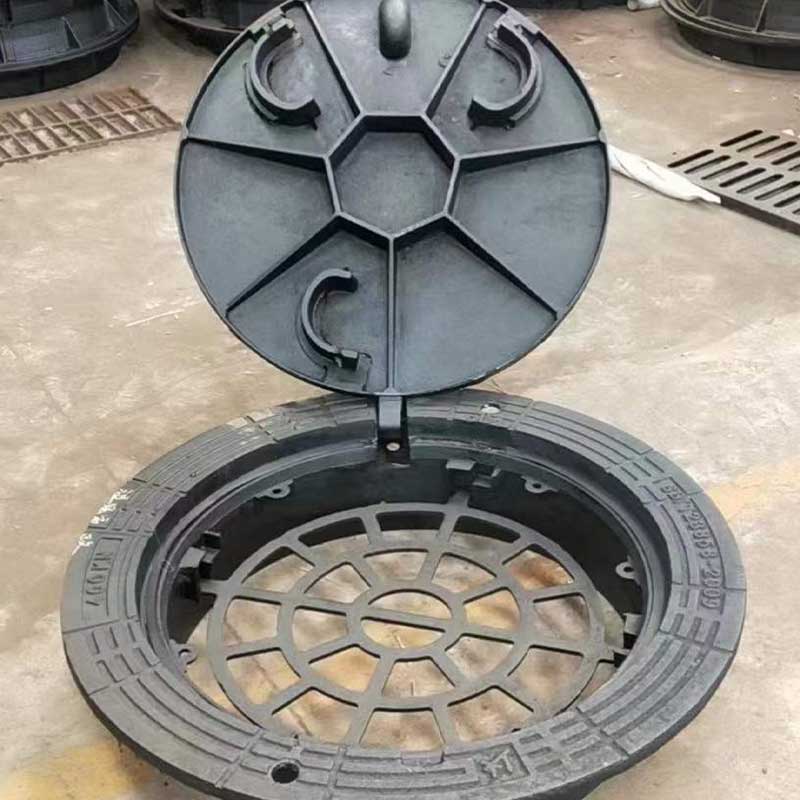
Look for casting marks, model references, drawing numbers and any owner asset records. The same nominal size may have been supplied in several generations with different seats or hardware. A manufacturer name alone may not establish compatibility. Send clear photographs of markings and the functional interfaces, and ask the supplier to confirm the specific relationship between the proposed lid and retained frame. Keep that confirmation in writing with the enquiry.
If the frame cannot be identified, replacement may still be technically assessable, but uncertainty increases. The owner and responsible engineer must decide what evidence is needed and whether a complete assembly is more appropriate. Do not describe an unidentifiable lid as equivalent merely because it is cast iron and approximately the right size. The purchasing record should make the retained component and the basis of compatibility clear enough for a later reviewer to understand.
Inspect the retained frame for defects that a new lid cannot fix
Inspect accessible bearing surfaces and frame sections for fracture, loss of material, distortion and other relevant damage. Record locations and photographs rather than a single unchecked statement that the frame is good. Look at the surrounding support as well. A sound casting on failed bedding can still move, and a new lid does not restore that support. If the frame condition or support cannot be established, keep the item open for technical review.
Pay particular attention to evidence of localized contact, recurring rocking or improvised repairs. Grinding, welding or adding packing can alter a functional interface and may obscure the original problem. Do not repeat such modifications to make a replacement appear to fit. Ask the responsible reviewer to determine whether the frame remains suitable and whether previous alterations affect the proposed evidence. A component replacement should not preserve an unresolved defect merely to minimize the immediate work order.
| Existing-frame finding | Implication for a lid-only proposal | Evidence needed before acceptance |
|---|---|---|
| Identified and apparently serviceable | May be considered for a compatible component | Confirmed drawing, condition and supplier compatibility |
| Unknown design or incomplete measurements | Fit and performance remain unresolved | Further survey and responsible technical assessment |
| Fractured or distorted seat | A new lid will not restore the interface | Replacement scope and support review |
| Hinge or lock differs from the proposed lid | Physical size is insufficient | Matched hardware and functional confirmation |
| Frame moves with the surround | Support defect remains outside a lid change | Installation investigation and approved repair detail |
Check hinges, locks and seals as compatibility interfaces
A hinged lid needs more than a matching outside size. Pin geometry, engagement, opening sweep and retention must work with the retained frame. A lock may depend on a particular lug or recess, while a seal may require a specific groove and closure position. Record these details during the survey. A lid that sits in the opening but cannot be securely retained or correctly closed is not a compatible replacement.
Request identification for any parts that must be renewed with the lid. The existing hardware may be worn or belong to a different revision. Confirm how the proposed assembly is opened with the operator's tools and how it is returned to service. Do not assume that a lock intended to discourage theft provides a defined uplift capacity or seal compression. Each function needs evidence within the actual configuration.
Ask what evidence applies to the mixed assembly
A product report for a new lid and its matching new frame does not automatically validate the same lid in an old frame. Compare the support, contact and restraint arrangements. Ask the supplier and responsible engineer to explain whether the evidence applies to the proposed retained assembly and what additional assessment is needed. Keep load-class markings as identification evidence rather than treating a matching label on two components as proof that they work together.
NYSDOT's guidance on adjustment rings and frames notes that existing frame dimensions vary and must be verified for compatibility. Although that guidance concerns its own approved products and jurisdiction, it illustrates the importance of measuring retained interfaces. It is not permission to mix arbitrary lids and frames. Use the applicable owner requirements and the exact product's technical confirmation to decide whether a lid-only solution is acceptable for this asset.
Technical reference: NYSDOT retained-interface compatibility guidance.
Use a controlled trial fit without disguising defects
Where a lid-only proposal remains viable, a trial fit can verify the agreed dimensions and operating features. Follow the owner's procedure and the supplier's instructions. Check consistent seating, intended engagement, removal and closure with the correct tools. Record the sample reference and the retained frame identity. Do not use traffic as an informal proof test or accept a component merely because it can be lowered into the opening.
If the trial shows rocking, binding, incomplete lock engagement or inadequate contact, stop and investigate. Do not add loose shims, remove material or force hardware to achieve a superficial fit. A revised proposal should document the changed interface and any evidence required. Keep failed samples separated from approved stock so they cannot be installed later by another crew. The trial record should state what passed and what remains unresolved.
Choose the replacement scope and preserve its basis
A complete assembly may be appropriate where the frame is damaged, unidentifiable, distorted, unsupported or incompatible with the available lid. That decision also needs a plan for the surrounding structure and reinstatement. Conversely, an identified serviceable frame with confirmed compatibility may support a component replacement. The scope should follow the evidence, not a preference for the smallest purchase or a rule that every incident needs the largest intervention.
For an enquiry to Shengxin, provide the frame survey, photographs, markings, failure history and required operating functions. The square cast iron and round cover product families can support discussion of complete alternatives where compatibility is uncertain. Ask for the exact offered drawing and state which existing parts would remain. After installation, record the actual lid and frame references together so the next maintenance team does not have to reconstruct the compatibility decision from scratch.
Discuss the project requirements
Send Shengxin the retained-frame measurements and photographs before requesting a lid-only replacement. Include markings, hardware and the reason for replacement. Ask whether a confirmed compatible lid is available or whether the asset needs a complete assembly, and retain that decision with the installation record.
Related product information: Shengxin square cast iron cover assembly. Share the applicable project documents through our contact page.
Project questions
Can I order a replacement using only the old lid diameter?
That is insufficient for a reliable compatibility decision. Record the seat, clear opening, depth, profile, hardware and frame identity, and have the proposed relationship confirmed.
Does matching the load-class mark prove compatibility?
No. The evidence must apply to the actual assembled support and restraint arrangement. Matching marks do not establish that a lid and an unrelated frame function together.
When should the frame be replaced too?
Consider a complete assembly when condition, support, identification or compatibility cannot be accepted. The responsible owner and technical reviewer should determine the scope from the survey and project requirements.
Can a tight lid be ground down on site?
Do not make an unapproved modification to achieve fit. It can alter contact, clearances or evidence applicability. Stop, document the mismatch and obtain a reviewed solution.
What should be recorded after a lid-only replacement?
Keep the retained frame identity, new lid reference, compatibility confirmation, inspection and operating checks together. Record any restrictions and the approved references for future spare parts.