

Table of Contents
Drain grate slot width becomes contentious when one team wants larger openings for water entry and another needs a surface suitable for people and small wheels. The conflict cannot be settled by choosing a material or copying the width shown on an attractive product photograph. The project needs a clear dimensional definition, the applicable route requirements and a hydraulic assessment of the proposed pattern in its actual location. This guide explains how buyers can coordinate those inputs, compare supplier drawings and inspect the delivered grate without treating a single nominal slot dimension as a complete specification.
Define the clear opening at the surface
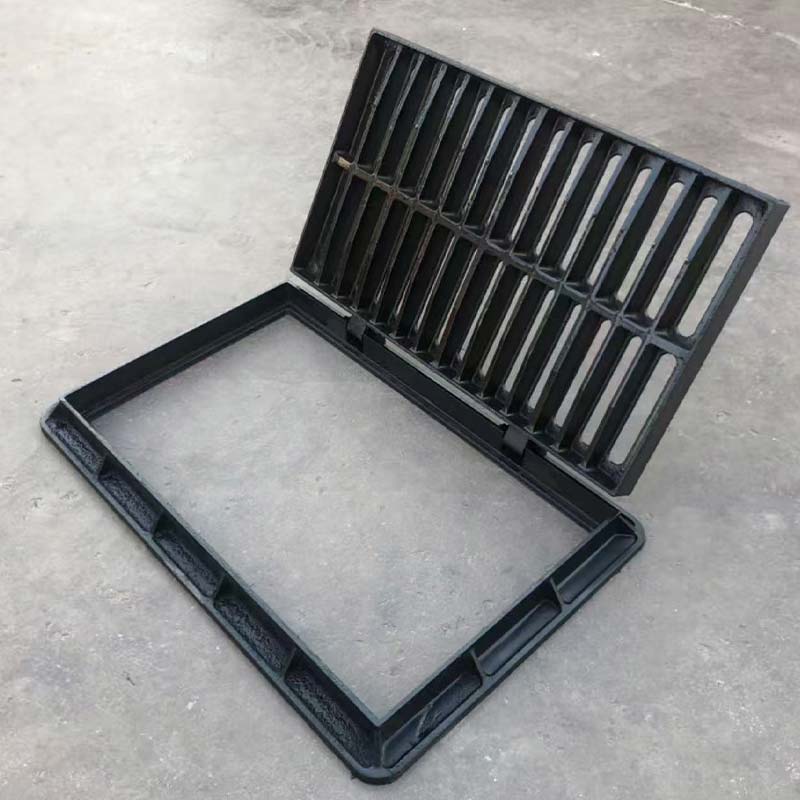
Ask for the actual clear-opening geometry on a dimensioned drawing. Nominal bar spacing, centre-to-centre pitch and clear slot width are different measurements. The drawing should identify the width, length, shape and any interruptions that divide an elongated opening. If slots taper through the casting, show the relevant section. A catalogue reference to narrow slots does not establish which part of the passage was measured or whether the geometry is consistent across the pattern.
Include perimeter gaps and spaces beside hinges or locks in the review where the applicable requirement covers them. A grate can have a compliant-looking main pattern and a different opening at its edge. Specify a measurement and acceptance method appropriate to the governing criteria rather than asking inspectors to judge by eye. The supplier response should make those features visible so a later revision or substitution cannot silently introduce an unreviewed opening.
Identify the route requirements before selecting a pattern
Locate the grate relative to accessible paths, crossings, entrances and other pedestrian movements. Determine the rules applicable to that surface and jurisdiction. The U.S. Access Board's floor and ground surface guide addresses openings and elongated-opening orientation within the ADA framework. Its relevance depends on the project context; it should not be cited as a universal rule for every drainage installation worldwide. Have the responsible designer establish the criteria to be placed on the procurement drawing.
Record whether users cross mainly in one direction or approach from several directions. Opening length and orientation may matter alongside width. Do not approve the design from the width alone while leaving the travel direction undefined. If the route could avoid the grate entirely, that arrangement still needs a designed and usable path. A space that appears on a site sketch is not enough to establish that people can safely bypass the openings in the finished environment.
Technical reference: U.S. Access Board guidance for surface openings.
Consider the real wheel and foot traffic at the location
Describe bicycles, wheelchairs, pushchairs, trolleys and other foreseeable users relevant to the site. A drainage strip near a loading door presents different operational interactions from an isolated landscaped inlet. Identify routes and crossing angles instead of inventing one representative wheel that supposedly proves safety for every user. The purpose is to help the designer apply the right requirements and evaluate the complete surface, including transitions and frame level.
If additional project-specific wheel passage requirements are proposed, define their basis and test method with the responsible reviewer. Avoid a supplier claim such as heel safe or bicycle friendly without an explanation of what it means for the offered pattern. Product labels can help identify intended applications, but cannot replace dimensions and applicable acceptance criteria. Keep the specification precise enough that another model can be assessed without relying on the same marketing vocabulary.
Evaluate water entry using the complete slot layout
Slot width affects geometry, but the total distribution, length and position of openings also influence the inlet assessment. Give the drainage designer the exact proposed pattern and its orientation relative to approach flow. Include gutter levels, local depressions and downstream conditions as required for the assessment. A narrower-slot pattern with a different overall size is not directly comparable to a wider-slot pattern simply by counting the gaps.
Ask what hydraulic evidence or model supports the proposal and which configuration it represents. If a supplier provides a flow value, obtain the test conditions and installed arrangement. Do not convert open area into a capacity without the appropriate basis. The project may need a different grate size, inlet layout or approved surface arrangement to reconcile its objectives. Resolve that design choice rather than instructing the supplier to make slots larger while assuming all other performance remains unchanged.
| Dimension or input | Why it cannot stand alone | Related review |
|---|---|---|
| Clear slot width | Length, orientation and edge gaps may also matter | Applicable surface-opening requirements |
| Total opening area | Does not define approach flow or interception | Hydraulic assessment of the installed layout |
| Nominal bar spacing | May describe pitch rather than clear width | Dimensioned casting drawing |
| Narrow-slot product label | Does not establish a measurable acceptance basis | Defined criteria and inspection method |
Include debris and cleaning in the geometry review
Consider the material likely to reach the grate and how it can accumulate across the proposed pattern. Leaves may blanket openings, packaging can bridge them and fine deposits can settle in recesses. Those observations do not justify a universal minimum width, but they help define maintenance and obstruction assumptions. Ask the operator whether its tools can clear the intended arrangement and whether it can access the underside or basket where debris may collect.
Keep maintenance feasibility distinct from capture claims. A pattern that retains more coarse material at the surface may need different cleaning, while a wider passage may transfer material downstream. The appropriate balance depends on the system objective. Document the expected operating method and any design assumption relying on it. Do not promise that a certain slot size eliminates blockage or reduces cleaning frequency without evidence for the actual catchment and maintenance arrangement.
Verify structural evidence for the selected opening pattern
Changing slot width or adding interruptions changes the casting geometry. Request evidence relevant to the complete offered assembly, including frame, supports and retention details where applicable. A report for another grate in the same material family does not automatically cover the new pattern. Identify the model, drawing revision and tested arrangement so the responsible reviewer can determine applicability. Keep structural and hydraulic acceptance separately traceable.
Do not permit field cutting, welding or filling of slots as an informal compromise. Such changes may alter support, durability and the basis of previous reviews. If an opening fails the applicable dimensional requirement, obtain a documented disposition and revised proposal. A surface coating or added mesh also requires assessment rather than being treated as a harmless accessory. It may change water entry, debris accumulation and the condition users encounter at the surface.
Specify tolerances and inspection with the functional requirement
A nominal dimension should be accompanied by the tolerances and acceptance method needed to preserve function. Let the responsible designer and supplier agree the appropriate detail using the governing requirements. Do not invent a generic casting tolerance and assume it satisfies an opening limit. Identify critical dimensions on the drawing so production and incoming inspection focus on the interfaces that matter rather than only the overall grate footprint.
For a first article or representative sample, verify the relevant openings and pattern against the approved drawing. Record the method, component identity and result. Inspect edge features and any location affected by the production finish. If a gauge or other check is specified by the applicable criteria, use that defined method. An undimensioned photograph can support identification, but cannot establish that a limiting opening requirement has been met across the assembly.
Freeze the coordinated pattern before the frame is installed
Shengxin's cast iron drain grate range provides a relevant enquiry route. Send the supplier the route plan, required opening criteria, hydraulic context and operating constraints. Request a drawing of the exact pattern rather than selecting from an unscaled image. Confirm the frame pairing and orientation before surrounding construction proceeds. The procurement schedule should identify the approved model and revision so an apparently similar alternative receives review before delivery.
At installation, check the actual pattern and orientation, finished levels and absence of construction material in the openings. Retain contextual photographs and the acceptance record with the asset. Later resurfacing or route changes can alter how the grate is crossed or how water approaches it, so preserve the reason for the selected arrangement. A coordinated specification remains useful through those changes because it records the requirements the slot geometry was chosen to satisfy.
Discuss the project requirements
Send Shengxin the route layout, opening requirements and inlet conditions. Request a dimensioned grate pattern and matching assembly evidence so the selected slot geometry can be reviewed before manufacturing and installation.
Related product information: Shengxin cast iron drain grate range. Share the applicable project documents through our contact page.
Project questions
Is slot width the same as bar spacing?
Not necessarily. Bar spacing may describe centre-to-centre pitch. Specify the clear-opening dimensions and the measurement convention on the drawing.
Does a narrow slot guarantee accessibility?
No. Apply the relevant route requirements to the complete opening geometry, orientation, perimeter gaps and finished surface.
Will wider slots always improve drainage?
They change geometric opening, but capture depends on the full pattern and installed flow conditions. Review the proposal using an appropriate hydraulic basis.
Can slots be widened after delivery?
Do not alter them without an approved disposition. Field modification changes the reviewed geometry and may affect structural, hydraulic and surface requirements.
What should a slot-width specification include?
State the clear dimensions, orientation, governing requirements, relevant tolerances, exact assembly reference and acceptance method, coordinated with drainage and maintenance needs.