

Table of Contents
A short-duration load test and a long-term deformation assessment answer different questions. For a composite manhole cover, a result showing that a new panel withstands a brief test does not, on its own, describe how it changes shape under sustained exposure. Procurement teams often encounter the term creep in technical submittals without enough detail to compare the evidence. The useful question is what was loaded, for how long, under which conditions and how the result applies to the offered assembly. This guide explains how to read that evidence without inventing a service life or assuming that all composite formulations behave alike.
Distinguish time-dependent deformation from immediate deflection
A cover deflects when a load is applied. Some response occurs immediately, while additional deformation may develop with time under sustained conditions. Those observations need to be separated in the report. The way deformation changes after unloading also matters to interpretation. A single final displacement value without a time history can hide the difference between the initial response, later movement and any residual change. Ask for the definitions and measurement sequence used by the test laboratory.
This distinction does not mean that every temporary load on a street cover is a sustained-load case. The responsible designer should identify the exposure that needs assessment, including any long-duration surface loading or restraint condition relevant to the project. Avoid applying a material creep result to an unrelated operational scenario without review. The purpose of the enquiry is to establish which long-term questions matter for this assembly and what evidence addresses them.
Identify the composite rather than relying on a family name
Composite is a broad description. Ask for the material system and production identification relevant to the offered product, together with the drawing revision and any embedded reinforcement or inserts. The supplier does not need to disclose proprietary formulation details to identify the tested product adequately. It does need a defensible link between the test sample and production. A report for an unspecified resin coupon cannot automatically support every panel in a catalogue.
Changes in reinforcement arrangement, thickness, ribs or manufacturing conditions can affect how evidence should be interpreted. Require the supplier to identify which changes trigger a new review. Keep appearance options separate from controlled structural details, while asking whether an option changes the tested material system. An approved sample should remain traceable through the order. Otherwise, procurement may receive a product with the same name but no demonstrated relationship to the evidence used for approval.
Read the environmental conditions beside the load history
Temperature, moisture and other relevant conditioning belong next to the load and duration in the review. A result obtained under one controlled environment should not be described as universal outdoor performance. Ask how the chosen conditions relate to the intended site. Where the project exposure differs, the responsible reviewer should decide whether the evidence remains applicable or whether further assessment is needed. Do not fill that gap with a generic claim that composites resist weather.
ASTM D2990 describes methods for assessing tensile, compressive and flexural creep and creep rupture of plastics under specified conditions. Its scope is useful when interpreting a cited material test. It does not turn any material result into certification of a complete manhole assembly. Confirm the method and edition actually used, the specimen details and the connection to the proposed design. Keep method compliance and product suitability as related but separate review questions.
Technical reference: ASTM D2990 plastics creep test scope.
Separate material specimens from complete-cover evidence
A coupon can help characterize material behaviour with a controlled shape and loading mode. A complete cover adds ribs, edges, lifting inserts, locks and a particular support interface. Those features affect how the panel behaves and functions. Ask whether the report concerns a material specimen, a component cut from a panel or the full assembly. Compare the relevance of each evidence type without dismissing useful material data or overstating what it establishes.
For a full-cover test, record the support span and contact arrangement. A panel continuously supported in a laboratory fixture may differ from an installation with defined bearing edges or interrupted support. Loading position and footprint should also be clear. If a family of sizes is covered by one representative test, request the technical basis for that extension. Do not assume the largest outside dimension is always the only feature that determines the least favourable configuration.
| Evidence item | Question it can address | Limit to check |
|---|---|---|
| Material-specimen creep report | Behaviour of the identified material under the stated method | Connection to the supplied panel and environment |
| Complete-cover sustained-load report | Response of the tested assembly and support arrangement | Span, loading, duration and sample identity |
| Post-test functional inspection | Whether specified operating features still function | Which features and acceptance criteria were checked |
| Long-term prediction | Expected behaviour within the modelled envelope | Assumptions, validation and extrapolation limits |
Ask for the time history and the acceptance criterion
Useful evidence shows when readings were taken, how the load was maintained and what changes were measured. Ask whether the reported value is total deflection, additional time-dependent deformation or residual movement after unloading. Include measurement accuracy and relevant setup details where the distinction matters. A plotted line without labelled axes or an undocumented final value is difficult to audit. The report should make the calculation and observation basis understandable to the responsible technical reviewer.
Acceptance needs a stated connection to the product's function. The project may be concerned with seating, surface continuity, lock operation or another serviceability requirement in addition to structural integrity. The reviewer should establish the relevant limits and conditions. Do not borrow a displacement limit from an unrelated panel or claim that any measurable movement is automatically a failure. Equally, survival without rupture does not necessarily establish that the assembly remains serviceable.
Keep extrapolated life claims within their demonstrated basis
Long-term performance claims may involve extrapolation beyond the actual observation period. Ask for the model, assumptions, validation and range over which the prediction is intended to apply. A short test followed by a long service-life statement needs more explanation than a simple multiplication of time. The responsible reviewer should assess the method and uncertainty. Avoid converting an estimated trend into a guaranteed lifespan for every traffic and environmental condition.
Request a clear distinction between directly observed results and modelled predictions. If multiple temperatures or loads were used, identify which data support the proposed application and whether the failure mode remains relevant. A purchasing team should not have to reconstruct that reasoning from marketing language. Record limits and outstanding questions in the submittal matrix. An unverified long-term claim should remain unverified until the required evidence is available and accepted.
Connect deformation evidence to seals, hardware and access
A cover is an access assembly, so shape change can matter even when no gross failure is visible. Review whether the evidence addresses continued seating, locking, opening and any specified seal engagement. These functions may depend on local geometry rather than only midspan displacement. Ask the supplier how the assembly was inspected after the relevant test and whether the hardware remained functional. Keep separate sealing requirements tied to their own evidence.
Plan field inspection around observable changes and the manufacturer's instructions. A maintenance crew should know how to report unusual rocking, binding or surface distortion without attempting an unauthorized repair. Do not instruct operators to flatten, heat or patch a composite panel to restore shape. The technical response needs to account for the material system and approved design. Preserve the component identification so a reported condition can be connected to its production and test history.
Build a reviewable decision instead of a yes-or-no material verdict
A useful assessment states the intended exposure, evidence reviewed, differences from the project and the resulting decision. It may accept a defined configuration, require additional information or reject a particular proposal. That is more informative than claiming that composite covers do or do not creep as a universal category. Different products and conditions need their own review. Keep the approval basis available for future substitutions and changes in service use.
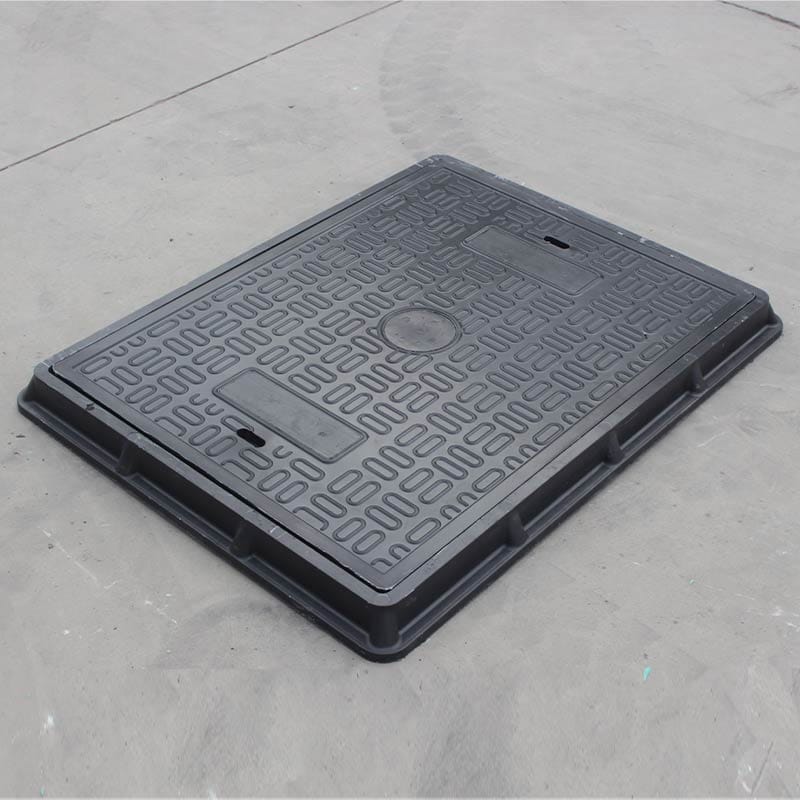
When discussing a Shengxin composite cover, provide the support detail, expected surface use and any long-duration exposure that the designer considers relevant. Ask for the exact product drawing and available material or assembly evidence. The square composite cover page identifies a product family, while time-dependent performance must be confirmed for the offered configuration. Do not infer a lifetime, deflection limit or certification from the product image or a general durability statement.
Discuss the project requirements
Send Shengxin the proposed support arrangement and the project's long-term performance questions. Request the exact material and assembly identification for any available evidence. Have the responsible designer compare its conditions and limits with the intended installation before approving the cover.
Related product information: Shengxin square composite cover. Share the applicable project documents through our contact page.
Project questions
Does passing a short load test establish long-term deformation performance?
No. Review the time-dependent question separately and ask which evidence applies to the intended exposure, material and assembly.
Can one composite formulation represent all resin covers?
Do not assume so. The material system, geometry, reinforcement and manufacturing controls need a documented relationship to the offered product.
Is ASTM D2990 a complete manhole-cover certification?
No. It addresses specified plastics creep test methods. A cited material result still needs interpretation for the complete cover, support arrangement and project requirements.
Should any measured deformation cause rejection?
The responsible reviewer should apply the relevant acceptance criteria. Distinguish immediate response, time-dependent change, residual deformation and the assembly’s required functions.
What should be done with an unsupported lifespan claim?
Request the observed data, model and applicability limits. Keep the claim unverified until the project has accepted a defensible basis; do not substitute an invented service-life figure.