

Table of Contents
Drain grate lock selection should account for the condition in which the lock will be used: outdoors, often wet or dirty, and sometimes during an urgent report of blocked drainage. A mechanism that works cleanly on a bench may be difficult to reach or release once grit fills its recess and cleaning equipment occupies the work zone. The owner needs a defined retention objective and a practical service sequence. This guide focuses on the operational details that distinguish a maintainable locked inlet from one whose security hardware is repeatedly omitted or improvised around when cleaning becomes urgent.
Write the cleaning scenario before comparing mechanisms
Identify the crew that responds to an inlet obstruction and the equipment it normally brings. Describe how the location is accessed, how the work zone is established and what authorization is required. Include out-of-hours arrangements if they are part of the owner's service model. The lock should be assessed within that actual process. A catalogue's quick-opening description says little about whether the responding contractor has the compatible tool or can reach the mechanism safely.
Keep urgency separate from permission to work in unsafe conditions. A report of ponding does not authorize crews to enter uncontrolled water or open a grate without the owner's required controls. The operational brief should identify the response and escalation process, while the hardware review checks whether the physical release can support it. Avoid claiming a universal acceptable opening time. The meaningful requirement is a reliable sequence that the responsible team can carry out under the site's approved arrangements.
Define what the lock must secure
Clarify whether the objective is to discourage casual removal, restrict unauthorized access or provide another specifically defined function. A lock, a captive hinge and a retaining clip may address different actions. Do not compare them only by the generic label anti-theft. If the project requires an engineered restraint against a defined load or uplift condition, state that separately and obtain matching evidence for the complete assembly.
Ask which component is secured and how engagement occurs. Some arrangements restrain the grate to the frame, while others control a separate access feature. The proposal should identify the actual load and operating path without relying on an unscaled photograph. This allows the owner to select only the functions it needs and to understand the maintenance obligations attached to them. More complex hardware is not automatically a better match for a litter-prone inlet.

Inspect the key recess as a debris-collecting surface
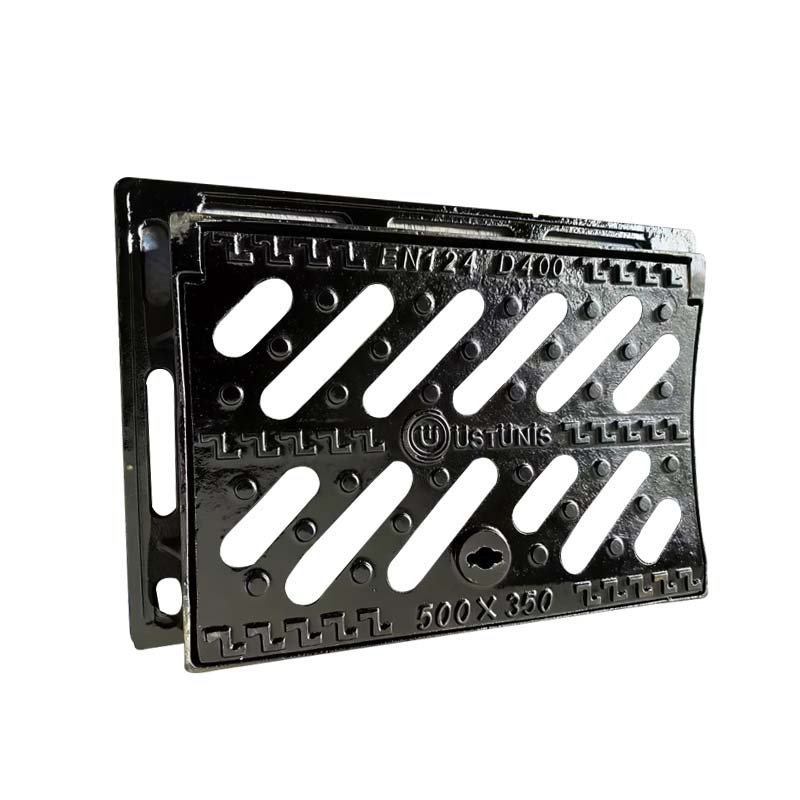
Locate the release point relative to the gutter, grate openings and local low spots. Ask how grit, leaves and wash water can reach it and how the operator is expected to clean it before engagement. A recessed feature can protect a mechanism while also making access difficult when deposits accumulate. Review the actual geometry with the maintenance team rather than assuming the recess will remain as clean as a product sample.
Obtain the permitted cleaning method and any restrictions. Do not plan to clear the lock by striking it, heating it or applying unspecified chemicals. Such actions may damage the mechanism and obscure a developing defect. If a cap or other protective part is included, identify how it is retained and replaced. A protection feature that is routinely lost or cannot be opened with the intended tool needs an operational solution before the wider batch is purchased.
Test the tool interface in the installed position
Confirm the exact tool reference and the space needed to engage and operate it. Check nearby curbs, walls, frame recesses and parked-equipment constraints. The tool may need movement beyond its insertion footprint. Include the final surface level, because resurfacing or an overfilled surround can reduce access. Do not assume that a standard-looking key from another contractor's van is compatible merely because it enters the recess.
Separate release from lifting. If one tool is intended to perform both actions, obtain explicit model-specific instructions. Otherwise plan the transition between tools while the grate remains controlled. Record where tools are held, who can access spares and how replacements are identified. A lock selection is incomplete when it specifies only the mechanism and leaves the essential operating tool outside the order and the maintenance inventory.
| Service-stage question | Detail to compare | Evidence from the trial |
|---|---|---|
| Can the release point be reached and cleaned? | Recess position and approved cleaning method | Access with the final surrounding surface |
| Can the intended tool operate? | Tool identity and movement envelope | Engagement and controlled release |
| Can accessories be serviced? | Latch projections, basket and loose parts | Complete cleaning setup and extraction sequence |
| Can closure be verified? | Seating and engagement checks | Operator-restored final assembly |
Coordinate release with baskets and other inlet accessories
Show the lock, latch or bolt beneath the grate on an installed section. Check interference with a basket, rails, handles and the planned cleaning equipment. A mechanism can release correctly while still projecting into the basket's extraction route. Ask whether any accessory needs to move first and whether that sequence is possible while the grate remains locked. Resolve circular dependencies on paper, rather than expecting crews to force one component past another.
Check whether normal release produces loose parts. If bolts, caps or other pieces are detached, define their retention and storage through the visit. Small parts can be lost into a basin or omitted during urgent restoration. The supplier should describe the intended complete operating sequence. Do not treat an improvised wire, substitute bolt or permanently removed latch as an acceptable long-term response to a difficult accessory interface.
Plan the maintenance operation around clear information
HSE's guidance on maintaining work equipment emphasizes planned work, competent personnel, suitable instructions and safe access. Use the applicable workplace requirements and the owner's procedures when reviewing the locked inlet. The lock's release instruction should fit within the broader cleaning method, with responsibilities clear where contractors are involved. Product hardware does not itself establish traffic management, open-inlet protection or confined-space authorization.
Give the crew a defined response when the lock will not release normally. The escalation should identify who can arrange an approved alternative method and how the affected area is controlled meanwhile. Avoid making greater force the default response. A failed release can involve contamination, corrosion, damaged tools or an incompatible part. Preserving observations and obtaining a disposition is more useful than damaging the interface until the original cause becomes uncertain.
Technical reference: HSE guidance on planned equipment maintenance.
Specify restoration as carefully as opening
After cleaning, the grate needs to return to its intended seat and the lock needs to engage correctly. Ask how the operator verifies both conditions. A mechanism can appear closed while its latch is not in the required position, and a locked grate can still be obstructed at its bearing surface. The acceptance and maintenance instructions should distinguish these checks rather than treating a turned key as proof that the entire inlet is restored.
Record missing or damaged hardware and follow the owner's disposition process. Do not leave the record saying cleaning complete if the retention function remains unverified. If temporary arrangements are authorized, identify their scope and responsible person. The long-term aim is a repeatable closure process that survives wet tools, poor light and contractor changes through appropriate planning, rather than an informal expectation that every operator will recognize an incomplete engagement by feel.
Use a representative service trial to compare options
Demonstrate each shortlisted arrangement with the intended crew and tools in a representative site layout. Include access to the release point, opening, accessory removal where relevant, cleaning-equipment setup and verified closure. Use conditions appropriate to the agreed assessment without damaging or deliberately compromising the mechanism. Record which practical constraints were represented and which remain to be resolved. A clean bench trial can verify one interface but should be labelled accordingly.
Compare the support needed to keep the system operable, including tools, replaceable parts and servicing instructions. Do not invent lifecycle savings or theft-prevention rates. State observable differences such as an inaccessible recess, a loose component or a documented tool requirement. Those findings give procurement concrete reasons for a choice and allow the supplier to address a particular problem instead of responding to a vague complaint that the lock is inconvenient.
Retain a lock schedule the drainage team can use
Shengxin's cast iron drain grate range provides a relevant route for a locking-configuration enquiry. Send the retention objective, inlet section and actual cleaning method. Request the proposed lock, tool and service-part references along with the available assembly evidence. Confirm the offered option in writing; a general grate photograph does not establish every locking feature or its compatibility with an existing frame.
At handover, link each locked inlet to its configuration and maintenance instructions. Review repeated difficult releases, missing tools or omitted parts as operating evidence. The remedy may involve a part, a training issue, an access constraint or a reviewed design change. Do not normalize disabling the lock to make cleaning easier. A sound selection gives the owner a security function that the drainage team can operate and restore using a defined, supportable process.
Discuss the project requirements
Send Shengxin the inlet section, retention requirement and cleaning-equipment details. Request a locking arrangement with its tools and restoration checks, then review a representative service trial with the drainage team before accepting the final option.
Related product information: Shengxin cast iron drain grate range. Share the applicable project documents through our contact page.
Project questions
Should the fastest-looking lock be selected for a drain grate?
Compare the actual service sequence with the intended crew and site constraints. A bench impression does not establish reliable access to a dirty, installed inlet.
Does every anti-theft feature provide the same function?
No. Locks, clips and captive hinges may address different actions. Define the required function and request evidence for the exact arrangement.
Can key recesses be cleaned with any available chemical?
Use the approved method and compatible materials. Unspecified chemicals or aggressive tools can damage the mechanism and complicate diagnosis.
What must be checked after cleaning?
Verify the grate’s intended seating and the lock’s engagement separately, with accessories returned to their approved positions.
What should the lock schedule contain?
Link each asset to the mechanism, tool and spare-part references, operating instructions, servicing requirements and the response to a failed release.