

Table of Contents
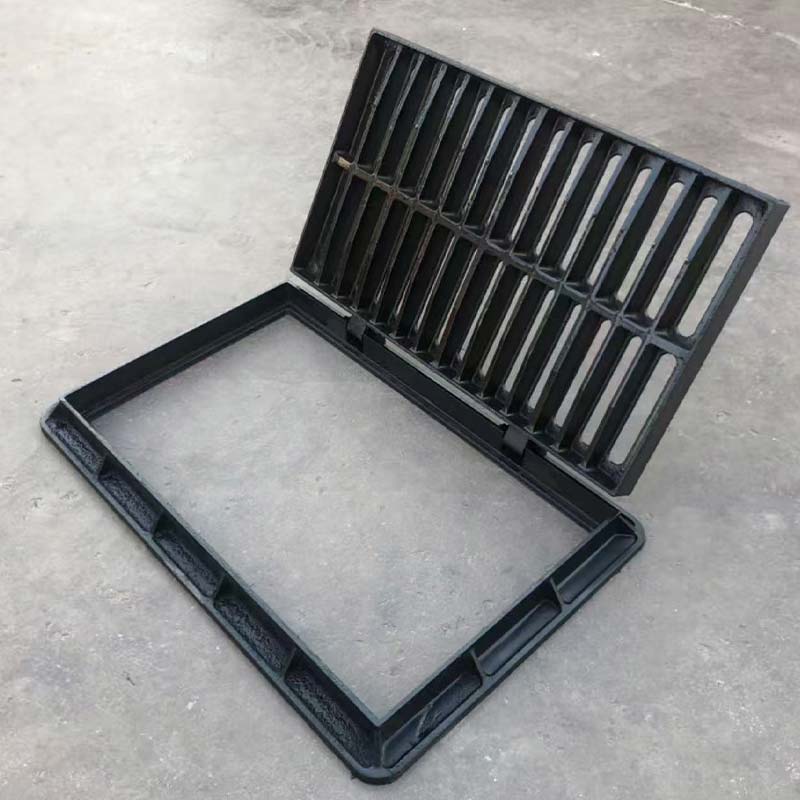
Hinged drain grate clearance is more than the space needed to raise the leaf. A cleaning crew may need to feed a hose through the opening, extract a basket and work beside a retained-open grate without interfering with its hinge or restraint. A demonstration of an empty grate opening in a yard can miss all those tasks. This guide focuses on the maintenance working space around and beneath the open leaf, helping owners coordinate inlet hardware with the equipment that actually services the drainage system.
List what must pass through the open inlet
Start with the maintenance method, not a preferred hinge position. Identify the hose, suction head, inspection equipment, basket or other item that must enter or leave the inlet. Record the relevant operating envelope supplied by the equipment owner. A nominal hose diameter may not describe a rigid connector or head. Likewise, a basket's upper flange or handle can govern extraction even when its body is narrower. The opening must suit the complete object in the way it is intended to move.
Separate routine surface servicing from tasks requiring a different work arrangement. Do not enlarge the assumed scope simply because an opening exists. The service owner should identify authorized procedures and any entry or operational restrictions. The clearance review then asks whether those procedures can be carried out with the selected grate, rather than implying that a physically open inlet makes every maintenance action acceptable.
Draw the clear opening with the leaf retained in service position
Obtain a section showing the hinge axis, underside projections and the specified retained-open position. Measure the remaining usable aperture and overhead space in that state. A leaf may clear the frame while its lower edge or hinge still projects into the removal path. Include any latch used to hold the grate open. The relevant geometry is the installed operating configuration, not an idealized position that the model does not permit.
Check intermediate movement where a basket or tool might contact the leaf as it opens. Confirm whether the operator must move equipment away before releasing or closing the grate. Draw those steps if they are not obvious. Avoid specifying a universal opening angle as the solution. The model's permitted motion, site obstructions and maintenance equipment should determine whether the proposed arrangement provides sufficient working space under the approved procedure.
Check the hose route rather than only the hose entry point
Trace the hose from the service vehicle or equipment to the working opening and into its intended position. Identify bends, rigid couplings and locations where the hose could bear on an edge or contact a retention feature. The equipment owner should define the permitted handling and bend conditions. Do not assume that a flexible hose can be routed through any gap simply because the gap is wider than its outside diameter.
Review the movement during cleaning, not just the initial setup. The crew may reposition the hose, withdraw a head or change direction. Those movements should not require leaning equipment against the open leaf or using the hinge as an unapproved guide. If the intended task occupies the space needed to keep the grate controlled, revise the layout or method. A clearance that exists only when no work is happening is not useful maintenance clearance.
Overlay the basket's loaded extraction path
Where a basket is fitted, show its handles and supports in the installed section. Trace extraction through the remaining aperture with the grate held as intended. A basket that clears when tilted may spill or interfere with the hinge when loaded; the owner needs a handling assessment for the actual method. Do not infer safe removal from the fact that the empty basket was originally lowered into place.
Confirm whether supports, rails or clip hardware need to be released during extraction and how those parts are restored. An apparently convenient hinge orientation can leave a handle trapped beneath the leaf. Conversely, moving the hinge to solve that issue may conflict with a curb or traffic arrangement. Coordinate the whole interface before ordering. The basket and grate suppliers need the same installed drawing so each does not assume that the other's component occupies no space.
| Maintenance movement | Potential obstruction | What to demonstrate |
|---|---|---|
| Cleaning head enters inlet | Rigid fitting against leaf or frame | Actual equipment route in working position |
| Basket leaves supports | Handle or flange beneath hinge | Complete approved extraction path |
| Operator releases restraint | Curb, wall or tool conflict | Standing position and compatible tool movement |
| Equipment is withdrawn and grate closes | Remaining hose or inaccessible latch | Controlled restoration sequence |
Reserve the operator's position and equipment approach
Mark where the operator stands during release, opening, cleaning and closure. Include the space needed for the actual tool and any handling aid. A curb, wall or parked vehicle can force a longer reach even though the leaf itself opens freely. Consider the final street or yard layout, not just the construction-stage photograph. Temporary storage, bins and landscaping can also become recurring obstacles if the operating zone is never identified in the asset information.
HSE's work-equipment maintenance guidance emphasizes planned maintenance, suitable information and safe access and working space. Apply the rules relevant to the actual workplace and task. Use that perspective to review the crew's position with the maintenance contractor. The supplier can show the hardware envelope, but the owner needs to establish the usable work zone and any closure or traffic arrangements required to make it available.
Technical reference: HSE guidance on maintenance access and working space.
Keep the open leaf controlled while equipment moves
Identify how the grate is retained in its permitted service position and how that feature is inspected and released. Check whether cleaning equipment can contact the restraint or prevent it from engaging fully. A hinge that keeps the leaf attached is not automatically a hold-open device. Obtain the exact operating instructions and avoid treating an improvised prop as the normal arrangement. Any assistance or restraint should be a reviewed part of the system.
Plan the transition to closure. Equipment may need to be withdrawn and the working aperture cleared before the operator releases the retained-open feature. The sequence should keep people and tools out of pinch zones and preserve control. Do not write detailed improvised manoeuvres into a generic article; the owner's competent task assessment should define them for the actual model. The procurement review should establish that the necessary physical space and approved hardware exist.
Inspect construction interfaces that can reduce clearance
Review where pavement, bedding, jointing and curb work meet the hinge and frame. These materials can fill recesses or restrict travel if the installation detail is not followed. Identify the features that must remain exposed and the dimensions to check before concealment. A model can have adequate design clearance and still bind after an overly generous surround is placed. Keep the installation crew's drawing consistent with the operating envelope reviewed by maintenance.
Check final levels and orientation before the frame is permanently surrounded. A hinge installed on the wrong side may require a significant correction once the surface is complete. Mark the intended position using a stable site reference. If the actual inlet differs from the measured geometry, obtain a disposition before rotating the frame or altering hardware. Unapproved cutting or grinding can change more than the clearance that first drew attention.
Use a task demonstration to identify the governing obstruction
Choose a representative inlet and perform the authorized maintenance sequence with the actual tools, basket and cleaning equipment. Record what passes easily, what requires a change and which conditions were not represented. A trial should test the most consequential interfaces, not simply provide a photograph of a fully open grate. Include release and restoration of every normal accessory so the accepted arrangement is the one crews will use.
If an obstruction is found, identify whether it comes from the grate, basket, support, equipment or site layout. That distinction guides the remedy. Avoid changing several features informally and then reporting that access improved without documenting the final configuration. A revised drawing and repeat of the affected step provide a clear basis for acceptance. The remaining operation need not be retested without reason if it was unchanged and already verified adequately.
Record the clearance conditions that the operator must preserve
Shengxin's cast iron drain grate range provides a relevant starting point for a hinged-configuration enquiry. Send the installed section, cleaning-equipment envelope and basket arrangement with the request. Ask for the exact operating geometry, restraint detail and maintenance instructions for the proposed model. Confirm the option in writing rather than assuming a general product photograph establishes every hinge feature.
At handover, retain the accepted task layout and any space that must remain available. Review changes to street furniture, equipment or basket design against that record. The clearance decision should remain useful after the original contractor leaves. A well-coordinated hinged grate gives crews a defined way to service the inlet and return it to its approved state, with enough room for the task instead of merely enough room to raise the leaf.
Discuss the project requirements
Send Shengxin the inlet section and the envelopes of your cleaning equipment and basket. Request a hinged assembly drawing that the maintenance team can review against the complete task before the frame orientation and order are fixed.
Related product information: Shengxin cast iron drain grate range. Share the applicable project documents through our contact page.
Project questions
Is the maximum opening angle enough to specify clearance?
No. Check the usable aperture, projections, restraint, operator space and equipment movement in the permitted working configuration.
Can a basket fit beneath the grate but still be difficult to remove?
Yes. Handles, flanges and the open leaf can obstruct extraction. Review the complete path and loaded handling method.
Should the open grate support the cleaning hose?
Do not assume it is designed for that use. Review the intended equipment route and avoid using hinges or restraints as unapproved supports.
What should a first-installation trial include?
Use the actual release tools, cleaning equipment, accessories and restoration steps in the finished or representative site constraints.
When should clearance be reviewed again?
Review changes to baskets, tools, cleaning equipment, street furniture, surrounding construction or the maintenance method that affect the accepted working envelope.