

Table of Contents
Round manhole cover seating problems often appear as a small rocking movement, a visible gap or a lid that needs repeated attempts to close. Those symptoms do not identify one cause. Debris, the wrong lid, damaged contact surfaces, a displaced insert or movement of the frame can produce superficially similar results. For an asset owner, the immediate need is to control the affected location and preserve enough evidence to make a sensible repair decision. This guide develops an inspection sequence that separates removable contamination from component and installation defects without hiding them beneath packing or unapproved grinding.
Record the symptom before disturbing the assembly
Identify whether the complaint concerns a visible level difference, movement under contact, difficult closure or noise during use. Record the location and the lid's orientation as found. Photograph the whole frame, surrounding pavement and relevant close views with a scale where useful. Do not ask workers to demonstrate movement by standing in traffic or exposing themselves to an unstable cover. Secure the location under the owner's procedure before opening or examining the assembly.
Observe the frame relative to the road as well as the lid relative to its seat. A cover can sit properly inside a frame that has tilted, while an otherwise level frame can contain a lid bearing unevenly. Distinguishing those conditions changes the repair enquiry. Keep initial observations separate from later findings after cleaning or removal. Once the seat has been disturbed, a description of the original condition becomes difficult to reconstruct from memory.
Confirm that the lid belongs to the frame
Collect available identification from both components and compare it with the asset record, supplier drawing and replacement history. A round lid that drops into an opening is not necessarily a compatible replacement. Seat profile, depth, hinge position, restraints and contact details may differ between visually similar models. Ask the original supplier or responsible technical reviewer to confirm pairing where identification is incomplete. Diameter alone is not enough to approve continued use.
Inspect whether a previous maintenance visit could have mixed lids from adjacent assets. Similar surface patterns can disguise different underside geometry. Record any uncertainty and avoid forcing the lid into place to make it appear usable. If substitution has occurred, the owner needs a controlled disposition for the complete assembly. Retaining an unsuitable frame merely because the new lid nearly fits can preserve the very condition that caused the complaint.
Clean only by an approved method and preserve findings
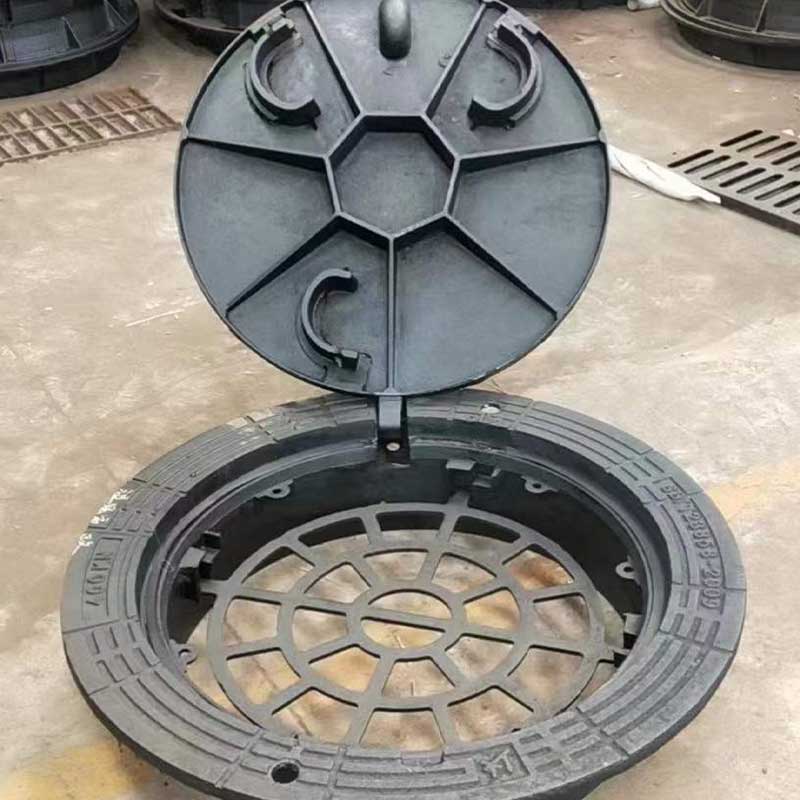
After safe removal, inspect the seat for stones, hardened mortar, asphalt, corrosion products and other material that can prevent contact. Photograph significant deposits before cleaning if their location helps explain the symptom. Use the cleaning method appropriate to the assembly and any resilient insert. Do not damage the profile with aggressive tools or assume that every raised feature is unwanted contamination. A moulded stop or designed contact point should not be removed to create a visually continuous ring.
Record what was removed and whether ordinary cleaning restored the intended operation. A successful cleaning result still needs a check of closure, restraint and surrounding condition. If the lid remains unstable, continue the investigation rather than repeating progressively harsher cleaning. Avoid lubricants, adhesives or sealants that the supplier has not approved. They may alter friction, attract debris, affect an insert or make later examination of the contact surfaces less informative.
Inspect contact geometry without assuming continuous bearing
Obtain the model's intended seating arrangement before judging the pattern. Some assemblies use defined contact features or replaceable inserts rather than a simple continuous metal ring. Compare the lid and frame with the drawing and look for fractured, missing, worn or deformed features. Describe observed damage precisely. A bright patch can indicate contact, but its appearance alone does not quantify load distribution or establish an acceptable bearing pattern.
Where a specialist contact check is required, use the supplier's or responsible engineer's method and acceptance basis. Do not create a universal gap tolerance or use a general workshop technique as proof of field suitability. Record the condition of both mating parts because damage on one can affect the other. The aim is to understand the functioning interface, not to make the surfaces look uniform by removing evidence or material.
| Finding | Next check | Avoid |
|---|---|---|
| Hard deposit on seat | Approved cleaning and closure recheck | Grinding unidentified raised features |
| Lid and frame identities differ | Model pairing and replacement history | Accepting fit based on diameter alone |
| Insert folded or displaced | Correct part and retention detail | Adding unapproved strips or packing |
| Frame movement or distortion suspected | Support and installation assessment | Ordering only a heavier lid |
Check inserts, seals and hardware as distinct components
A displaced resilient insert can hold one side of a lid above its intended seat. Confirm the correct part reference, profile and retention method. Look for folds, debris beneath the insert, missing sections or unapproved replacements. Do not cut a seal shorter or add a second strip as an informal adjustment. If the part has deteriorated, ask whether replacement is a permitted maintenance operation and what inspection of the metal surfaces is needed before fitting it.
Check hinges, locks and bolts for interference with closure. A latch that contacts the frame too early can make the lid feel seated while it remains lifted locally. Confirm that hardware is in the prescribed position and uses the intended components. Seating, sealing and locking are related but separate checks. A lock that engages does not establish that the lid bears correctly, and a lid that appears level does not prove that a required seal has the intended compression.
Investigate frame movement before ordering a different lid
Inspect the frame and surrounding support for cracks, separation or visible movement under the owner's approved assessment method. If the frame is no longer in its intended geometry or position, the enquiry needs an installation review. A new lid cannot rebuild support beneath a moving rim. Where hidden support cannot be evaluated from above, record the limitation and define the further investigation required. Avoid declaring the bedding sound based only on an undamaged patch of pavement.
NYC DEP's sewer and water specifications provide an example of an owner addressing frame-and-cover work together with associated supporting construction. The relevant local specification and exact manufacturer's instructions still govern the project. Use that complete-installation perspective when choosing a repair boundary. Identify whether the remedy concerns the lid, paired components, bedding or a wider structural condition, and obtain technical approval before surrounding works hide the affected interface again.
Technical reference: NYC DEP sewer and water construction specifications.
Use a controlled disposition rather than improvised packing
Classify the finding and record the approved action: cleaning, a compatible service part, a complete replacement or further investigation. State who authorized the disposition and which evidence it relies on. An unapproved shim may temporarily reduce rocking while changing contact and allowing the underlying defect to remain. Grinding can remove material from the seat and invalidate the intended pairing. Neither should become the default solution because it produces a quieter demonstration at handover.
If a replacement assembly is needed, provide the measured opening, frame details and installation context with the enquiry. Shengxin's round cast iron cover page offers a relevant starting point, while compatibility and suitability need confirmation for the specific proposal. Ask for the complete drawing, intended bearing arrangement and applicable evidence. Do not use a general product photograph as proof that a new loose lid will match a retained frame of uncertain identity.
Verify closure and retain evidence for the next inspection
After the approved intervention, check the full operating sequence with all inserts and hardware installed. Verify the intended seating behaviour, closure and restraint using the applicable instructions. Compare the frame and surrounding levels with the original observations where those were relevant. Record any remaining uncertainty or defect needing follow-up. A photograph of a closed lid without the inspection result cannot demonstrate that the original movement has been resolved.
Keep before-and-after photographs, component references and the repair disposition with the asset. If the complaint recurs, compare the new condition with those records before repeating the same remedy. A pattern of displaced inserts may require a different review from repeated contamination after resurfacing. The record should make that distinction possible. A successful seating investigation produces both an operable assembly and a defensible explanation of why the selected action addressed the observed problem.
Discuss the project requirements
Send Shengxin the lid and frame identification, seat photographs and measured opening details. Request advice on a compatible complete assembly or approved replacement parts, and resolve any frame-support concern before placing a lid-only order.
Related product information: Shengxin round cast iron manhole cover. Share the applicable project documents through our contact page.
Project questions
Can a round lid rock even when its diameter is correct?
Yes. Compatibility includes the seat profile, depth, inserts and hardware. Debris or damage can also prevent the intended contact.
Should rocking be corrected with a shim?
Only if a specifically approved design calls for it. Improvised packing can alter load transfer and hide a component or support defect.
Is a small visible gap always a defect?
Interpret the gap using the intended model geometry and acceptance requirements. Some features are deliberate, while other gaps indicate contamination, interference or damage.
Does locking the lid prove it is seated?
No. Verify seating and locking separately. Hardware can engage while the lid is locally lifted or bearing incorrectly.
What should accompany a replacement enquiry?
Include component identification, seat and frame photographs, measured dimensions, support observations and the approved repair boundary. Ask for compatibility confirmation for the offered assembly.