

Table of Contents
Composite manhole cover UV exposure is difficult to evaluate from the phrase UV resistant alone. A buyer needs to know which material was assessed, under what exposure and which properties were examined afterward. A cover that retains an acceptable colour has not automatically demonstrated unchanged structural behaviour, and an accelerated exposure duration is not automatically a number of years in the street. This guide helps technical buyers build a focused outdoor-ageing evidence request for a proposed composite cover while keeping appearance, material testing and complete-assembly suitability distinct.
Describe the outdoor exposure the project actually presents
Identify where and how the cover will be installed. An exposed plaza, a partly shaded service lane and a covered plant area do not present identical weathering conditions. Describe sunlight exposure, wetting, temperature context, surface contamination and cleaning practices without inventing a universal outdoor severity rating. The objective is to give the supplier and reviewer a useful service description, not to predict material degradation from a few site photographs.
Include foreseeable changes where they are relevant. A cover initially shaded by temporary works may later receive direct sun, while a future pavement coating could alter its surface condition. Keep established project requirements separate from uncertain scenarios. If the owner needs a particular design life or appearance retention, state that requirement explicitly and ask what evidence supports it. Do not allow a commercial warranty statement to become the only description of expected outdoor performance.
Identify the tested material and surface construction
Request enough material and manufacturing identification to link the evidence to the offered cover. The resin system, reinforcement, pigment and protective surface construction may all be relevant to the comparison. The supplier need not disclose proprietary formulation details publicly, but it should provide a controlled means of demonstrating that the tested configuration represents the proposed product. A report for an unidentified composite sample cannot establish applicability merely because the offered lid is also described as FRP.
Ask whether the weathering assessment used a coupon, a surface layer, a moulded section or a complete cover. Record specimen preparation and any difference from production. A machined coupon may expose a different surface from a finished moulded lid; a coating test may address only the coating. Those distinctions do not make the evidence useless, but they define what it can support. Keep them visible in the approval record rather than presenting every material test as a complete-assembly qualification.
Read the weathering method and conditions before reading the hours
Obtain the test method, edition, exposure equipment or outdoor location, specimen orientation and reported conditions. For accelerated testing, identify the light source and the wetting or temperature cycle as applicable to the method. For outdoor exposure, identify the location and observation period. A duration without its conditions is difficult to interpret and cannot support a fair ranking between reports that used different exposure arrangements.
ASTM's public description of its outdoor weathering practice for plastics explains that location and climate affect the interpretation of outdoor durability results. Use the relevant method and competent review to decide how evidence relates to the project. Do not assume that one location or one short exposure represents all service environments. The procurement question is whether the evidence is relevant and sufficiently complete for the intended use, with any limitations recorded rather than concealed by a headline exposure number.
Technical reference: ASTM outdoor weathering practice for plastics.
Choose the properties that need to remain acceptable
Define what the owner needs to know after exposure. Colour, gloss, surface condition and visible cracking may address appearance or inspection concerns, while mechanical performance requires appropriate property measurements and acceptance criteria. Ask which properties were measured before and after exposure and how the specimens were conditioned. A statement that there was no obvious visual change cannot by itself establish the retained performance of the complete cover under its service loading.
Set acceptance requirements through the project specification and responsible technical review. Do not invent a universal allowable percentage loss for every composite system or treat the absence of a stated failure as a passing result. Where only appearance data are available, describe that limitation accurately. The supplier may be able to provide further evidence, propose a different surface construction or explain the basis of its recommendation. The buyer should know which of those routes is supporting the decision.
| Evidence offered | Useful interpretation | Limit to clarify |
|---|---|---|
| Colour change after exposure | Appearance response of identified specimens | Does not alone establish retained structural performance |
| Material property comparison | Change in specified properties under stated conditions | Specimen relevance to the production cover |
| Accelerated weathering duration | Exposure completed using a defined method | No automatic conversion to years outdoors |
| Outdoor service photographs | Visible condition at a documented site and time | Exposure history and hidden properties remain uncertain |
Avoid converting accelerated exposure directly into field years
Ask the supplier how any claimed relationship between laboratory exposure and outdoor service was established. Different conditions and degradation mechanisms can affect that relationship. A simple conversion printed in a sales presentation is not a substitute for relevant validation. If a service-life statement is offered, request its scope, assumptions and supporting work. Distinguish a prediction from a warranty obligation and from a demonstrated period of field use.
Be particularly careful when comparisons involve different formulations or surface systems. A test that ranks two materials under one exposure may not establish the same ranking under every climate and maintenance practice. Avoid declaring that a specified number of test hours guarantees a fixed number of years for the project. A defensible decision can acknowledge uncertainty while still selecting a product on relevant evidence, installation requirements and an appropriate inspection plan.
Connect surface weathering with the installed assembly
Review the whole lid and frame arrangement separately from the material ageing results. Outdoor exposure can coincide with traffic wear, impact, water and cleaning, yet a weathering test may not reproduce those combined conditions. Check the scope of structural evidence, lifting inserts, locks and replaceable seals for the offered configuration. A weathering report for the resin does not automatically establish the durability of metal accessories or the long-term operability of the assembled access point.
Consider whether the specified finish is part of the assessed construction. Adding paint or another surface treatment after approval may change appearance and maintenance requirements and may conceal later inspection signs. Ask for written compatibility and repair guidance before making such changes. If the owner expects recoating or renewal, identify when and how it is assessed. Avoid describing an unspecified coating as a universal solution to outdoor ageing without evidence for its use on the actual cover.
Review reports with traceable questions for the supplier
Build a short evidence schedule identifying the report, laboratory, specimen, exposure method, measured properties and relationship to the proposed model. Check dates and drawing references, and ask about production changes since testing. A report issued before a formulation revision may need a relevance explanation. If data are incomplete, record the open point and responsible reviewer instead of filling the gap with an assumption that all products from the same family behave alike.
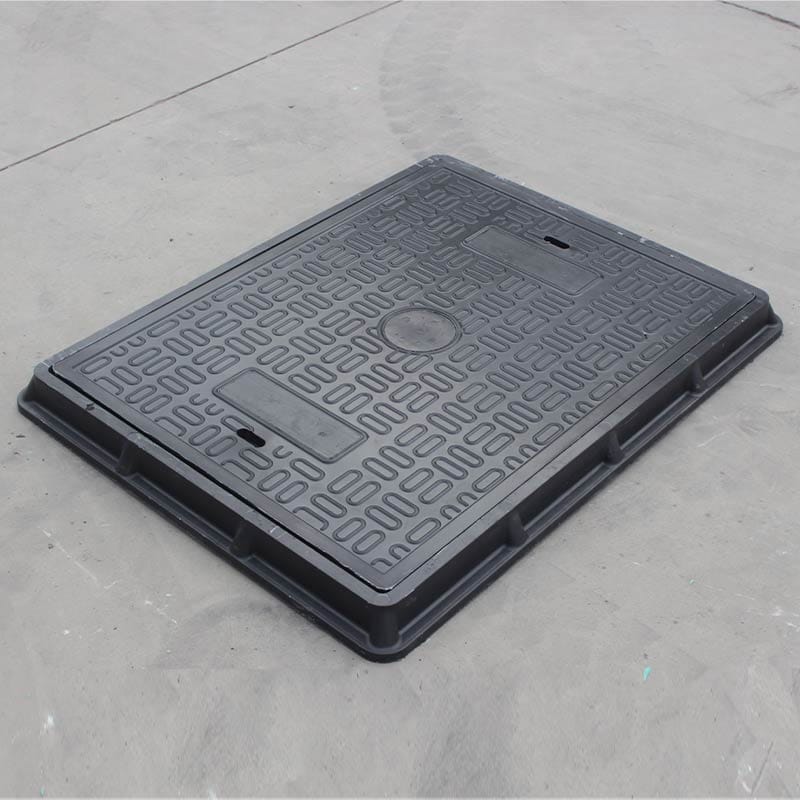
Shengxin's round composite manhole cover range gives buyers a relevant starting point for discussing an outdoor proposal. Provide the exposure description and required evidence with the enquiry. Ask what is available for the exact configuration and which claims remain subject to confirmation. Website photographs and general descriptions can identify the product family, but they do not prove retained properties after weathering. Keep the technical acceptance tied to documents and inspection evidence that can be traced.
Create a baseline for service inspection without predicting failure
At installation, record the model, batch identification where available, approved surface construction and clear photographs under documented conditions. Note the initial condition of exposed surfaces, edges, lifting points and frame interface. The baseline helps future inspectors distinguish longstanding moulding features from changes during service. It should not be used to invent a failure timetable. Inspection intervals and escalation criteria need to reflect the owner's risk assessment, supplier instructions and operating experience.
When changes are observed, document their location and extent and seek the appropriate technical assessment. Fading alone is not a measurement of structural capacity, while cracking or damaged load-bearing features may require a different response. Avoid sanding, painting or repairing a changed surface before preserving evidence and obtaining approved guidance. A useful outdoor-ageing procurement process ends with an owner who understands the evidence received, its limits and the observations that should trigger further review.
Discuss the project requirements
Send Shengxin the proposed installation exposure, surface requirements and project acceptance needs. Request available outdoor-ageing evidence for the exact composite cover configuration and have its scope reviewed before adopting service-life or appearance claims.
Related product information: Shengxin round composite manhole cover range. Share the applicable project documents through our contact page.
Project questions
Is UV resistant a complete technical specification?
No. Identify the material, exposure method and properties assessed, then compare the evidence with the project’s outdoor conditions and acceptance requirements.
Does fading mean the cover has lost load capacity?
Colour change alone does not quantify structural capacity. Record the condition and obtain an assessment appropriate to the product and any accompanying damage.
Can accelerated test hours be stated as guaranteed service years?
Only a relevant and adequately supported relationship could justify a particular prediction. Do not assume a universal hours-to-years conversion across materials and climates.
Is a test on a composite coupon useful?
It can inform material assessment, provided its identity and preparation are known. Its relationship to the moulded production cover and complete assembly must be explained.
What should a UV evidence request include?
State the site exposure and required outcomes, then ask for specimen identity, test conditions, before-and-after properties, report traceability and an explanation of applicability to the offered configuration.