

Table of Contents
A storm drain basket bypass needs a deliberate destination. A gap that lets water escape a basket may protect inlet flow, allow targeted litter to escape, or simply feed a part of the chamber that cannot convey the water away. Its value depends on the complete drainage arrangement and the condition under which it operates. Procurement therefore needs more than a basket dimension and a mesh description. This guide explains how to discuss bypass with the drainage designer, supplier and maintenance team, so a litter interception project includes a practical response to accumulated debris without claiming that every overflow path is safe or effective.
Define what the basket must retain and what the inlet must convey
State the intended capture function first. A basket may target leaves and coarse litter, while other project controls address sediment or different pollutants. List the material of interest without implying that one insert treats everything carried by runoff. Then identify the drainage criteria that remain applicable when the basket is installed. Capture and conveyance are related objectives, but they require different evidence. Neither should disappear from the enquiry merely because the other is easier to describe in a catalogue.
Identify who can approve the tradeoff between capture and relief flow. A maintenance supervisor may recognize that a basket fills rapidly, but may not be the person authorized to change the approved hydraulic arrangement. Name the owner, designer and operator in the review record. The procurement brief should explain which requirements are fixed and which choices remain open. That prevents an apparently minor mesh or rim modification from being accepted without considering its effect on the drainage system.
Ask for a section showing every route through and around the basket
Obtain a drawing of the basket installed beneath the actual grate and frame. It should show the basket rim, supports, sides, base, outlet and any designated bypass opening. Trace water from the gutter to the connecting drain through the drawing. A plan view can hide a bypass that is blocked vertically by the frame or a support rail. Dimension the important interfaces and identify the assembly revision rather than relying on a photograph of a loosely placed sample.
Label intentional relief paths separately from unintended installation gaps. A poor fit around the rim may allow debris to avoid the basket under ordinary operation; that does not make it an approved bypass. Conversely, sealing every visible gap may obstruct a route the designer intended to remain open. The supplier should explain the function of the proposed geometry. The responsible designer should then assess that geometry in the installed arrangement, including any variation in existing basin dimensions.
Review progressive blockage instead of an empty-versus-full choice
Debris accumulation is rarely uniform. Leaves can cover a wall of openings, packaging can bridge a narrow throat and sediment can occupy the base while other areas remain open. Ask what happens as these different surfaces become obstructed. The assessment should consider plausible patterns from the catchment rather than equating geometric volume with remaining hydraulic performance. An insert can interfere with flow before it looks full, especially when flexible debris blankets a relatively small effective opening.
Document the conditions used to evaluate bypass, including the assumed obstruction and the available water levels. Avoid inventing a standard blockage percentage for all installations. The owner and designer should select the design scenarios using the governing requirements and site exposure. Where product test evidence is offered, check that the basket, supports and overflow geometry match the proposal. A test of an empty mesh panel does not establish the behaviour of a partially obstructed basket beneath a street grate.
Follow relief flow beyond the rim of the basket
A bypass opening can only offer useful relief if water has a viable route after passing it. Check the clearance between basket and chamber, the path to the outlet and the downstream drainage conditions. A basket pressed against a wall may leave less conveyance space than the sample suggests. An outlet already submerged or obstructed may limit the benefit of bypass. Record those conditions rather than attributing every instance of ponding to the insert alone.
Also consider what happens above the inlet when its capacity is exceeded. Identify where surface water can accumulate or continue, and which thresholds, roads or pedestrian areas may be affected. This is a site drainage question requiring the owner's competent design review. The basket supplier can provide geometry and relevant evidence, but should not be asked to guarantee an entire catchment from a single inlet photograph. Keep downstream uncertainty visible until the responsible party resolves it.
| Arrangement | Question for review | Evidence to retain |
|---|---|---|
| Designated rim overflow | Where does relief water travel after crossing the rim? | Installed section and downstream assessment |
| Unintended gap around insert | Does ordinary flow carry target litter around the basket? | Fit survey and approved perimeter detail |
| Partially covered mesh | Which accumulation pattern affects effective flow first? | Defined debris scenarios and inspection observations |
| Retrofit rail beside basket | Does the support reduce bypass clearance? | Coordinated support and hydraulic drawings |
Set a cleaning trigger before bypass becomes routine operation
Bypass should not silently become the normal operating mode of a capture device. Define observable conditions that prompt inspection, cleaning or escalation, and make those conditions understandable to the actual crew. They may include obscured openings, retained debris affecting a relief path or difficulty in extracting the unit. The thresholds must follow the approved design and operating experience. A calendar visit alone cannot show that the basket remains serviceable between visits during a concentrated litter or leaf event.
The EPA's stormwater maintenance guidance emphasizes maintenance responsibilities, inspection arrangements and records for stormwater controls, including debris-capturing devices. Use that operational perspective when assigning the basket to an asset register. Record its condition before cleaning, not just a photograph after it has been emptied. Note whether bypass appeared obstructed or active when observed. These records help the owner determine whether the maintenance plan supports the intended capture function or whether the arrangement needs technical review.
Technical reference: EPA stormwater maintenance guidance.
Keep removal hardware out of the approved relief path
Handles, restraints and support rails can occupy the same narrow space proposed for overflow. Check their positions in the operating and stowed states. A handle that falls across a relief opening may change performance when debris catches on it. Similarly, a retrofit bracket may interrupt the space around a basket even if the basket itself fits. Coordinate these details before the first installation rather than treating handling accessories as a separate purchase with no hydraulic consequences.
Plan extraction with retained wet material and with the grate in its actual open position. The maintenance team needs a defined method for moving the basket to the collection point. If the handling arrangement requires removal of a flow component, show how it is restored and verified afterward. Do not encourage crews to cut supports or omit retainers to make cleaning faster. An assembly that cannot be maintained as approved needs redesign or a different operational arrangement.
Assess retrofit variations before ordering a site-wide batch
Existing inlets that share a surface grate size may have different throat widths, wall offsets and outlet positions. Survey representative variations and identify the limits within which one basket configuration can be used. A bypass clearance established at the first inlet cannot be assumed at every asset. Put the measured dimensions and accepted variants on the order schedule so installers can recognize when a delivered unit does not belong at a particular location.
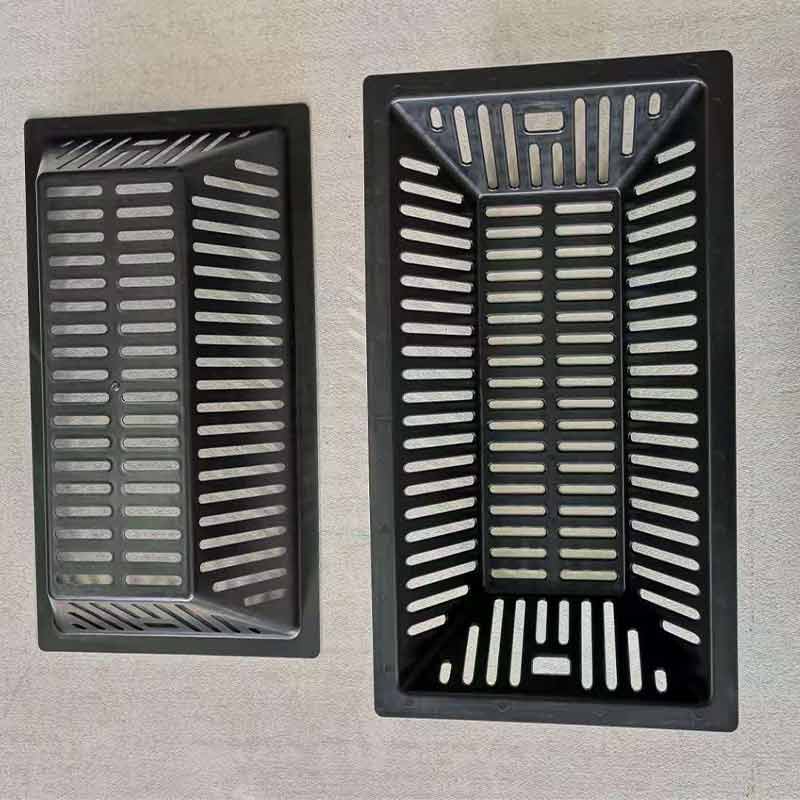
Shengxin's sewage interception basket product page offers a relevant basis for a model enquiry. Ask for the proposed installed section, support details and any available capture or flow evidence for that configuration. Treat advertised compatibility as an invitation to verify fit, not proof of suitability for every existing basin. A trial should include the actual grate, all mounting hardware and a removal demonstration, with discrepancies resolved before the wider batch is released.
Handover a flow diagram the operator can use
Give the operator a simple asset-specific diagram showing normal flow, the intended relief route and locations that must remain clear. Pair it with photographs of the empty installed basket and its supports. Identify the parts that can be removed for maintenance and those that require technical approval to alter. This makes a hidden bypass feature inspectable and reduces the risk that a well-intentioned repair seals or obstructs it during later works.
Review early inspection records against the design assumptions. If the basket repeatedly reaches bypass conditions before the team can service it, consider source control, a revised maintenance approach or a reviewed design change. Do not claim success solely because the road no longer ponds if the targeted litter now escapes continuously. Acceptance should address both objectives and state any remaining limits. A clear record lets the owner manage those limits instead of discovering them during the next intense debris event.
Discuss the project requirements
Send Shengxin your inlet section, catchment debris description and proposed maintenance method. Request a basket drawing that identifies the support and bypass geometry, then have the drainage designer review the complete installed flow route before committing to a batch.
Related product information: Shengxin sewage interception basket. Share the applicable project documents through our contact page.
Project questions
Is every gap around a basket a bypass?
No. A gap may be an unintended fit defect. The approved drawing should identify intentional relief paths and distinguish them from places where target debris can avoid the basket.
Can bypass eliminate maintenance?
No. Relief flow does not empty accumulated material or preserve capture indefinitely. Cleaning triggers and response arrangements remain necessary for the installed device.
Should the bypass be as large as possible?
Its geometry needs a project assessment balancing drainage, capture, fit and maintenance. Enlarging it without review may allow the targeted material to escape during ordinary operation.
Why can ponding remain after an overflow is added?
The basin outlet or downstream system may limit flow, or the intended route may be obstructed. Inspect the complete arrangement rather than judging only the basket rim.
What should be checked during the first installation?
Verify the basket and supports against the approved section, confirm all relief clearances, demonstrate loaded-removal planning and record the inspection features the operator must keep visible.