

Table of Contents
Water running past a storm drain grate on a steep gutter can look like proof that the grate is too small. The same symptom can arise from a raised leading edge, a poorly aligned approach, debris or an inlet connected to a restricted drainage system. Buying a grate with a larger advertised opening does not identify which condition matters. A useful investigation follows the water before, across and beyond the inlet, then distinguishes surface interception from the ability to convey captured water away. This guide helps road owners and procurement teams prepare that investigation and turn its findings into a precise enquiry for a grate and frame assembly.
Establish whether the inlet lies on a continuous grade
Locate the inlet on a longitudinal profile of the gutter. Confirm whether water can continue downhill past it or whether it occupies a local low point. The distinction matters because an inlet on a continuous grade may intercept only part of the approaching flow, with the remainder continuing to another inlet. A photograph taken close to the grate cannot establish that arrangement. Record upstream and downstream inlet positions, changes in curb alignment and any nearby junction where runoff can leave the surveyed gutter.
Define the question using an observed event. Note where the water approached, which part crossed the grate, where bypass continued and whether ponding remained after rainfall. Include the timing of observations and visible inlet condition. Avoid placing workers in moving traffic or fast runoff merely to obtain footage. Existing fixed cameras or observations from a protected location may provide useful context, but their images need dimensions and site levels before they become hydraulic evidence.
Survey the water's approach rather than only the frame
Measure the gutter crossfall, local longitudinal slope and surface transitions sufficiently far upstream to describe the approaching water path. Identify changes caused by patches, utility trenches, driveway crossings and resurfacing. A narrow ridge can divert water away from the inlet even when the frame itself is at the planned elevation. Tie measurements to a stated datum and locate each section on a plan so that the responsible designer can reproduce the geometry in an assessment.
Pay particular attention to the leading edge and the transition from gutter to frame. Record whether the pavement forms a lip, a local depression or an abrupt slope break. Do not prescribe a deeper depression as a universal remedy: it affects traffic, maintenance and the structural installation as well as water entry. The survey should distinguish what exists from what a revised design proposes. That separation keeps a supplier's product drawing from being mistaken for an approved road reconstruction detail.
Separate splash-over from flow travelling beside the openings
Water can pass along the curb without crossing much of the effective grate width, or reach the grate and continue across its downstream edge. Those patterns point to different questions. Trace the wetted width relative to the grate, not just the total width of the gutter. If the principal stream runs beside the openings, increasing open area farther from the stream may add little interception. If the stream crosses the openings rapidly, the inlet geometry and approach conditions need closer hydraulic consideration.
Use descriptive observations until an engineer has evaluated the mechanism. A video may show an apparent sheet of water skipping slots, but cannot independently quantify captured discharge. Avoid assigning a capture percentage from visual appearance. Collect enough detail to compare the existing arrangement with candidate grates under the same assumptions. A supplier should explain what test or calculation supports its proposed geometry and which approach conditions fall outside that evidence.
Inspect the basin and outlet before condemning the surface grate
An inlet that fills from below cannot accept surface water as intended, regardless of the visible slot area. Through the owner's authorized inspection process, record sediment, obstructions, outlet condition and evidence of elevated water in the basin. Compare the sequence of rising water and surface bypass where reliable observations are available. Chamber inspection and any entry require the owner's appropriate safety arrangements; opening a grate does not authorize personnel to enter a drainage structure.
Keep restrictions in the basket, basin outlet, connecting pipe and wider network as separate possibilities. Cleaning the surface bars alone will not resolve every one of them. If a debris basket is fitted, obtain its approved flow and bypass detail and identify whether accumulation interferes with the inlet. Do not permanently remove a basket or enlarge an outlet as an informal test. The investigation should preserve the system's other functions while establishing which component limits acceptance.
| Observed flow pattern | Evidence needed | Decision it supports |
|---|---|---|
| Stream stays beside grate | Approach cross-sections and wetted path | Review alignment and effective interception width |
| Water crosses slots and continues downhill | Slope, grate geometry and relevant hydraulic data | Assess on-grade interception and bypass |
| Basin water rises toward the grate | Outlet inspection and downstream conditions | Investigate conveyance restrictions |
| Bypass collects at the next low point | Connected gutter profile and receiving inlet review | Assess the drainage system beyond one inlet |
Compare candidates using the same hydraulic assumptions
Ask the designer to state the runoff case, gutter geometry, inlet dimensions, debris allowance and downstream boundary used for comparison. FHWA's Urban Drainage Design Manual provides an authoritative reference framework for analysing roadway drainage and inlet interception. The project still needs an applicable local design basis and a competent assessment of its actual geometry. A catalogue statement about drainage efficiency is not a substitute for that work or evidence that a specific site will meet the owner's criteria.
Compare effective interception and remaining gutter flow, not simply gross opening percentage. Document whether the proposed grate arrangement has support from relevant hydraulic data or whether a justified engineering model is being used. Clarify the effect of changing grate length, width, depression or inlet type individually. A comparison that changes every assumption at once may appear decisive while leaving the reason for improvement unclear. Record uncertainty so that purchasing does not convert an estimate into a guaranteed site outcome.
Technical reference: FHWA Urban Drainage Design Manual.
Follow bypass to the next place it can cause harm
Water passing an inlet does not disappear when it leaves the photograph. Trace its route to the next inlet, crossing, sag, driveway or property threshold. Establish whether the original design intentionally allowed bypass and whether downstream conditions have changed. A successful local modification may reduce runoff farther downhill, while another may redirect it across a pedestrian route. Assess the connected road segment rather than setting an arbitrary objective that this one grate must capture all water reaching it.
Include vulnerable access points and locations where accumulated flow meets traffic. The owner should identify the acceptance criteria for spread, ponding and exceedance routing using the governing guidance. Avoid inventing a universal acceptable water depth for all roads. If an additional inlet or a different drainage arrangement is necessary, resolve that infrastructure choice before requesting a like-for-like casting. A better component cannot compensate for an inlet layout that cannot satisfy the adopted design case.
Keep structural and road-user requirements in the comparison
A hydraulically attractive grate still needs to suit its load position, frame support and users. Identify wheel paths, bicycles, pedestrians and maintenance equipment before approving slot orientation or surface details. Check the complete assembly's applicable structural evidence, not the material name alone. Changes to bar layout, hinges or support geometry may create a different assembly from the one described in a test report. Confirm which proposed configuration the evidence actually covers.
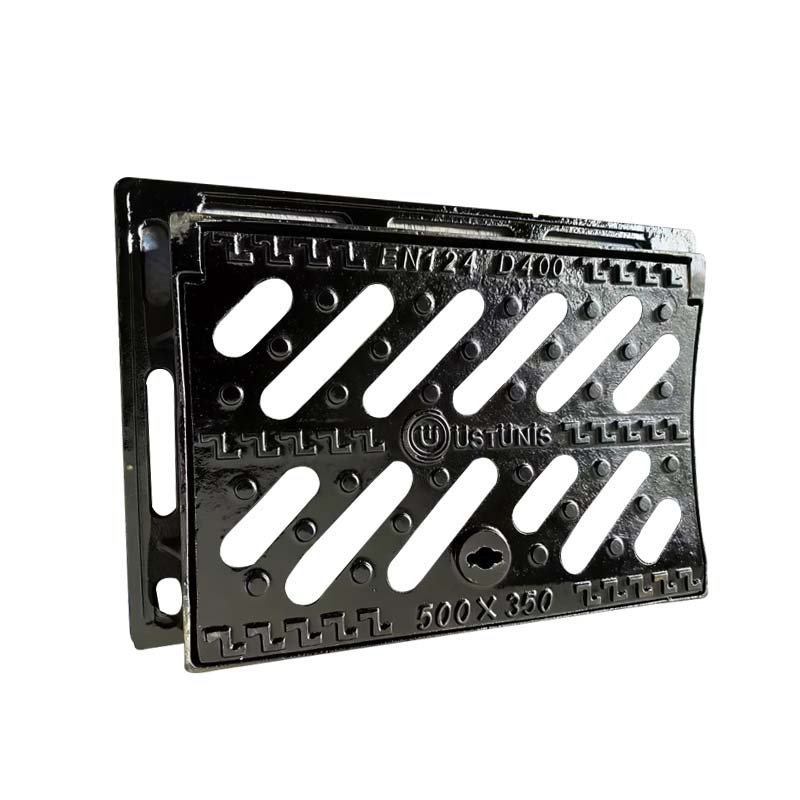
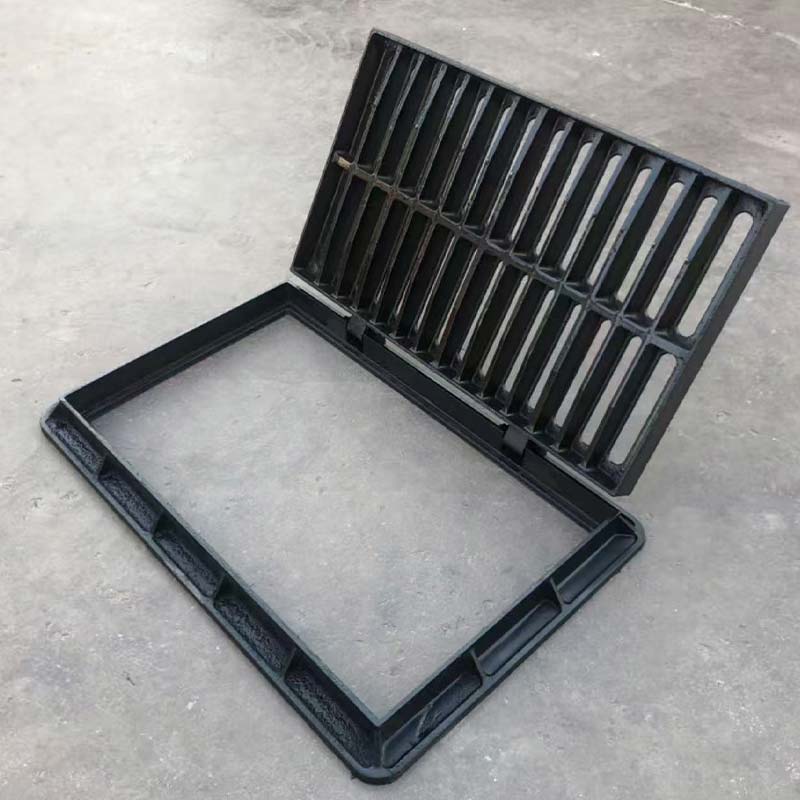
Use Shengxin's cast iron drain grate page as a starting point for discussing available configurations, then request a drawing for the exact proposal. Include the required frame dimensions, installation interface and access method. Road geometry should not force an installer to cut bars, grind bearing surfaces or cover lifting features with asphalt. Resolve those interfaces in the drawing review so that the finished inlet remains both maintainable and consistent with the assessed hydraulic arrangement.
Verify the installed geometry and establish a useful observation record
Before acceptance, compare the finished inlet with the surveyed and approved levels. Photograph the upstream transition, grate, curb and downstream gutter together, then capture closer views of the bearing and access details. Record any deviation that could alter the water path. An inspection limited to confirming the correct casting model misses the road surface conditions that may have caused the original bypass. Keep the geometry record with the assembly identification and the drainage design revision.
After an appropriate rainfall observation opportunity, document how water approaches and leaves the inlet, along with debris and basin condition. A convenient hose demonstration can help reveal a local lip but should not be presented as proof of performance under the design storm. Review unexpected behaviour with the designer before changing the casting again. This approach turns a complaint about skipped water into a repeatable assessment and gives the next maintenance team evidence it can actually use.
Discuss the project requirements
Send Shengxin the gutter survey, existing inlet photographs and approved hydraulic brief when requesting a replacement grate. Ask for the exact assembly drawing and relevant supporting evidence so your designer can assess the proposed water-entry geometry before ordering.
Related product information: Shengxin cast iron drain grate. Share the applicable project documents through our contact page.
Project questions
Will a grate with more open area stop water skipping the inlet?
Not necessarily. The openings must intersect the approaching flow and work with the gutter geometry and downstream drainage. Compare candidates using a consistent hydraulic assessment.
Does bypass always mean the inlet has failed?
No. Some on-grade inlet layouts allow part of the flow to continue to downstream inlets. Establish the adopted design criteria and whether the observed route is acceptable for this location.
Should the grate be lowered into a deeper depression?
Only through an approved design that considers hydraulics, traffic, support and maintenance. An improvised depression can create other problems without establishing the required interception.
What should a supplier receive with the enquiry?
Provide measured gutter profiles, inlet and frame dimensions, traffic context, observed flow paths and the designer’s comparison basis. Include any basket and downstream restriction information.
Can a hose test prove storm performance?
A hose can expose some local surface defects, but it does not generally recreate the design runoff and downstream conditions. Use it as an observation tool within a broader verification plan.