

Come to our blog. We are a professional manufacturer of ductile iron and composite resin manhole covers, supplying infrastructure products for municipal and industrial projects worldwide.
- 👉 Follow us on Facebook for the latest product updates, industry news, and project cases.
- 👉 If you have any project requirements or need a quotation, feel free to contact our team directly for fast support and customized solutions.
Please continue reading our blog for more industry insights and product information
Table of Contents
Key Takeaways
- Understand what affects FRP manhole cover price in global infrastructure projects
- Learn key technical factors such as resin type, load class, and manufacturing process
- Compare FRP vs cast iron vs ductile iron vs steel covers
- Explore real-world applications and engineering standards
- Learn lifecycle cost vs initial price differences
- Discover procurement strategies for smarter purchasing decisions
- Review global market trends and smart city integration
- Get answers to frequently asked buyer questions
Introduction
The demand for FRP manhole cover solutions has grown rapidly in global infrastructure development. Cities are upgrading aging drainage systems, industrial plants are improving corrosion resistance, and smart city projects are adopting lightweight composite materials.
Unlike traditional cast iron covers, FRP (Fiberglass Reinforced Plastic) covers offer a combination of lightweight structure, corrosion resistance, anti-theft performance, and long service life.
However, the FRP manhole cover price is not fixed. It varies based on engineering design, material selection, load capacity, and production method. Understanding these factors is essential for making cost-effective procurement decisions.
What Is an FRP Manhole Cover?
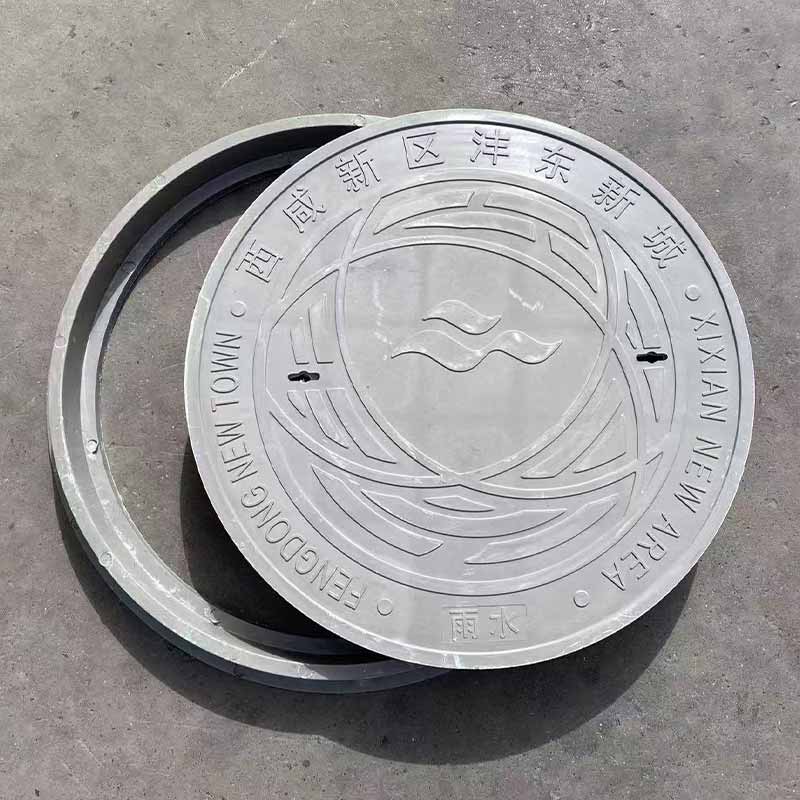
An FRP manhole cover is a composite access cover made from fiberglass reinforcement and resin matrix. It is designed for infrastructure systems such as:
- Urban drainage systems
- Roadway access points
- Utility tunnels
- Chemical plants
- Telecom networks
- Industrial facilities
Core Advantages
- Lightweight structure (easy installation)
- Corrosion resistance (no rusting)
- Anti-theft properties (no scrap value)
- Long service life (20–30 years)
- High load performance
FRP Manhole Cover Price Overview
The FRP manhole cover price is determined by multiple technical and commercial factors rather than a single fixed market rate.
Main Price Range Factors
- Load class requirement
- Resin system selection
- Manufacturing process
- Structural reinforcement design
- Size and customization level
- Surface treatment requirements
Key Factors Affecting FRP Manhole Cover Price
1. Resin Material System
The resin system directly determines durability and chemical resistance.
Common Resin Types
- Polyester resin (standard municipal use)
- Isophthalic resin (enhanced durability)
- Vinyl ester resin (chemical plants, high corrosion environments)
- Epoxy resin (high-end industrial applications)
Higher-grade resin increases FRP manhole cover price but significantly improves service life.
2. Fiberglass Reinforcement
Fiberglass determines structural strength.
Types include:
- Chopped strand mat
- Woven roving
- Hybrid reinforcement layers
More reinforcement = higher load capacity = higher price.
3. Load Bearing Standards (EN124 System)
| Class | Load Capacity | Application | Price Level |
|---|---|---|---|
| A15 | 1.5 tons | Pedestrian areas | Low |
| B125 | 12.5 tons | Parking areas | Medium |
| C250 | 25 tons | Urban roads | Medium-High |
| D400 | 40 tons | Heavy traffic roads | High |
| E600 | 60 tons | Industrial zones | Very High |
Higher load class significantly increases production cost.
4. Manufacturing Process
Different production methods directly affect quality and price.
Compression Molding
- High precision
- High consistency
- Suitable for mass production
- Higher tooling cost
Hand Lay-Up
- Low tooling cost
- Flexible customization
- Lower consistency
SMC Molding
- Premium quality
- High structural strength
- Fast production cycle
- Highest price level
5. Size and Design Complexity
Custom designs increase production cost.
Examples include:
- Non-standard shapes
- Embedded logos
- Locking systems
- Smart sensor integration
- Double sealing structures
6. Surface Treatment
Surface finishing affects safety and aesthetics:
- Anti-slip texture
- UV protection coating
- Decorative patterns
- Anti-theft locking system
FRP Manhole Cover Price Comparison Table
| Material | Weight | Corrosion Resistance | Lifespan | Cost Level |
|---|---|---|---|---|
| FRP | Light | Excellent | 20–30 years | Medium |
| Cast Iron | Heavy | Low | 10–15 years | Medium |
| Ductile Iron | Heavy | Medium | 15–20 years | High |
| Steel | Medium | Low | 8–12 years | Medium |
FRP vs Traditional Manhole Covers
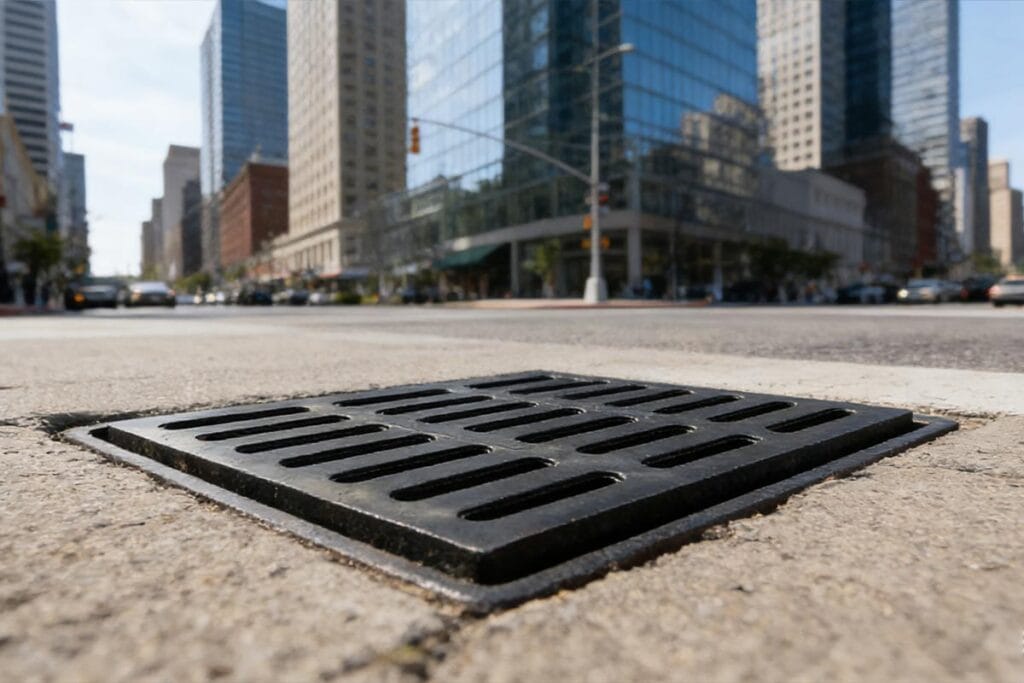
FRP vs Cast Iron
- FRP is lightweight and corrosion-free
- Cast iron is heavy and prone to rust
- FRP reduces installation and transport cost
- Cast iron has higher theft risk
FRP vs Steel
Steel is strong but rusts easily. FRP offers better long-term stability in humid and chemical environments.
FRP vs Concrete
Concrete is cheap but brittle. FRP offers better flexibility, sealing, and durability.
Hidden Cost Factors in FRP Manhole Cover Price
Many buyers only consider unit price, but real cost includes:
- Transportation cost (weight advantage of FRP)
- Installation labor cost
- Maintenance frequency
- Replacement cycle
- Theft loss prevention
Lifecycle cost is often 30–50% lower for FRP compared to metal alternatives.
Global Market Trends
The FRP manhole cover industry is growing due to:
- Smart city infrastructure development
- Replacement of aging metal covers
- Increased corrosion-resistant material demand
- Rising labor and maintenance costs
Key Market Insights
- Global FRP infrastructure growth: 6–8% CAGR
- Asia-Pacific dominates production capacity
- Europe leads in regulatory adoption
- Municipal replacement projects increasing annually
Real Project Case Studies
Case Study 1: European Smart City Upgrade
- 12,000 FRP covers installed
- Maintenance cost reduced by 38%
- Theft incidents reduced by 95%
Case Study 2: Chemical Industrial Plant
- Vinyl ester FRP covers used
- Acid-resistant environment
- Service life extended beyond 20 years
Case Study 3: Urban Housing Project
- Replaced steel covers
- Reduced noise and maintenance
- Improved pedestrian safety
Installation Cost Advantage of FRP
FRP covers reduce installation complexity:
- No heavy lifting equipment needed
- Faster installation speed
- Lower labor cost
- Reduced transportation burden
Installation cost savings: 20–40% compared to iron covers
Smart City Integration Trend
Future FRP covers may include:
- RFID tracking chips
- Load sensors
- Maintenance alerts
- Digital mapping systems
These features improve infrastructure monitoring efficiency.
FRP Manhole Cover Buying Guide
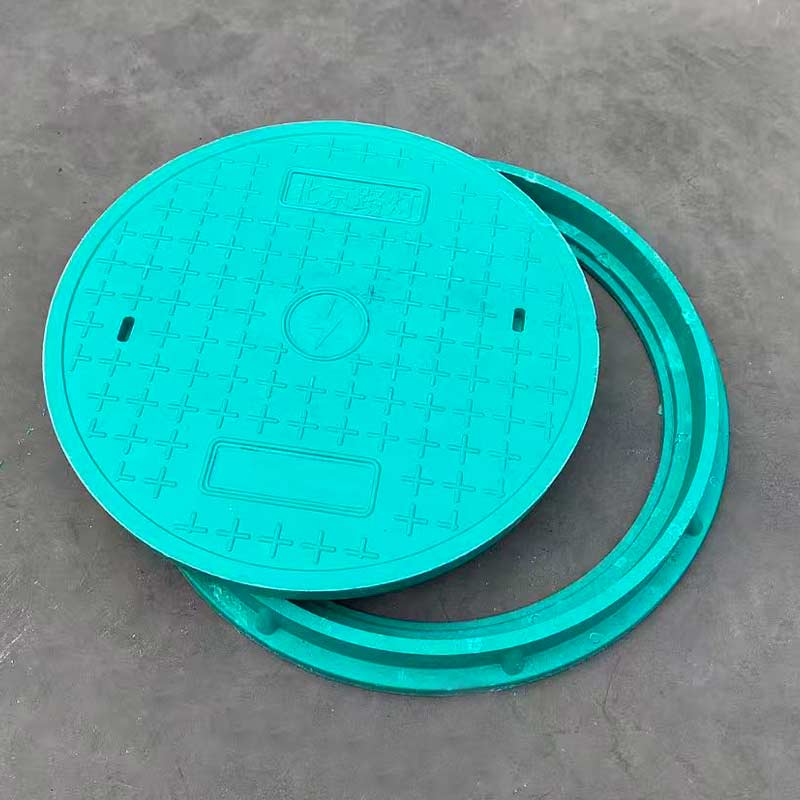
Step 1: Determine Load Class
Choose based on traffic conditions.
Step 2: Select Resin Type
Chemical exposure determines resin selection.
Step 3: Evaluate Lifecycle Cost
Do not focus only on initial FRP manhole cover price.
Step 4: Verify Standards
Ensure compliance with EN124 or equivalent standards.
Step 5: Choose Reliable Supplier
Check manufacturing capability, QC system, and export experience.
Conclusion
The FRP manhole cover price is determined by engineering complexity, material selection, and performance requirements rather than a single market value.
Although the initial cost may vary, FRP solutions offer significant long-term advantages including corrosion resistance, lightweight installation, reduced maintenance cost, and extended service life.
For modern infrastructure, FRP manhole covers represent a cost-efficient and future-ready solution that aligns with global trends in smart cities and sustainable development.
FAQ
Why is FRP manhole cover price different across suppliers?
Because of differences in resin type, load class, manufacturing process, and customization level.
Is FRP suitable for highways?
Yes, D400 and E600 grades are designed for heavy traffic applications.
How long does FRP manhole cover last?
Typically 20–30 years depending on environment and load.
Is FRP fire resistant?
Yes, flame-retardant resin systems are available.
Can FRP be used in chemical plants?
Yes, especially vinyl ester FRP for corrosive environments.
Why is FRP more expensive than steel initially?
Due to composite materials, molding process, and engineering design.