

Welcome to our blog. We are a professional manufacturer of ductile iron and composite resin manhole covers, supplying infrastructure products for municipal and industrial projects worldwide.
- 👉 Follow us on Facebook for the latest product updates, industry news, and project cases.
- 👉 If you have any project requirements or need a quotation, feel free to contact our team directly for fast support and customized solutions.
Please continue reading our blog for more industry insights and product information
Table of Contents
Key Takeaways
- Engineering role of a round manhole cover in modern infrastructure systems
- Deep technical comparison between cast iron and composite materials
- Load classes (EN 124) and real engineering performance standards
- Lifecycle cost, safety, and maintenance considerations
- Corrosion, theft, and environmental impact analysis
- Real municipal engineering case studies and failure scenarios
- Smart infrastructure trends and future material evolution
- Practical selection framework for procurement and engineering teams
Introduction
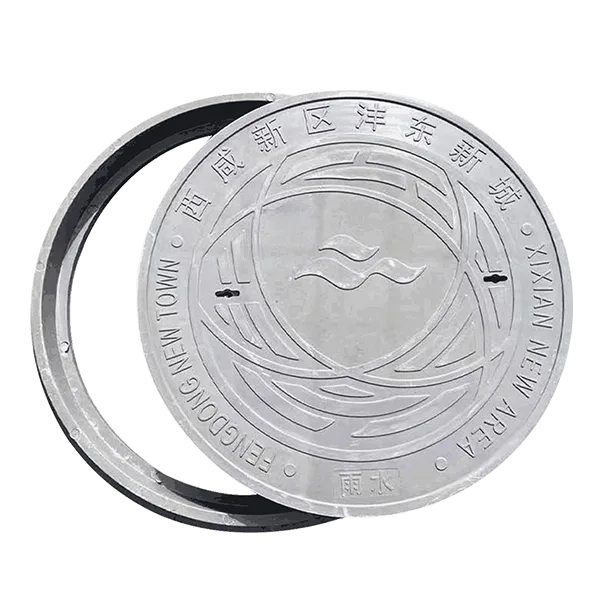
Urban infrastructure is built on systems that are largely invisible—underground drainage, power networks, telecom ducts, and water supply pipelines. At the surface level, the round manhole cover is the only visible protective interface between pedestrians, vehicles, and these complex underground systems.
A round manhole cover is not just a lid. It is a load-bearing structural safety component engineered to withstand dynamic traffic loads, environmental stress, and long-term fatigue cycles. In many cities, a single cover may experience thousands of vehicle load cycles per day, including passenger cars, buses, and heavy trucks exceeding 40 tons.
According to global municipal infrastructure reports, more than 30% of urban road maintenance issues are linked to faulty or poorly selected manhole cover systems. This makes material selection not a design preference—but a long-term safety and cost decision.
Today, the two dominant material categories—cast iron and composite materials—define the engineering trade-offs in strength, durability, weight, and lifecycle efficiency.
Key Takeaways
- Engineering structure and function of round manhole cover systems
- Mechanical and chemical behavior differences between cast iron and composite materials
- EN 124 load classification system and real-world interpretation
- Failure mechanisms in urban infrastructure systems
- Cost-performance lifecycle analysis (CAPEX vs OPEX)
- Industry case studies from Europe, Asia, and North America
- Smart city integration and future material innovation trends
Engineering Definition of Round Manhole Cover Systems
Structural Function in Urban Infrastructure
A round manhole cover serves four primary engineering functions:
- Load transfer from surface traffic to underground chamber walls
- Protection against accidental entry and safety hazards
- Environmental sealing against water, debris, and gas leakage
- Access point for inspection and maintenance operations
In modern city planning, these systems are designed as part of a broader “load distribution network,” where each cover must align with road class and expected traffic density.
Why Round Geometry Is Structurally Optimal
The round shape is not arbitrary—it is a mechanical optimization:
- No orientation weakness under load rotation
- Uniform stress distribution along circumference
- No risk of falling into the chamber opening
- Easier rotational installation and maintenance
This geometry remains the global standard in infrastructure engineering.
Cast Iron Round Manhole Cover: Engineering Deep Dive
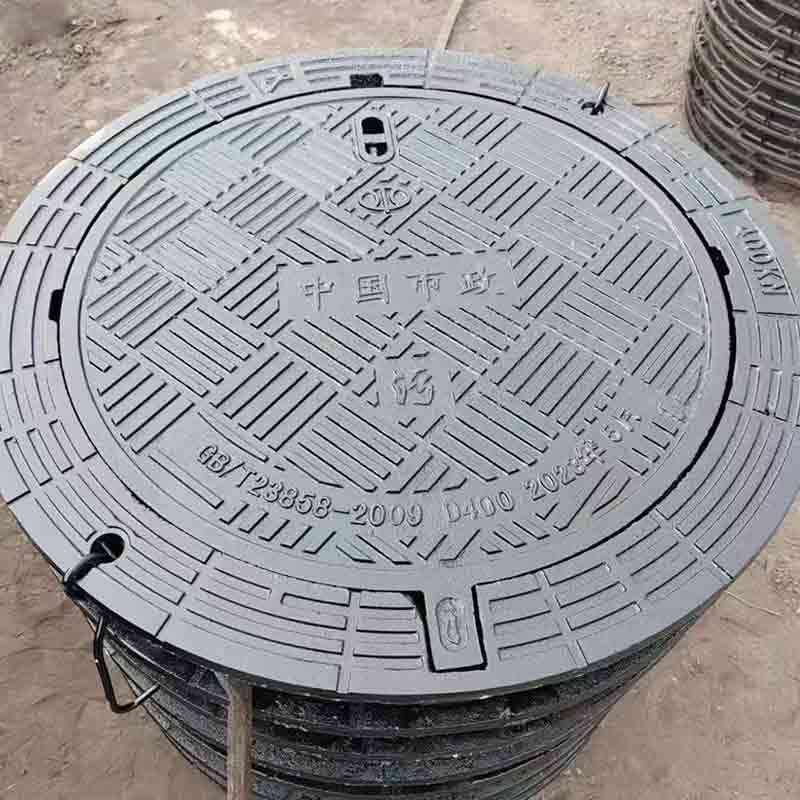
Material Composition and Structure
Cast iron covers are typically made from:
- Gray cast iron (high compressive strength, brittle fracture behavior)
- Ductile iron (EN-GJS-500-7 or similar grades)
Ductile iron is more commonly used in modern infrastructure due to its improved toughness and impact resistance.
Mechanical Performance Characteristics
- Compressive strength: typically 400–700 MPa depending on grade
- Load resistance: up to EN 124 Class D400 or higher
- High deformation resistance under static load
- Excellent vibration damping properties
Advantages of Cast Iron Systems
- Extremely high load-bearing capacity
- Long service life (often 20–40 years under proper conditions)
- Proven performance in highways and industrial zones
- Standardized manufacturing globally
Limitations
- High weight increases installation cost
- Susceptible to corrosion without coating
- Theft risk due to scrap metal value
- Noise generation under traffic impact
Composite Round Manhole Cover: Advanced Material Engineering
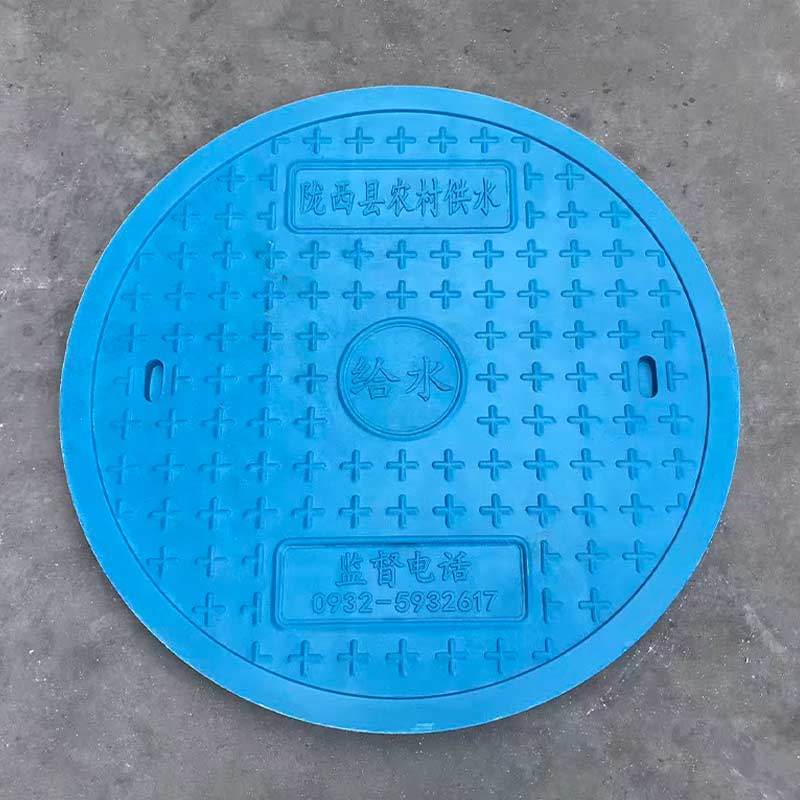
Material Structure Overview
Composite covers are typically made from:
- Glass fiber reinforced polymer (GFRP)
- Sheet molding compound (SMC)
- Resin-based polymer concrete
These materials are engineered for lightweight structural performance rather than pure compressive strength.
Mechanical Performance Characteristics
- Load capacity: EN 124 A15 to C250 (depending on design)
- Tensile strength: high relative to weight ratio
- Elastic deformation under load without permanent failure
- Excellent fatigue resistance in moderate traffic conditions
Key Advantages
- Up to 75% lighter than cast iron
- Fully corrosion resistant (no rusting)
- Electrically non-conductive (safe for telecom/electric systems)
- Anti-theft due to low resale value
- Reduced transportation and installation cost
Limitations
- Lower maximum load capacity compared to ductile iron
- UV degradation risk in low-quality materials
- Higher material cost in some markets
- Requires strict quality control for structural consistency
EN 124 Load Classification Standard Explained
The EN 124 standard is the primary global benchmark for manhole cover load classification.
Load Classes Overview
| Class | Load Capacity | Application Area |
|---|---|---|
| A15 | 1.5 tons | Pedestrian areas, gardens |
| B125 | 12.5 tons | Parking areas, sidewalks |
| C250 | 25 tons | Kerbside, light traffic roads |
| D400 | 40 tons | Roads, highways, industrial zones |
| E600 | 60 tons | Port areas, heavy industrial zones |
| F900 | 90 tons | Airports, extreme load areas |
Engineering Insight
- Cast iron dominates D400–F900 applications
- Composite materials dominate A15–C250 applications
This classification is critical for procurement engineers when selecting a round manhole cover system.
Cast Iron vs Composite: Engineering Comparison
| Feature | Cast Iron | Composite |
|---|---|---|
| Load Strength | Very High | Medium |
| Weight | Heavy | Lightweight |
| Corrosion Resistance | Medium | Very High |
| Installation Cost | High | Low |
| Theft Risk | High | Low |
| Maintenance Frequency | Medium | Low |
| Noise Reduction | Low | High |
Lifecycle Cost Analysis (LCC Model)
Cost Structure Breakdown
Cast iron systems:
- Lower initial material cost
- Higher installation and transportation cost
- Higher long-term maintenance cost
Composite systems:
- Higher initial unit cost
- Lower logistics and labor cost
- Lower maintenance cost
10-Year Lifecycle Study Insight
Based on municipal infrastructure studies:
- Composite covers reduce maintenance visits by 30–50%
- Cast iron covers show better performance in high-load zones
- Total lifecycle cost difference depends on traffic class and environment
Real Engineering Case Studies
Case 1: European Highway Upgrade Project
A highway in Germany replaced standard cast iron covers with ductile iron Class D400 systems.
Results:
- 60% reduction in structural failure
- Improved traffic noise reduction
- Increased inspection intervals
Case 2: Asian Smart City Telecom Network
A telecom project replaced cast iron covers with composite systems.
Results:
- 80% reduction in theft incidents
- Faster installation time (up to 40% improvement)
- Improved worker safety during maintenance
Common Failure Mechanisms in Round Manhole Cover Systems
Cast Iron Failure Modes
- Fatigue cracking under repeated heavy loads
- Edge chipping due to impact stress
- Corrosion weakening in coastal regions
Composite Failure Modes
- UV degradation in low-grade materials
- Resin fatigue under excessive load
- Improper installation causing deformation
Smart City Integration and Future Trends
Modern infrastructure is evolving toward “smart manhole systems,” including:
- Embedded IoT sensors for load monitoring
- Structural health monitoring (SHM) systems
- GPS-based asset tracking
- Smart theft detection systems
These technologies are increasingly integrated into advanced round manhole cover designs in major cities.
Environmental and Sustainability Considerations
Composite materials offer:
- Lower carbon footprint in transportation
- Recyclable polymer components
- Reduced energy consumption during installation
Cast iron offers:
- High recyclability rate (over 90%)
- Long service life reducing replacement frequency
Procurement Decision Framework
When selecting a round manhole cover system, engineers typically evaluate:
Step 1: Traffic Load Classification
- Pedestrian / light traffic → composite
- Heavy traffic / industrial → cast iron
Step 2: Environmental Exposure
- Coastal / chemical zones → composite preferred
- Dry urban roads → cast iron suitable
Step 3: Maintenance Strategy
- Low maintenance requirement → composite
- High durability requirement → cast iron
Step 4: Budget Structure
- Low CAPEX preference → cast iron
- Low OPEX preference → composite
Conclusion
The selection of a round manhole cover material is fundamentally a balance between structural strength, environmental resistance, lifecycle cost, and application scenario.
Cast iron remains the dominant solution for heavy-duty infrastructure due to its unmatched strength and long service life. Composite materials, on the other hand, are redefining modern infrastructure design through lightweight construction, corrosion resistance, and smart city integration.
Future infrastructure systems will likely adopt a hybrid approach—using cast iron in load-critical zones and composite materials in smart, distributed, and corrosion-sensitive environments—creating a more efficient and sustainable urban infrastructure model.
FAQ
What is the strongest round manhole cover material?
Ductile iron cast iron covers provide the highest load-bearing capacity.
Are composite manhole covers safe for roads?
Yes, but mainly for light to medium traffic areas.
Why are cast iron manhole covers still widely used?
Because they provide unmatched strength and durability in heavy-load environments.
Do composite covers rust?
No, composite materials are corrosion-free by nature.
Which material lasts longer?
Cast iron generally lasts longer in high-load environments, while composites last longer in corrosive environments.