

Welcome to our blog. We are a professional manufacturer of ductile iron and composite resin manhole covers, supplying infrastructure products for municipal and industrial projects worldwide.
- 👉 Follow us on Facebook for the latest product updates, industry news, and project cases.
- 👉 If you have any project requirements or need a quotation, feel free to contact our team directly for fast support and customized solutions.
Please continue reading our blog for more industry insights and product informatio
Table of Contents
Key Takeaways
- Deep understanding of Cast Iron Manhole Cover strength engineering principles
- Load classification systems (EN 124 / ASTM / ISO standards) explained in detail
- Material science comparison: gray cast iron vs ductile iron evolution
- Real-world failure analysis and structural safety design logic
- Infrastructure case studies from global urban road systems
- Lifecycle cost, maintenance strategy, and durability optimization
- Industry trends driven by smart cities and heavy traffic expansion
Introduction
Modern cities depend heavily on underground infrastructure systems, including drainage networks, sewage systems, telecommunication ducts, and utility corridors. Above these systems lies one of the most overlooked but critical components of civil engineering—the Cast Iron Manhole Cover.
According to global urban infrastructure safety reports, over 70% of municipal road maintenance incidents involving subsurface access points are related to cover failure, misalignment, or structural fatigue. This highlights why strength is not just a material property, but a public safety requirement.
A Cast Iron Manhole Cover must withstand extreme dynamic and static loads, ranging from pedestrian pressure to heavy freight trucks exceeding 40 tons axle load. Its structural integrity directly affects road safety, traffic reliability, and underground system protection.
What Is a Cast Iron Manhole Cover?
Engineering Definition
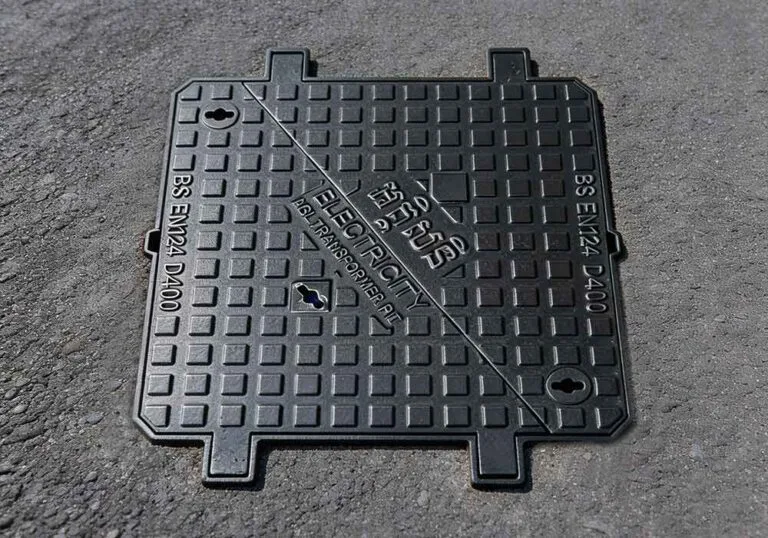
A Cast Iron Manhole Cover is a load-bearing structural plate designed to seal underground access points while supporting surface loads safely.
It is typically manufactured using gray cast iron or ductile iron through high-temperature casting processes.
Functional Engineering Role
It performs three critical infrastructure functions:
- Load distribution across underground chambers
- Safety barrier for pedestrians and vehicles
- Protection of utility systems from environmental exposure
Cast Iron Manhole Cover Strength Fundamentals
Structural Load Behavior
The strength of a Cast Iron Manhole Cover depends on its ability to resist three primary forces:
- Static load (stationary vehicles)
- Dynamic load (moving traffic impact)
- Impact load (sudden shocks or wheel drop events)
Engineering Stress Distribution
Load is transferred through:
- Cover surface rib structure
- Frame seating system
- Underground support chamber walls
This multi-layer load distribution system prevents localized failure.
Cast Iron Manhole Cover Strength Classification System (EN 124 Standard)
The EN 124 standard is the most widely used classification system in global infrastructure projects.
| Class | Minimum Load (kN) | Equivalent Load (tons) | Application Scenario |
|---|---|---|---|
| A15 | 15 kN | ~1.5 tons | Pedestrian areas |
| B125 | 125 kN | ~12.5 tons | Parking lots |
| C250 | 250 kN | ~25 tons | Roadside gutters |
| D400 | 400 kN | ~40 tons | Urban roads/highways |
| E600 | 600 kN | ~60 tons | Industrial zones |
| F900 | 900 kN | ~90 tons | Airports, ports |
Material Science Behind Cast Iron Manhole Cover Strength
Gray Cast Iron Structure
Gray cast iron contains graphite flakes distributed within a ferrite matrix.
This structure provides:
- High compressive strength
- Good damping capacity
- Lower tensile strength
However, it is brittle under sudden impact.
Ductile Iron Evolution
Ductile iron (nodular iron) is treated with magnesium, transforming graphite into spherical nodules.
Engineering Improvements:
- Tensile strength increases by 2–3 times
- Impact resistance improves by 300–400%
- Fatigue resistance significantly enhanced
This makes ductile iron the modern standard for high-load infrastructure.
Cast Iron Manhole Cover Strength vs Ductile Iron Evolution
Structural Performance Comparison
| Property | Gray Cast Iron | Ductile Iron |
|---|---|---|
| Tensile Strength | Low | High |
| Impact Resistance | Low | Very High |
| Crack Resistance | Weak | Strong |
| Load Capacity | Moderate | High |
Cast Iron Manhole Cover vs Composite Cover Systems
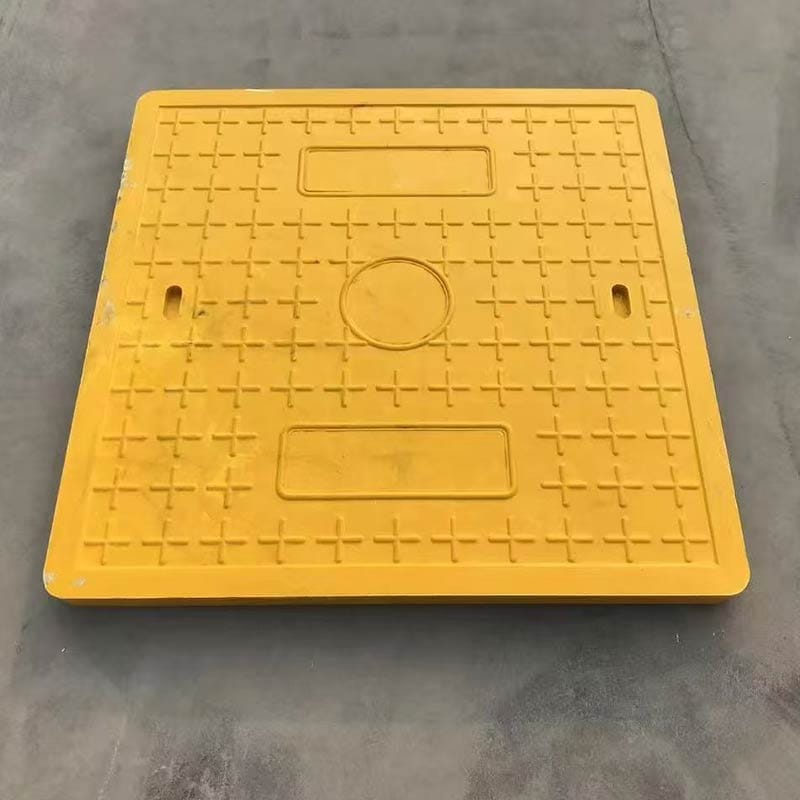
Composite materials are increasingly used in low-load environments.
Composite Covers
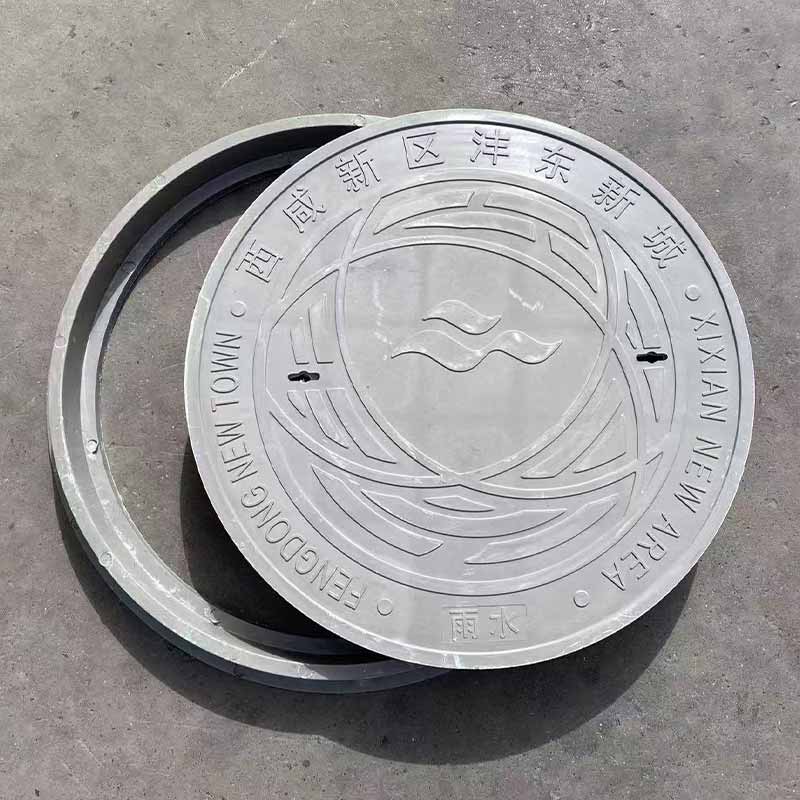
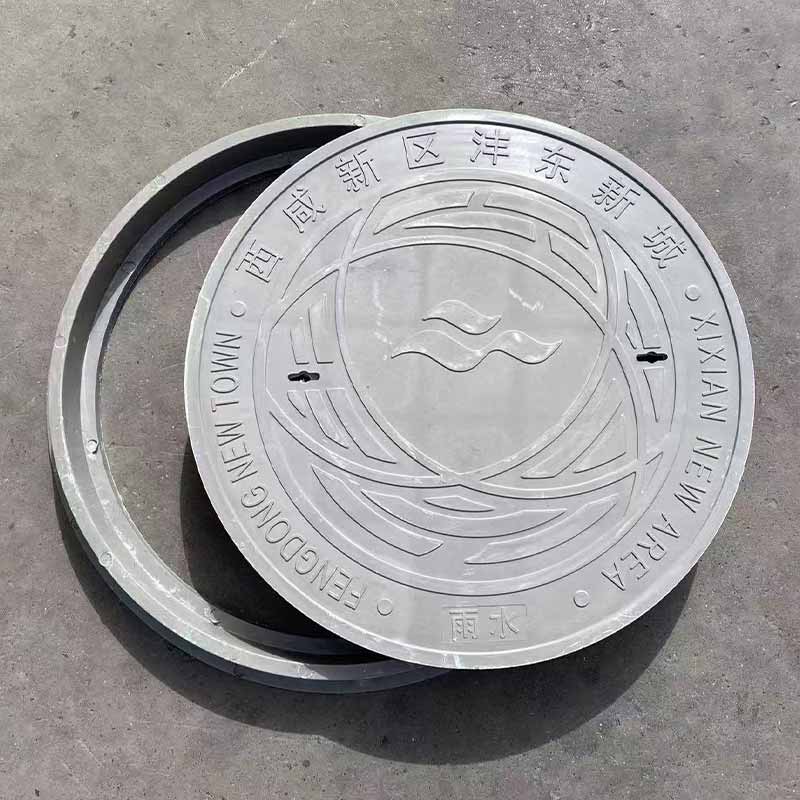
Made from fiberglass reinforced polymer (FRP) or resin-based composites.
Advantages:
- Lightweight
- Corrosion-resistant
- Easy installation
Limitations:
- Lower load capacity
- UV degradation risk
- Lower theft resistance
Engineering Design Structure of Cast Iron Manhole Cover
Rib Reinforcement System
Ribs are designed in radial or grid patterns.
This increases structural stiffness and distributes load evenly.
Frame Support Mechanism
The cover sits inside a reinforced frame.
Load transfer occurs between frame and surrounding concrete structure.
Anti-Rotation Locking System
Modern covers include locking mechanisms to prevent displacement under vibration.
Cast Iron Manhole Cover Strength Testing Methods
1. Static Load Testing
Hydraulic presses apply controlled loads up to rated capacity.
Permanent deformation must not exceed standard thresholds.
2. Dynamic Fatigue Testing
Simulates repeated vehicle load cycles.
Tests durability over long-term usage.
3. Impact Drop Testing
Heavy steel weights simulate sudden shock loads.
Ensures crack resistance under extreme conditions.
Global Standards for Cast Iron Manhole Cover Strength
EN 124 (Europe)
Defines load classes, testing methods, and safety requirements.
ASTM A48 (United States)
Specifies gray iron casting standards and mechanical properties.
ISO 1083
Defines spheroidal graphite cast iron classification systems.
Cast Iron Manhole Cover Strength Failure Analysis
Common Failure Modes
1. Fatigue Cracking
Repeated traffic loading causes micro-cracks.
Over time, these propagate into structural failure.
2. Improper Seating Failure
Incorrect installation leads to uneven load distribution.
This causes edge breakage.
3. Material Brittleness
Low-quality cast iron may fracture under shock load.
Infrastructure Engineering Case Studies
Case Study 1: Smart City Road Upgrade (Europe)
Upgraded to ductile iron D400 covers across urban highways.
Results:
- 42% reduction in maintenance incidents
- Improved traffic safety index
Case Study 2: Industrial Port Expansion Project
F900-rated covers installed in heavy cargo zones.
Results:
- Zero structural failures under container traffic
- Increased operational safety efficiency
Case Study 3: Flood Control Infrastructure (Asia)
Reinforced covers used in drainage systems.
Results:
- 30% improvement in water drainage stability
- Reduced cover displacement during storms
Cast Iron Manhole Cover Strength and Lifecycle Cost
Cost Structure Overview
| Cost Factor | Percentage Contribution |
|---|---|
| Material Cost | 35–45% |
| Manufacturing | 25–30% |
| Installation | 15–20% |
| Maintenance | 10–15% |
Lifecycle Insight
High-strength ductile iron covers reduce long-term maintenance cost by 20–35% in urban infrastructure systems.
Modern Industry Trends and White Paper Insights
Urban Load Growth Trend
Global urban traffic loads have increased by over 25% in the last decade.
This drives demand for higher strength manhole covers.
Smart City Integration
Modern infrastructure integrates:
- Smart monitoring sensors
- Load detection systems
- IoT-based maintenance alerts
Sustainability Focus
Manufacturers are shifting toward:
- Recyclable cast iron materials
- Low-emission melting furnaces
- Energy-efficient production systems
Cast Iron Manhole Cover Selection Engineering Guide
Step 1: Determine Load Class
Select based on expected traffic type (pedestrian, urban, industrial).
Step 2: Environmental Conditions
Consider corrosion risk, moisture, and chemical exposure.
Step 3: Material Selection
Choose between gray cast iron and ductile iron based on stress levels.
Step 4: Installation Quality
Proper seating and concrete support are critical for strength performance.
FAQ
What determines the strength of a Cast Iron Manhole Cover?
Strength depends on material composition, design structure, and load class rating.
Ductile iron provides significantly higher performance.
What is the strongest manhole cover class?
F900 is the highest standard class.
It is used in airports and heavy industrial ports.
Why do cast iron manhole covers fail?
Failure usually occurs due to fatigue cracking, poor installation, or material defects.
Improper load distribution is a major cause.
How long does a cast iron manhole cover last?
Typically 20–30 years under normal conditions.
Ductile iron versions may last longer with proper maintenance.
Why are manhole covers so heavy?
Weight ensures stability, prevents displacement, and increases theft resistance.
It also improves load-bearing performance.
Conclusion
The Cast Iron Manhole Cover Strength is a fundamental pillar of urban infrastructure safety. Its performance depends on material science, structural engineering design, and compliance with international standards.
With increasing urban density and traffic loads, modern infrastructure is shifting toward ductile iron-based high-strength systems that provide better durability, safety, and lifecycle cost efficiency.
Understanding its engineering principles is essential for municipalities, contractors, and infrastructure designers aiming to build safer and more resilient cities for the future.