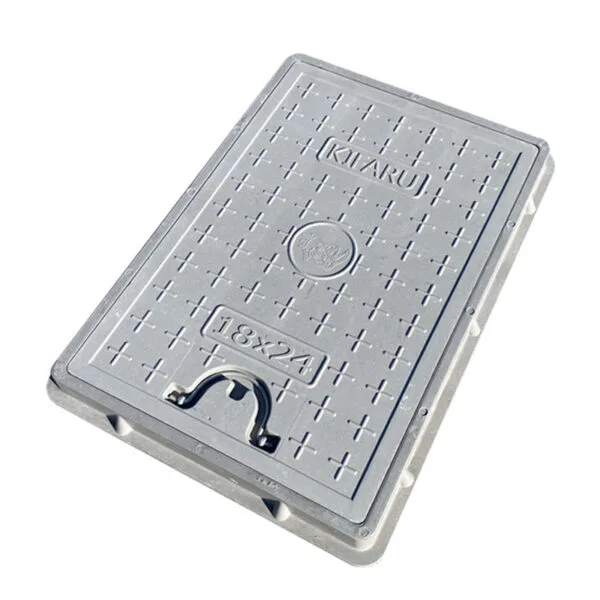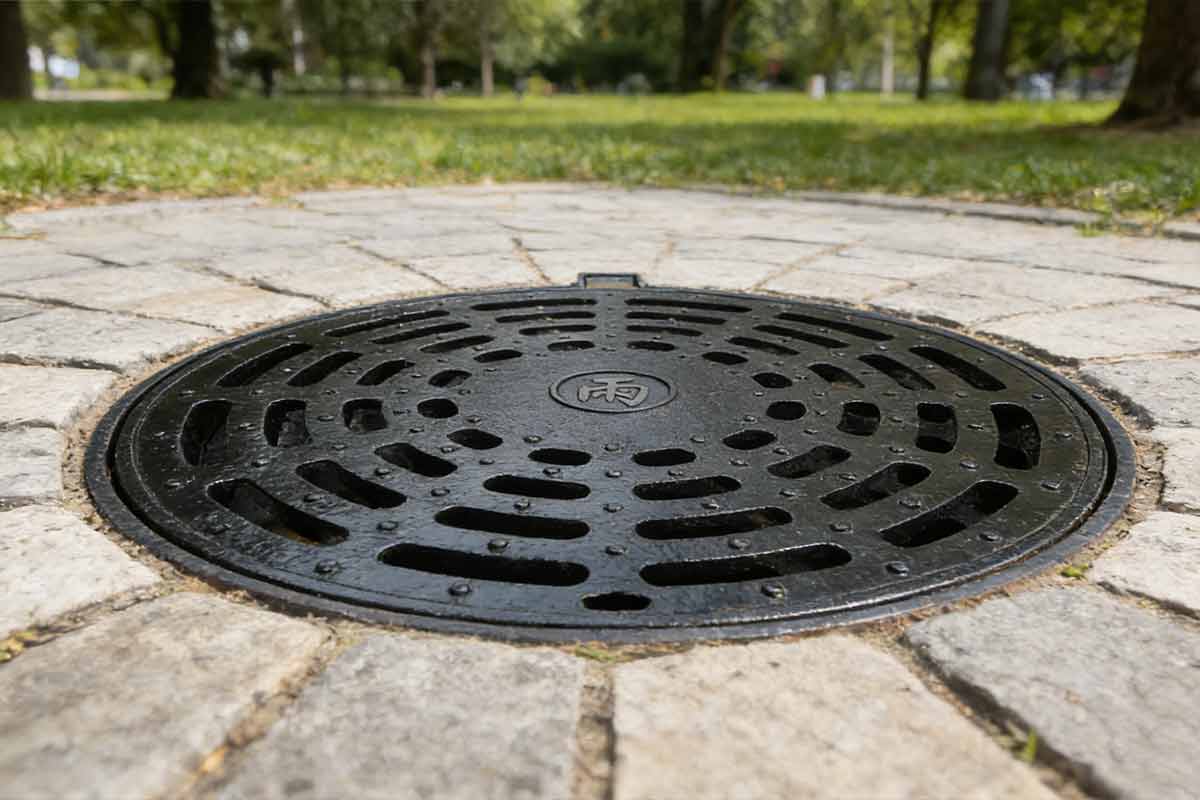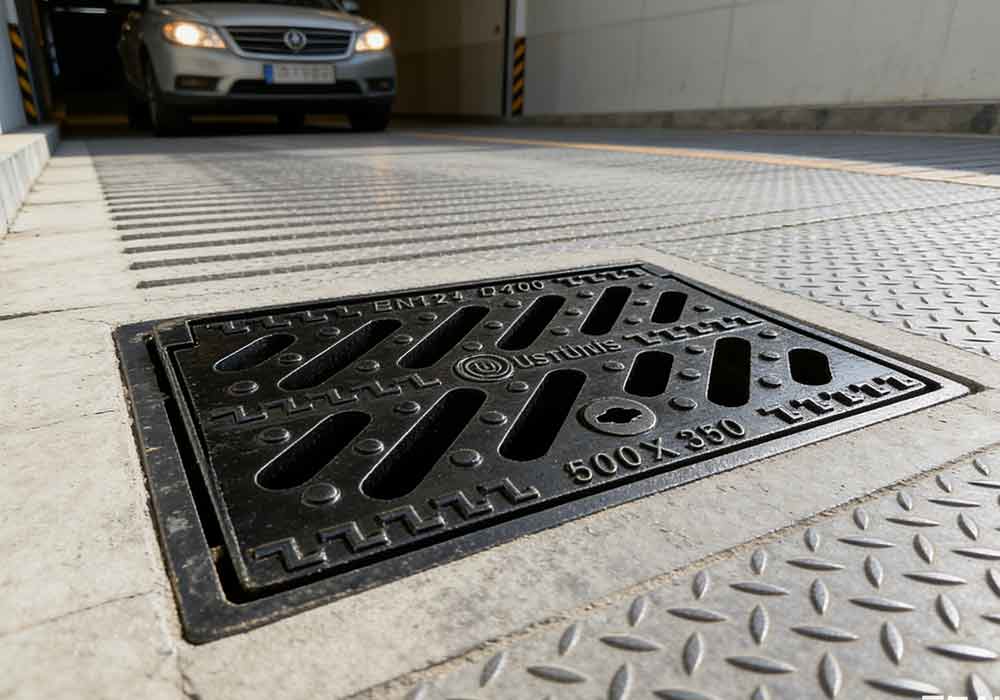


Welcome to our blog. We are a professional manufacturer of ductile iron and composite resin manhole covers, supplying infrastructure products for municipal and industrial projects worldwide.
- 👉 Follow us on Facebook for the latest product updates, industry news, and project cases.
- 👉 If you have any project requirements or need a quotation, feel free to contact our team directly for fast support and customized solutions.
Please continue reading our blog for more industry insights and product information.
Table of Contents
Key Takeaways
- Cast iron manhole covers are critical load-bearing infrastructure components in modern cities
- International standards such as EN 124, ASTM A48, and ISO 1083 define safety and performance requirements
- Ductile iron significantly outperforms gray cast iron in impact resistance and fatigue life
- Proper manhole cover cast iron selection reduces road failure incidents by up to 40%
- Load classes (A15–F900) ensure correct application across pedestrian, urban, and industrial zones
- Advanced coatings and smart monitoring systems are transforming modern infrastructure maintenance
Introduction
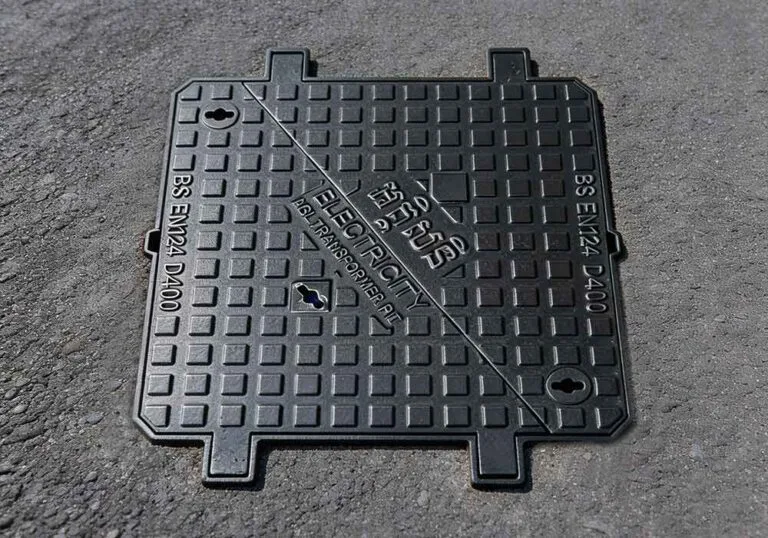
In modern infrastructure engineering, manhole cover cast iron is far more than a simple road cover—it is a critical structural safety component that protects underground utility networks worth millions of dollars. These include water supply systems, sewage networks, gas pipelines, telecom fiber optic channels, and electrical conduits.
Global infrastructure reports indicate that municipal governments spend over $12–18 billion annually on road and underground utility maintenance, and a significant portion of these costs is directly linked to manhole cover failures, misalignment, corrosion damage, or load collapse.
A single failed manhole cover can result in:
- Vehicle accidents and liability claims
- Underground pipeline exposure
- Flooding due to drainage failure
- Traffic shutdowns and emergency repair costs
Because of this, manhole cover cast iron standards are strictly regulated under international engineering frameworks to ensure public safety, durability, and long-term structural integrity.
Global Engineering Framework of Manhole Cover Cast Iron Standards
Manhole cover standards are designed to unify safety performance across different countries and climates. The most widely used global frameworks include:
- EN 124 (Europe)
- ASTM A48 / A536 (USA)
- ISO 1083 (International ductile iron standard)
- BS 497 / BS EN 124 (UK adaptation)
These standards define not only strength requirements but also material composition, fatigue resistance, testing cycles, and installation tolerances.
Engineering Objectives of Manhole Cover Cast Iron Standards
Structural Load Safety Assurance
Manhole covers must withstand both static and dynamic vehicle loads ranging from bicycles to 90-ton industrial transport systems.
Lifecycle Durability Control
Standards ensure minimum service life targets between 20 to 40 years depending on class and environment.
Environmental Resistance Requirements
Covers must resist corrosion caused by:
- Chloride exposure (coastal cities)
- Acidic rainwater
- Freeze-thaw cycles in cold regions
Why Standardization Matters in Global Infrastructure
Without standardized manhole cover cast iron systems:
- Road collapse risks increase significantly
- Maintenance costs become unpredictable
- Cross-border infrastructure projects lose compatibility
According to World Bank infrastructure reports, standardized components reduce lifecycle maintenance costs by up to 28–35%.
Detailed Load Classification System (EN 124 Engineering Standard)
Load Classes and Real Engineering Applications
| Class | Load Rating | Typical Load (kN) | Application Scenario |
|---|---|---|---|
| A15 | 15 kN | 1.5 tons | Pedestrian walkways, gardens |
| B125 | 125 kN | 12.5 tons | Sidewalks, parking lots |
| C250 | 250 kN | 25 tons | Roadside drainage systems |
| D400 | 400 kN | 40 tons | Urban roads, highways |
| E600 | 600 kN | 60 tons | Industrial logistics zones |
| F900 | 900 kN | 90 tons | Airports, ports, heavy industry |
Engineering Interpretation of Load Classes
Dynamic Load vs Static Load
- Static load: stationary pressure (vehicle parked)
- Dynamic load: moving impact force (traffic movement)
Dynamic load is typically 1.3–2.0 times higher than static load, depending on vehicle speed and road condition.
Real Infrastructure Deployment Mapping
- Residential zones → A15–B125
- Commercial districts → B125–C250
- Urban highways → D400
- Industrial ports → E600–F900
Material Science Behind Manhole Cover Cast Iron Systems
Gray Cast Iron vs Ductile Cast Iron Performance
Gray Cast Iron
- Compressive strength: high
- Impact resistance: low
- Crack propagation risk: high
- Cost: low
Ductile Iron (Nodular Iron)
- Tensile strength: up to 420–700 MPa
- Elongation: 10%–18%
- Fatigue resistance: high
- Industry preference: >85% of modern installations
ISO 1083 Material Composition Standards
Typical ductile iron composition:
- Carbon: 3.2%–3.9%
- Silicon: 2.0%–3.0%
- Magnesium: 0.03%–0.06%
- Phosphorus: <0.1% (controlled impurity level)
Metallurgical Advantages in Cast Iron Engineering
- Graphite nodules improve stress distribution
- Reduced crack propagation
- Enhanced vibration absorption
- Longer fatigue life under cyclic load
Performance Testing Protocols for Manhole Cover Cast Iron
Static Load Testing
Performed using hydraulic presses simulating real-world weight conditions.
Acceptance criteria:
- No visible deformation at rated load
- Permanent deformation < 0.1% of diameter
Dynamic Fatigue Testing
Simulates repeated vehicle traffic cycles:
- Standard test cycles: 100,000–2,000,000 cycles
- Simulated vehicle weight: up to 40 tons
Impact Resistance Testing
Drop hammer test:
- Weight: 50–150 kg
- Drop height: 1–3 meters
- Target: no cracking or fracture
Long-Term Aging Simulation
Accelerated corrosion tests simulate:
- 10–30 years environmental exposure
- Salt spray testing (ASTM B117 standard)
Anti-Theft Engineering in Manhole Cover Cast Iron Systems
Structural Weight Advantage
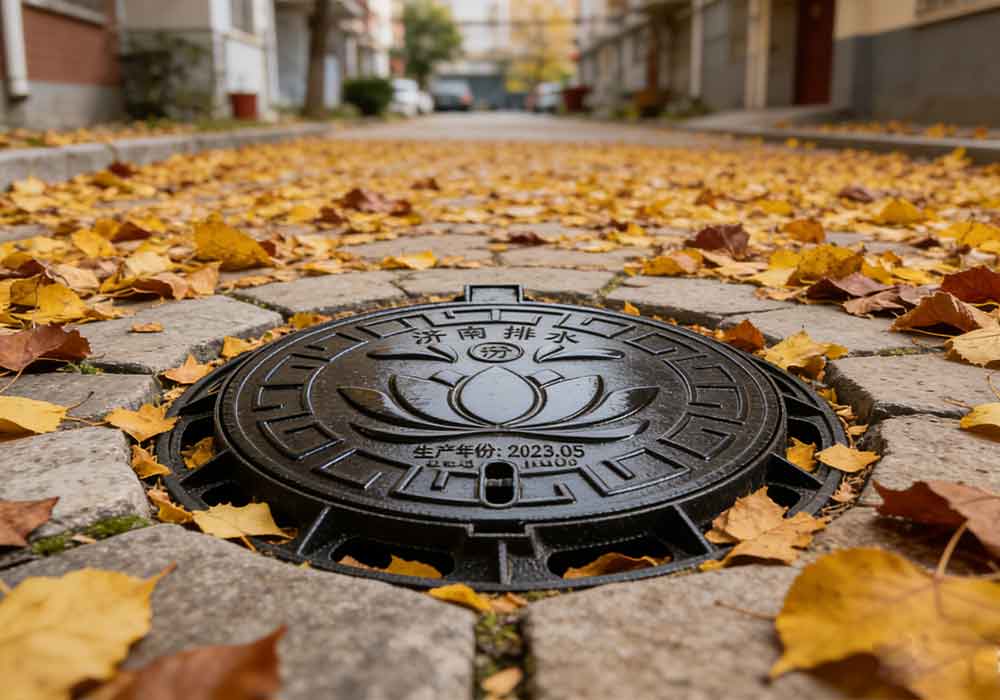
Typical ductile iron cover weight:
- 50 kg to 120 kg depending on size
This makes theft significantly harder compared to composite materials.
Locking and Security Systems
Modern designs include:
- Bolt-down locking mechanisms
- Hinged safety covers
- Embedded frame anchoring systems
Smart Anti-Theft Monitoring
Emerging systems integrate:
- RFID tracking chips
- GPS-enabled infrastructure tagging
- Real-time displacement alerts
Corrosion Protection and Surface Engineering Standards
Coating Technologies
- Epoxy resin coating (industrial grade)
- Bituminous protective coating
- Zinc-rich anti-corrosion layers
Environmental Performance Data
Field studies show:
- Coated covers last 30–50% longer in coastal environments
- Corrosion rate reduced by up to 65%
Installation Engineering Guidelines
Structural Foundation Requirements
- Minimum concrete bedding thickness: 150–200 mm
- Load distribution reinforcement required
- Frame alignment tolerance: ±2 mm
Road Surface Integration Standards
Improper installation causes:
- Vehicle shock damage
- Noise pollution
- Frame displacement
Proper installation ensures flush alignment with asphalt surface.
Global Infrastructure Case Studies
Smart City Upgrade Project (Europe)
- 12,000 manhole covers replaced
- Accident reduction: 21%
- Maintenance cost reduction: 27%
- Lifecycle extension: +15 years
Coastal Industrial Port Project (Asia)
- Installed F900-class covers
- Zero structural failure in 5 years
- Load stability improved by 38%
Urban Flood Prevention Project
Upgraded drainage system reduced:
- Flooding incidents by 32%
- Emergency repair costs by 18%
Market Trends in Manhole Cover Cast Iron Industry
Smart Infrastructure Integration
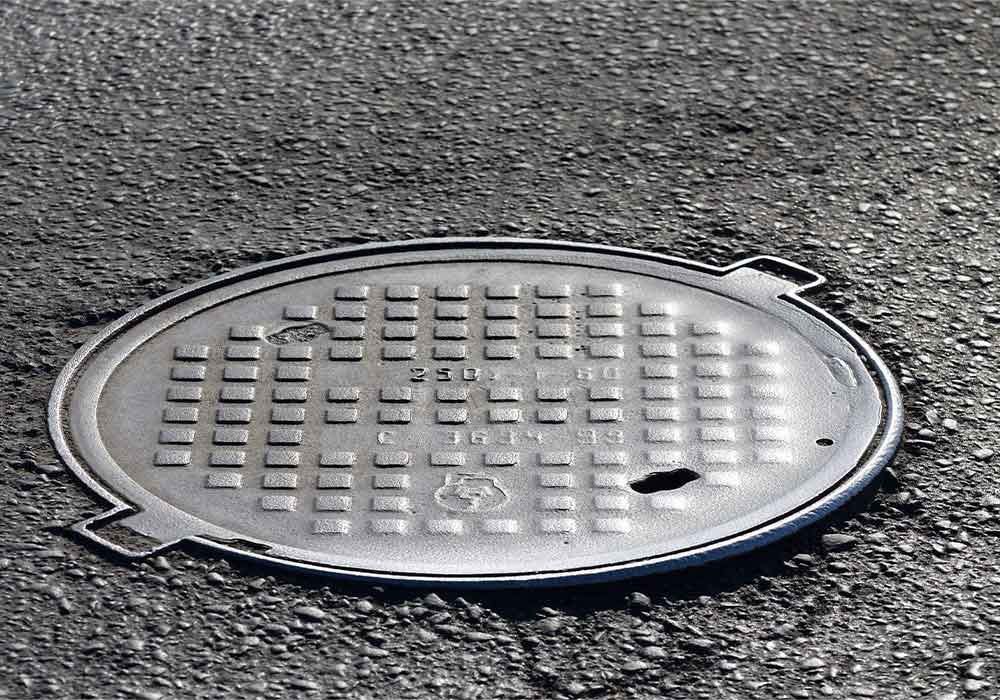
- IoT-based load monitoring systems
- Predictive maintenance analytics
- AI-driven structural health diagnostics
Global Market Growth
Industry reports (2025 forecast):
- Market size growth: 5.8% CAGR
- Highest demand regions: Asia-Pacific, Middle East, Africa
- Increased demand for D400+ class covers
Sustainability and Recycling Trends
- Cast iron recycling rate: >90%
- Circular economy adoption in municipal engineering
- Low-carbon production technologies emerging
Economic Impact of Manhole Cover Cast Iron Selection
Cost vs Lifecycle Efficiency
| Factor | Low-Grade Covers | Standard Cast Iron |
|---|---|---|
| Initial Cost | Low | Medium |
| Maintenance Cost | High | Low |
| Lifespan | 5–10 years | 20–40 years |
| Failure Risk | High | Low |
Infrastructure ROI Analysis
Proper manhole cover cast iron selection improves:
- Infrastructure ROI by 18–30%
- Maintenance frequency reduction by 40%
- Emergency repair cost reduction by 25%
FAQ
What is manhole cover cast iron used for?
It is used to protect underground utility systems while supporting vehicle and pedestrian loads.
Why is ductile iron preferred over gray cast iron?
Because it offers higher tensile strength, better impact resistance, and longer service life.
How long does a cast iron manhole cover last?
Typically 20–40 years depending on load class and environment.
What is the strongest manhole cover class?
F900 is the highest load class used for airports and heavy industrial zones.
Are cast iron manhole covers recyclable?
Yes, they are fully recyclable and widely reused in metallurgy industries.
Conclusion
The performance of manhole cover cast iron systems directly determines the safety, reliability, and efficiency of modern urban infrastructure. From material science and load classification to anti-theft design and smart monitoring, every engineering detail contributes to long-term structural stability.
By following international standards such as EN 124, ISO 1083, and ASTM frameworks, cities can significantly reduce infrastructure failure rates, improve public safety, and lower long-term maintenance costs.
In the era of smart cities and digital infrastructure management, manhole covers are no longer passive components—they are critical engineering assets in global urban development systems.