

Table of Contents
Manhole cover markings become a procurement problem when the casting, quotation and test paperwork tell different stories. A raised material designation may sit beside an assembly class, a pattern number and an unfamiliar date code. None should be interpreted in isolation. Before accepting or rejecting the delivery, identify what each mark claims and which document is supposed to support it. This guide gives buyers a practical way to investigate conflicting information, preserve the actual delivered identity and obtain a documented disposition without assuming that a strong material designation proves a complete cover's performance.
Photograph the delivered identity before cleaning or sorting
Capture the lid, frame and packaging identifiers while their relationship is still clear. Include one overall view showing the paired components and close views of relevant marks with enough light to read them. Record the delivery reference and location. If several models arrived together, keep them distinguishable rather than placing every lid in one pile before inspection. A later question about a mark is much easier to resolve when the original pairing and shipment context remain documented.
Do not grind, repaint or remark an uncertain designation to make it agree with the order. That destroys useful evidence and may create a misleading appearance of conformity. Record unclear or partially filled characters as observed instead of guessing what they ought to say. If a temporary label contradicts a cast feature, retain both. The first task is to preserve the discrepancy accurately; deciding which information is authoritative comes through the technical and supplier review.
Divide the marks into different kinds of information
Ask the supplier to explain the marking scheme for the offered model. Separate manufacturer identity, product reference, assembly classification, material designation and production information. A pattern number can look like a batch code, while a date can be mistaken for a standard edition. Do not assign meaning from format alone. The explanation should identify the physical location and function of each important mark so the receiving team can apply it consistently across the shipment.
Check both lid and frame. Their identifiers may serve different purposes and need not be identical to be a legitimate pair. Conversely, matching top patterns do not prove compatibility. Ask which references establish the approved pairing and whether production variations are permitted. The inspection record should preserve the actual characters and the supplier's interpretation separately. That distinction allows a reviewer to revisit the explanation without losing the evidence on which it was based.
Keep material designation separate from assembly class
A material specification describes a different subject from the tested or declared performance of a complete lid-frame assembly. ASTM A536, for example, is a specification for ductile-iron castings. Its official public scope is a material reference, not a universal statement that every cover made from that iron belongs to a particular assembly class. Use the applicable project standards and technical review to determine what each marking must demonstrate.
Do not convert a material strength figure into an allowable road load by a simple assumption. Shape, support, opening size and the complete test arrangement also matter to an assembly assessment. Equally, a load-related mark does not establish every material property or exposure resistance. Keep the two evidence streams connected to the delivered model but separately reviewable. This prevents a genuine material claim from being used to excuse an unresolved assembly-class discrepancy.
Technical reference: ASTM A536 ductile-iron material specification scope.
Compare the order, drawing and report as one configuration
Create a small comparison record showing the ordered model, accepted drawing revision, reported specimen and physical delivered identifiers. Add the claimed material and assembly classification in separate columns. Identify precisely where they differ. A vague complaint that the cover has the wrong stamp gives the supplier little basis to respond. A located mismatch between the accepted drawing and a specific delivered frame is much more actionable.
Read any report limitations and specimen description before deciding that its headline result applies. Another opening size, frame profile or accessory arrangement may require an applicability explanation. A correct-looking class mark cannot supply that missing link. Conversely, a typographical error in paperwork may be resolvable without replacing a conforming casting, but only through a controlled correction. Let the responsible reviewer distinguish documentation error, marking error and a different supplied product.
| Conflict observed | Question to resolve | Useful disposition evidence |
|---|---|---|
| Material mark differs from order | Was a different material supplied or is identification incorrect? | Component-linked material clarification |
| Assembly class differs across documents | Which exact configuration supports the claimed class? | Accepted drawing and relevant report relationship |
| Lid and frame references differ | Are these parts an approved pair? | Supplier-confirmed compatibility record |
| Label differs from cast information | What does each identifier represent? | Marking map and shipment reconciliation |
Investigate whether a mixed assembly created the conflict
Check receiving and storage history for lids separated from their original frames. A mixed delivery can contain similar components with different seats, locks or references. Ask the supplier about confirmed interchangeability rather than trying each lid until one appears to close. Record the identity of uncertain pairings and prevent them from being distributed while the discrepancy remains open. The aim is to establish the correct assembly, not merely to find a combination that fits the visible opening.
Look for a shipment split, replacement component or earlier stock item that entered the group. These possibilities should guide reconciliation without becoming unsupported accusations. Compare physical marks with the packing schedule and accepted item list. If the supplier can establish the correct relationship through production records, retain that explanation. Do not rewrite the inspection sheet as if the pairing had never been uncertain; the disposition is part of the useful evidence chain.
Hold the affected scope without losing component identity
When the discrepancy affects acceptance, identify which units or groups are on hold and why. Keep their labels, marks and document references intact. Avoid treating the entire stock as identical if the evidence distinguishes different models or production groups, but do not release similar-looking items merely because only one was first noticed. The owner and reviewer should define the appropriate scope using the information available.
A hold record should state the unresolved requirement and who can issue the disposition. Keep held components away from normal installation allocation so an urgent request does not bypass the review accidentally. If the site needs temporary protection or a replacement to maintain service, handle that through the owner's operational process. Urgency does not make an uncertain material or class designation self-explanatory, and an installed casting becomes harder to reconcile once its hidden marks are inaccessible.
Request a correction that explains the cause and final status
Ask the supplier to identify whether the discrepancy concerns the product, its mark or its accompanying document. The response should link the affected component references to the proposed action and supporting evidence. A new certificate bearing the desired wording is not enough if no one explains why the original differed. Similarly, a statement that all products are equivalent does not establish the permitted relationship between the particular models.
If remarking is proposed, obtain an approved method and a technical basis showing what the replacement mark represents. Preserve the original condition in the record and identify who authorized the change. Do not allow a local workshop to add a class or material designation on the buyer's assumption. A corrected mark should reflect a substantiated product identity; it cannot create performance that has not been demonstrated under the relevant requirements.
Reconcile replacement items before they enter the work programme
Inspect any replacement against the accepted configuration and its own delivery identity. Do not automatically transfer an earlier review to another model simply because it arrives to close the nonconformity. Check the drawing, component pairing and relevant evidence again where the proposal changes. Link the replacement to the original disposition so procurement and the site can see which physical items were returned, retained or accepted.
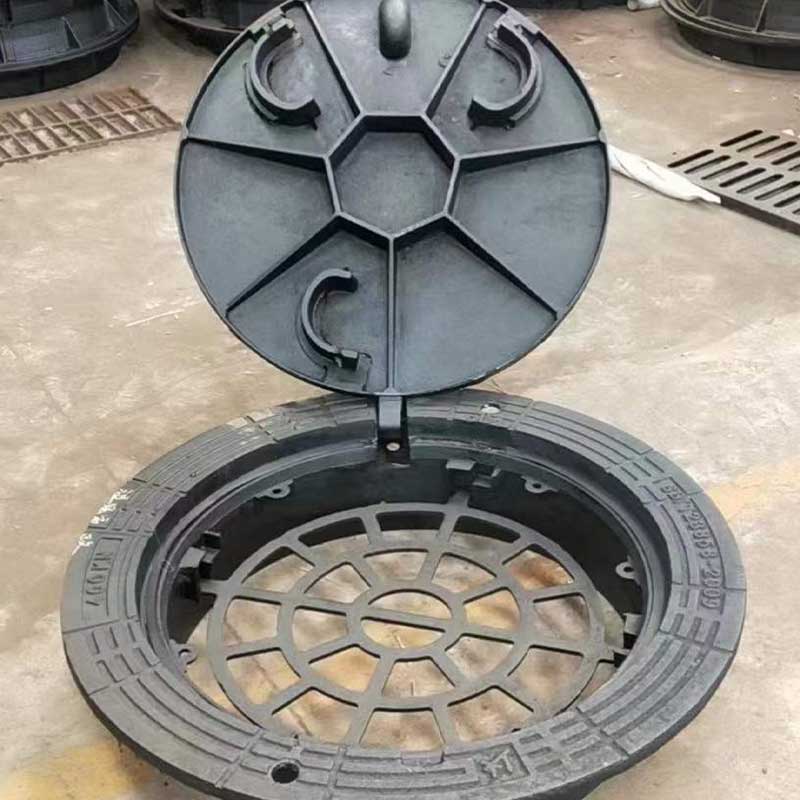
Shengxin's round cast iron manhole cover range provides a relevant starting point for a clarified enquiry. Send photographs of the marks together with the required assembly and material information. Request the exact proposed model and its marking explanation in writing. A general catalogue page can identify a family, but it does not resolve a discrepancy in a particular shipment. Keep the reply tied to the supplied components and agreed order requirements.
Carry the resolved identity into the asset record
At installation, link the accepted lid and frame to the site asset reference and retain photographs of marks that will later be hidden. Store the accepted drawing and disposition with the related evidence. Future maintenance crews need enough information to order compatible parts without repeating the original uncertainty. A record that says heavy-duty cover installed omits the distinctions that made the purchase review necessary.
When a later repair changes the lid, frame or hardware, update the identity link. The original marking explanation may no longer describe the complete assembly. Review affected claims proportionately rather than inheriting them from the asset's history. Good marking control gives the owner a clear statement of what is installed and why it was accepted. It preserves the limits of each claim instead of allowing a few raised characters to become a substitute for all technical evidence.
Discuss the project requirements
Send Shengxin clear photographs of the lid and frame marks with your accepted drawing and order requirements. Request a component-specific explanation and documented resolution before releasing uncertain assemblies for installation.
Related product information: Shengxin round cast iron manhole cover range. Share the applicable project documents through our contact page.
Project questions
Does a material designation prove a cover’s load class?
No. Material and complete-assembly requirements address different subjects. Review the relevant evidence for each and connect it to the offered configuration.
Must the lid and frame carry identical numbers?
Not necessarily. Ask which identifiers establish the approved pairing and what each number means for the specific model.
Can an unclear mark be interpreted from a similar product photograph?
Use the actual delivered evidence and the supplier’s marking explanation. A similar photograph cannot establish the identity of the item under review.
Is a replacement certificate enough to close a discrepancy?
It needs a controlled explanation connecting the correction to the affected components and the requirement. The responsible reviewer must accept that basis.
What should be preserved before installation?
Capture component marks, pairing, shipment references and the accepted disposition, especially identifiers that will become hidden after setting the frame.