

Table of Contents
Composite manhole cover fire performance is often reduced to a short label such as flame retardant. That label does not explain the exposure, specimen, measured result or function required at the installation. A surface-burning test and an assessment of an assembly's ability to perform a defined role during fire answer different questions. Before using a report in procurement, identify what the project actually requires and which part of that requirement the evidence addresses. This guide helps buyers and technical reviewers interrogate fire-related claims without assigning unverified ratings or treating a material test as approval for every use of a composite access cover.
Translate the project concern into a defined requirement
Ask why fire performance matters at this location. The concern may relate to nearby combustible materials, infrastructure beneath the cover or a specified function in a building or industrial design. The responsible fire and engineering professionals should identify the required outcome and governing criteria. Do not let the purchasing team choose a test simply because a supplier already has a favourable result. The evidence request needs to follow the requirement rather than define it retrospectively.
Keep different outcomes separate. Limiting a material's contribution to fire, maintaining a barrier function and preserving safe operation after an incident are not interchangeable promises. If more than one matters, identify each in the brief. Avoid a blanket request for a fireproof cover. It gives no usable acceptance basis and encourages vague responses. The specification should state the function and applicable framework with enough precision for a reviewer to decide whether the proposed evidence is relevant.
Identify the specimen behind the headline result
Request the complete report or an adequate controlled technical submission, not only a cropped certificate image. Check whether the specimen was resin, a composite coupon, a panel with a surface layer or the complete cover assembly. Record thickness, construction, preparation and mounting information that affect applicability. A successful test of one specimen does not establish that a production lid of another geometry has the same performance in its installed position.
Link the specimen to the offered construction using model, material and revision information. Include any flame-retardant surface treatment or coating that formed part of the test. If the supplier has changed a formulation or layer since the report, ask for an explanation of relevance or further evidence. Proprietary details can be handled through controlled documentation, but the buyer still needs a traceable connection. The word composite alone cannot make that link.
Read the method's stated purpose and limitations
A test name should lead the reviewer to the method's scope, not be treated as a general fire approval. ASTM's public E84 description, for example, concerns comparative surface-burning characteristics under stated conditions and identifies limitations including heat-transmission measurement. This illustrates why a flame-spread result must not silently become a claim about an access assembly's barrier performance. It does not mean E84 is automatically the correct method for a particular manhole cover project.
Ask the responsible reviewer to identify which methods and classifications the project requires. Confirm the report's method and edition and whether its application to the specimen is explained. Do not relabel results from one framework using another framework's class names without a valid basis. A concise evidence schedule should show the claimed function, supporting report and remaining gap. That makes a limited but useful material result distinguishable from a complete project acceptance.
Technical reference: ASTM E84 surface-burning method scope and limitations.
Keep measured results separate from commercial adjectives
Replace labels such as self-extinguishing or low smoke with the actual reported result and its conditions where the relevant report supports such a statement. Determine who assigned any classification and under what scheme. A supplier's summary can help navigation, but the technical decision needs the underlying information. Avoid repeating a fire-resistance duration, smoke claim or noncombustibility claim unless the evidence and intended application genuinely support it.
Read the report's observations and limitations as well as its conclusion. Mounting, exposed face and support conditions can affect interpretation. Do not discard those details because a one-line score is easier to compare. The procurement record should retain the result as reported and describe its scope in plain language. Where the required property was not measured, mark it unverified rather than borrowing reassurance from a different measured property.
| Claim or evidence | What to clarify | Conclusion to avoid |
|---|---|---|
| Surface-burning result | Method, specimen and reported scope | The installed opening has a proven barrier duration |
| Material flame-retardant description | Traceability to formulation and test evidence | Every composite construction performs identically |
| Complete-assembly assessment | Dimensions, supports, joints and permitted variants | Any similar frame or finish is covered |
| Post-incident appearance | Known exposure and required technical assessment | An intact-looking lid is automatically fit for service |
Assess the complete cover and frame function where required
If the design requires a particular assembly function during fire, include the frame, joints, supports, fasteners, seals and installation interfaces in the evidence review. A material coupon does not reproduce every route through an assembled opening or every restraint holding it in place. Ask whether the evidence represents the actual dimensions and configuration, and what limits apply to variants. The responsible professional should determine the adequacy of that basis for the intended role.
Do not infer continued load-bearing or safe pedestrian use after heating from a surface-burning result alone. Likewise, a nonmetallic body does not establish the performance of its metal inserts or accessories under the relevant exposure. Keep ordinary structural acceptance and fire-related acceptance separately traceable, while ensuring that the offered model is the same in both submissions. A product can have evidence for one function and an unresolved question for another.
Review installation conditions that can invalidate assumptions
Compare the report or approved assessment with the proposed support, orientation and surrounding construction. If an assembly requirement depends on a defined joint or infill, identify it on the installation drawing. A site substitution may affect the basis of acceptance even when the cover itself is unchanged. Make the critical installation features visible to the contractor and inspector so they do not disappear in a general note to install according to instructions.
Also review any proposed added finish, coating or local repair. A cosmetic layer may change the exposed construction from the specimen described in the report. Ask for an approved disposition before assuming that more coating is beneficial. Keep the installed configuration consistent with the accepted evidence. Where it cannot match, obtain the responsible review rather than presenting the original report as if no difference exists.
Use a claim-to-evidence matrix to expose missing answers
Place each required fire-related function in its own row. Identify the offered construction, report reference, measured property and reviewer decision. Add a separate column for conditions and limits. This avoids a stack of certificates creating the impression of completeness when every document addresses the same narrow material property. The matrix should make both supporting evidence and open questions understandable to procurement without asking it to perform the specialist fire assessment.
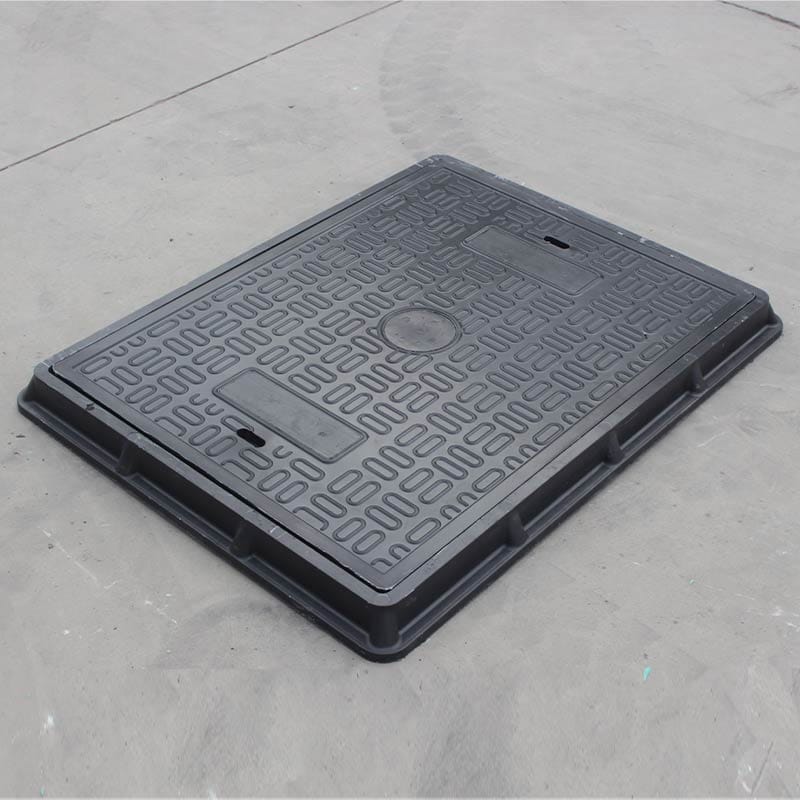
Shengxin's round composite manhole cover range provides a relevant starting point for a technical enquiry. Send the actual fire-performance requirement and ask which evidence is available for the proposed configuration. Do not treat a general product page or a declaration about resin as a substitute for the requested submission. Where an appropriate option cannot yet be demonstrated, keep the item subject to technical resolution rather than writing a verified rating into the purchase order.
Define the response after a heat or fire incident
Ask the owner how affected assets will be secured and assessed after an incident. The response should be established with the appropriate professionals and operating procedures, not improvised from a marketing label. Preserve identification and incident information for the technical review. A cover that appears intact is not automatically confirmed suitable for continued loading, while visible damage needs a controlled disposition rather than a cosmetic repair intended to restore appearance.
Do not prescribe a universal field heating test or encourage personnel to reproduce fire conditions. Fire testing belongs with competent facilities and appropriate methods. For service assets, document the observed condition and known exposure as far as reliable information permits. The reviewer can then decide what inspection, testing or replacement is appropriate. This keeps the original procurement claim from being misused as a blanket statement that the asset needs no assessment after an event.
Retain the accepted scope through future replacements
At handover, store the evidence matrix, reports, reviewed assembly drawing and critical installation record under the asset reference. Record the exact construction and any restrictions on replacement parts or finishes. Future purchasers need to know which requirements drove the selection. A replacement described simply as the same size and composite material may not preserve the accepted fire-related construction.
When the supplier proposes a revision or the site changes its required function, revisit the affected evidence rather than inheriting every prior claim. The review can remain proportionate and focused on the change. The objective is a clear, supportable statement about the offered cover under defined conditions. That provides a better basis for purchasing and asset management than a broad fire-performance adjective whose meaning no one can recover when the cover is inspected or replaced.
Discuss the project requirements
Send Shengxin the fire-performance requirements established by your project specialists. Request the exact offered construction and relevant reports, then review the evidence scope and installation conditions before approving any fire-related claim in the order.
Related product information: Shengxin round composite manhole cover range. Share the applicable project documents through our contact page.
Project questions
Does flame retardant mean fireproof?
No. Define the required function and review the actual test or assessment scope. A broad adjective does not establish every fire-related property.
Can a resin test prove a complete cover’s fire performance?
It may inform material assessment, but the connection to the production cover and any required assembly function must be established separately.
Does a flame-spread result prove heat resistance through an opening?
Do not assume that. Methods measure specific properties and have stated limits. The responsible reviewer should identify the evidence required for the project’s function.
Can a coating be added after the fire review?
Review the change before application. A different exposed construction may fall outside the accepted evidence or introduce new maintenance requirements.
What should a fire-performance enquiry include?
Provide the required function and governing criteria, proposed installation and exact assembly details. Request traceable reports and a clear explanation of their applicability and limitations.