

Table of Contents
Composite manhole cover chemical resistance cannot be established by the statement acid and alkali resistant. An industrial site may expose a cover to diluted wash water, occasional splashes, persistent contamination or a specific process chemical, and those are different service conditions. The resin, reinforcement, surface and hardware also need to be identified. Before comparing materials, turn the site exposure into a useful technical brief. This guide helps buyers request relevant evidence, separate spill control from cover selection and avoid approving a broad chemical-resistance claim that says little about the actual installation.
Name the substances that can contact the cover
Work with the site's process and maintenance teams to identify substances reaching the surface or underside. Use controlled chemical names and available product information rather than general labels such as corrosive water. Include cleaning products, process residues and any mixtures that are relevant to normal operation. A safety data sheet can help identify a substance, but it does not itself establish compatibility with a proposed cover material.
Separate confirmed routine exposure from credible accidental exposure and from unknown conditions. If the site cannot identify a mixture, record that gap and determine what further assessment is needed. Do not ask a supplier to approve an unspecified chemical environment. The material recommendation should rest on a defined exposure description, with ownership of assumptions clear. This also helps the buyer recognize when a cover enquiry actually requires input from the site's environmental or process specialist.
Describe contact conditions as well as chemical identity
State the relevant concentration, temperature context, frequency and duration of contact using the site's known operating information. Distinguish a brief splash followed by approved cleaning from prolonged wetting or immersion. Identify which side of the cover is exposed and whether trapped liquid can remain in recesses. Do not invent convenient conditions merely to match a supplier chart. The question is how the actual installation compares with the evidence available.
Include mechanical service where it affects the assessment. Traffic, abrasion and loading can coexist with chemical contact, while a simple compatibility table may address a different condition. The responsible technical reviewer should decide which combined effects need evidence. A positive material chart entry under one condition is not a guarantee for every temperature, mixture and loading state. Preserve those distinctions in the review instead of reducing a complex exposure to a green cell in a purchasing spreadsheet.
Identify the complete material system being offered
Request traceable identification of the resin-based construction, reinforcement and exposed surface. If a protective coating is part of the recommendation, include its reference and application requirements. The supplier may protect proprietary formulation details, but should provide enough controlled identification to link evidence with production. The general term composite covers many constructions and cannot establish chemical behaviour of a particular product.
Review seals, lifting inserts, fasteners and locks separately. Their materials may differ from the cover body and may govern operability after exposure. Ask how the proposed chemicals affect those components and whether maintenance or replacement restrictions apply. A resistant body with an unsuitable latch can still leave the asset difficult to open. The enquiry should describe the offered assembly, not treat every accessory as if it automatically shares the resin's compatibility.
Ask what each compatibility statement is based on
Distinguish published material guidance, laboratory exposure results and field observations. All may contribute to a decision, but their scope differs. Ask for the tested material, reagent, conditions, properties measured and acceptance basis where test evidence is offered. ASTM's plastics standards catalogue identifies chemical-reagent evaluation practices among its material-testing resources. The responsible reviewer should select the applicable method and edition rather than assume that any report carrying a standard number answers the site's question.
Check whether the evidence reports appearance only or also relevant dimensional and mechanical changes. A sample that looks unchanged after exposure has not necessarily demonstrated the complete assembly's retained function. Conversely, a visible change may require interpretation rather than an unsupported declaration of failure. The acceptance basis should be defined before testing or approval. Record missing properties and the reason the reviewer considers the evidence sufficient or requests further work.
Technical reference: ASTM plastics testing standards catalogue.
| Exposure information | Why it matters | Question for the evidence review |
|---|---|---|
| Named substance and mixture | General labels hide important differences | Does the supporting information address this chemistry? |
| Concentration and contact time | Splash and prolonged wetting are different conditions | How closely do test and service conditions align? |
| Temperature and mechanical service | Material behaviour depends on the full context | Which combined effects remain unverified? |
| Body, seals and hardware | Accessories may use different materials | Does the recommendation cover the complete assembly? |
Compare the evidence with the service exposure explicitly
Use a comparison sheet with one row for each important substance or condition. Identify the supporting evidence and state any mismatch in concentration, temperature, duration or material construction. Do not silently interpolate between unrelated chart entries or treat resistance to one chemical as proof for a mixture. Where the evidence does not represent the intended use, ask for a justified technical assessment, additional testing or a revised proposal.
Keep uncertainty visible in the purchase decision. A supplier recommendation may be conditional on prompt cleaning or a protective finish. If the owner accepts that condition, the operating team must be able to implement it. An assumption that is never handed over cannot protect the installation. Avoid broad warranties or service-life predictions that the underlying evidence does not support. A defensible review states both the available basis and the limits within which the material is being selected.
Keep drainage and spill control in their proper design process
A chemically compatible cover does not determine where contaminated liquid is allowed to go. The site must manage containment, drainage connections and disposal under its applicable operating and regulatory requirements. If a cover lies in a spill-prone area, involve the responsible site personnel before changing its openings, seals or drainage arrangement. Material selection supports that plan; it does not approve discharge or transform a general access cover into a complete containment system.
Similarly, a sealed appearance is not evidence of chemical-tight performance under every condition. If the project requires a defined exclusion or retention function, specify the conditions and request evidence for the exact assembly and installation. Do not solve a contamination concern by applying an unreviewed sealant or closing vent openings. Such changes can affect other functions and may leave the original process hazard unresolved.
Agree cleaning, inspection and repair before delivery
Ask the supplier for approved cleaning methods compatible with the proposed material system and site substances. Confirm any restrictions on chemicals, temperatures, abrasives or tools. The site should incorporate those requirements into its existing operating procedure. A maintenance team should not discover after installation that its routine cleaner conflicts with the accepted proposal. Resolve that compatibility early, while the material or cleaning choice can still be changed through the appropriate review.
Define what observations prompt further assessment, such as unexpected surface change, swelling, cracking, damaged hardware or loss of normal closure. Do not invent universal damage limits. Preserve the condition before applying cosmetic repairs or coatings that could hide evidence. Record the known exposure history when reporting a concern. The reviewer needs both the component condition and what contacted it to determine the appropriate response.
Send the supplier a bounded chemical-exposure brief
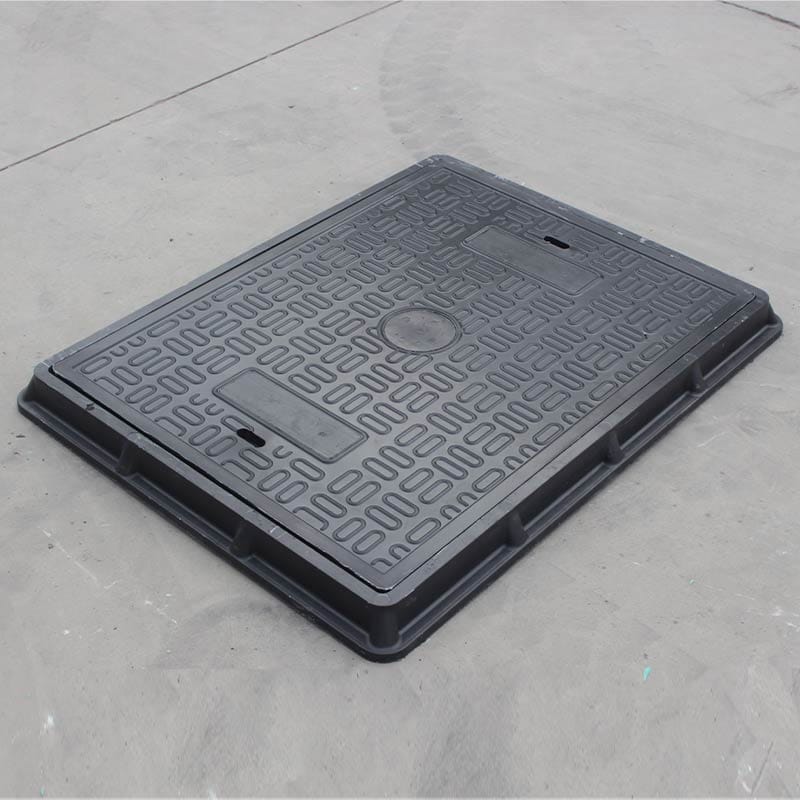
Shengxin's round composite manhole cover range provides a relevant starting point for discussing a material proposal. Include the exposure schedule, service conditions, opening geometry and required operating functions. Ask the supplier to identify the offered construction, available supporting evidence and any limitations. Do not interpret a general corrosion-resistance statement on a product page as confirmation for an industrial chemical that the supplier has not been told about.
Retain the accepted exposure brief with the assembly drawing and maintenance record. If the site's process or cleaning products change, review whether the original recommendation still applies. The asset can remain visually unchanged while its service conditions have moved outside the approved basis. A controlled procurement process makes that relationship visible. It lets the owner request targeted advice or new evidence rather than treating the original phrase chemical resistant as permanent permission for any future exposure.
Discuss the project requirements
Send Shengxin a named chemical-exposure schedule with contact conditions and required assembly functions. Request a specific material recommendation and available supporting evidence, then have the site's responsible technical team review any gaps before ordering.
Related product information: Shengxin round composite manhole cover range. Share the applicable project documents through our contact page.
Project questions
Is acid and alkali resistant enough for an industrial order?
No. Identify the actual substances and contact conditions, then request evidence applicable to the offered material and complete assembly.
Does a safety data sheet prove cover compatibility?
No. It can help describe the substance and handling information, but product-material compatibility requires its own relevant assessment.
Can a chart for one resin apply to every composite cover?
Not automatically. Confirm the offered construction, surface and evidence relationship. Reinforcement, processing and accessories may also require consideration.
Does chemical resistance establish spill containment?
No. Containment, drainage routing and any sealing performance are separate requirements that need a defined site design and appropriate evidence.
When should compatibility be reviewed again?
Review it when process substances, cleaning products, exposure conditions or the supplied construction change, or when inspection identifies an unexpected condition.