

جدول المحتويات
A composite water meter pit cover may be considered when an underground meter is difficult to read by radio. The purchasing question is whether the proposed assembly improves reliable data collection at the actual site. A material name cannot answer that question on its own. The meter antenna, pit geometry, nearby metalwork, water conditions and collector route all belong in the evaluation. A successful reading with the lid open is useful diagnostic information, but it does not demonstrate performance with the finished cover closed. This article sets out a practical trial brief for utility buyers who need to compare candidate covers without turning a general claim about radio transparency into an unsupported project guarantee.
Define a successful reading before comparing cover materials
Start with the metering team's operational requirement. Identify the meter and radio module, communication technology, normal reporting cycle and the location or route of the receiving equipment. Decide whether the objective is routine fixed-network reporting, a drive-by reading or a technician's local interrogation. These are different use cases. A cover that permits a nearby handheld reading may still fail to meet the intended collection method. Keep the cover enquiry tied to the actual equipment and workflow.
Choose acceptance measures that the network operator can retrieve and interpret. Depending on the system, useful evidence may include successful expected reports, missed-report patterns and the module's recorded link indicators. Do not invent an acceptable signal threshold from an unrelated radio system. The operator should define the required observation period and pass criteria before samples arrive. Otherwise, a brief demonstration can be declared successful even though it says little about normal service reliability.
Document the complete pit rather than the removable panel
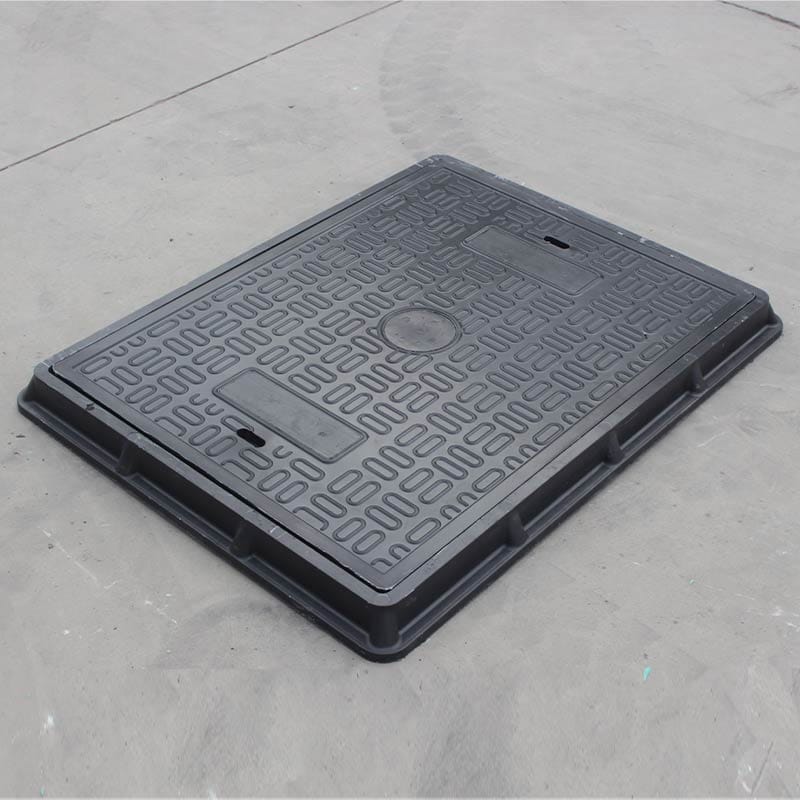
Record the clear opening, frame material, panel geometry, supporting structure and the meter's position below the surface. Include photographs showing the antenna relative to the cover and nearby pipes, reinforcement or brackets. If the radio module is connected to a separate antenna, note its model, mounting and cable routing. The trial needs to reproduce the installed arrangement. Moving the antenna above ground while evaluating a below-ground cover changes the question being tested.
Identify components that would remain unchanged in a rollout. A composite panel within a substantial metal frame is a different assembly from a panel and frame made to another design. Locks, lifting inserts and embedded parts should be disclosed where relevant to the radio assessment. Their presence does not automatically determine the result, but it belongs in the record. Draw the pit section so the network team can distinguish a cover effect from a change in equipment position.
Use an open-cover reading as a diagnostic baseline
Where the utility's safe work procedure permits, compare readings under controlled configurations. Record the normal closed assembly first, then a permitted diagnostic condition, and finally the proposed assembly. Keep receiver position, radio settings and equipment identity consistent. A technician standing closer during one reading can create an apparent improvement unrelated to the lid. Capture the configuration and time with every result so that later reviewers do not merge unlike observations into a single average.
An open-cover result helps identify whether the surface assembly may contribute to the difficulty. It is not a final acceptance test because the pit is then in a condition that will not exist during routine operation. If communication remains poor with the opening unobstructed, the project may need a broader network investigation. Do not assume a more expensive panel will resolve problems caused by equipment condition, receiver coverage or an unsuitable antenna arrangement.
Select trial locations that represent difficult installations
Choose sites deliberately rather than accepting only the easiest demonstration pit. Include the relevant range of depths, surrounding construction and collector conditions. If water accumulation is a real operating condition, the trial plan should address it without deliberately exposing equipment beyond its approved limits. Record any condition that cannot be reproduced safely. A trial limited to a dry shallow pit should not be described as proof for a wet, deeper installation elsewhere in the network.
Use paired comparisons where practical. The same location measured with each approved candidate gives a more interpretable result than unrelated readings from different streets. Keep the sample identity and drawing revision with the record. If the cover geometry or formulation changes between the trial and production, ask whether the evidence still represents the offered product. A successful pilot does not automatically validate every cover sold under the same broad composite description.
| Trial configuration | What it helps answer | What it does not establish |
|---|---|---|
| Existing assembly closed | Current service baseline | The cause of every missed reading |
| Opening unobstructed under an authorized procedure | Whether the surface assembly may affect the link | Performance of a finished closed installation |
| Candidate assembly closed in the same pit | Relative result for that equipment and location | All frequencies, pit depths or frame designs |
| Production installation monitored in service | Whether the approved configuration meets the operating requirement | Unrelated structural or sealing properties |
Observe repeated reporting rather than one successful packet
Radio links can vary with the environment and the collection method. NIST's work on built-environment signal propagation discusses the complexity of propagation and penetration in real surroundings. That research supports measuring the actual environment, while it does not certify any particular water meter pit cover. For a purchasing trial, keep the interpretation narrow: repeated field observations are needed to evaluate the proposed meter, cover and network combination.
Let the operator choose a monitoring period that captures the expected reporting behaviour and relevant operating variation. Preserve missing reports as missing, rather than replacing them with the next successful reading. Note network outages, maintenance visits and configuration changes that could affect interpretation. If the radio platform only exposes limited diagnostics, state that limitation. The result should explain what was observed and under which conditions, not hide uncertainty behind a single best signal value.
Technical reference: NIST built-environment signal propagation research.
Evaluate mechanical suitability on its own evidence
Improved radio performance does not establish that the cover is suitable for the surface location. Define the expected pedestrian, vehicle and maintenance loads, the support conditions, access needs and any owner requirements. Ask for model-specific evidence and the applicable installation instructions. A panel selected for a meter pit beside a footpath may still encounter service vehicles. The trial brief should therefore include the real access pattern rather than an informal description of the area as pedestrian only.
Check the seat, retention, lifting method and hardware after fitting the sample. Ensure the completed surface does not introduce a trip edge or prevent the meter crew from opening it. Do not infer watertightness, electrical insulation or long-term load behaviour from the fact that a radio reading succeeded. Each requirement needs its own documented assessment. Keeping these decisions separate prevents a desirable communications result from masking an unacceptable mechanical interface.
Write supplier questions that expose the limits of each claim
Ask whether any offered radio-related evidence applies to the exact cover thickness, frame, inserts and test configuration. Request the frequency range or system used in the assessment and whether the test concerned a material sample or a complete assembly. A laboratory transmission result through a flat coupon is useful material information, but the utility still needs to assess the assembled pit. Do not convert a result from one radio technology into a universal guarantee for all meter networks.
For the supply contract, identify which product details are controlled after approval and how changes will be communicated. List the cover drawing, material description, frame arrangement and any embedded hardware. Require production identification sufficient to connect supplied parts with the approved version. If the vendor cannot provide a particular radio test, leave that item unverified and rely on a properly defined project trial where appropriate. Absence of a report is not evidence of either success or failure.
Carry the trial result into rollout and maintenance records
The approval record should name the configuration, tested locations, observation period, result and any restrictions. It should also state which installations fall outside the trial envelope. For example, a different frame or deeper meter position may require further review. Give installation teams the same configuration drawing that the trial used. Small site changes can otherwise accumulate until the production installation differs materially from the arrangement that performed well in the pilot.
After rollout, compare service data with the pilot expectation and log any recurring location-specific problems. Retain a route for reporting broken hardware, difficult opening or changed surface conditions as well as missed readings. Shengxin's round composite cover page can support an initial assembly enquiry, but the metering team must still validate the chosen model with its own equipment. Supply the pit section and trial requirements so the proposal can address a defined application.
Discuss the project requirements
Preparing a water meter cover trial? Send Shengxin the pit section, frame arrangement, expected surface use and proposed meter configuration. Ask for the exact candidate drawing and identify the evidence needed for each requirement. Keep radio acceptance with the utility's metering team and approve the complete installed assembly before rollout.
Related product information: Shengxin round composite cover. Share the applicable project documents through our contact page.
Project questions
Is every composite cover radio transparent?
Do not treat that phrase as a universal specification. Formulation, geometry, inserts and the rest of the pit assembly can matter. Ask what was tested and verify the proposed installation with the meter system.
Can a handheld reading prove fixed-network performance?
No. Receiver location, collection method and link conditions differ. Use a trial that reflects the intended reporting system and the network operator’s acceptance criteria.
Should a metal frame be removed during the trial?
Only if its removal is part of the approved proposed installation. Testing without a frame that will remain in production produces evidence for the wrong assembly.
How long should the trial run?
The network operator should set the duration around expected reporting cycles and relevant environmental variation. There is no defensible universal period for every meter technology and site.
What must be checked after radio acceptance?
Complete the independent mechanical, access and installation assessments. Record load requirements, seat compatibility, retention and any separate sealing requirements before approving the assembly for service.