

جدول المحتويات
Composite manhole cover impact damage may be reported after a dropped tool, a delivery incident or contact from equipment. The immediate question is whether the affected assembly can remain available for use while its condition is assessed. A small surface mark does not quantify remaining capacity, and the absence of an obvious hole does not provide a complete inspection result. This guide helps owners preserve incident evidence, distinguish product damage from surrounding support problems and obtain a suitable disposition without inventing a universal acceptable dent depth or relying on a cosmetic repair to restore confidence.
Control the affected location before investigating the mark
Follow the owner's procedure for an uncertain or damaged access asset, including protection of people and traffic where needed. Identify the component and its current service conditions. Do not ask someone to stand on a suspected damaged cover to demonstrate that it still works. An improvised load trial can create risk and is not a substitute for an appropriate assessment. The operational response should preserve safe access and prevent further exposure while the responsible technical team reviews the condition.
Record whether the cover was installed, stored or being handled when the event occurred. Those contexts affect what can be examined and what other components may be involved. A dropped lid in a yard may require attention to its edges and lifting features, while an installed strike may also affect frame contact and support. Keep the scope open until the observations establish which interfaces need review, rather than reducing the response to the most visible spot.
Preserve the event history without inventing impact energy
Collect reliable information about the object or equipment involved, where contact occurred and the cover's position at the time. Retain available photographs, operator accounts and relevant handling records. Separate observed facts from estimates and unknowns. Do not calculate an impressive impact energy from a guessed drop height or an uncertain object mass and treat it as measured evidence. A qualified reviewer needs the quality of the input information as well as any proposed calculation.
Record whether subsequent traffic, cleaning or handling changed the surface before inspection. This helps distinguish the original event from later damage. If no one witnessed the incident, say so. A localized mark may suggest a contact location, but does not establish every detail of the event. The most useful report gives the reviewer a bounded account and clear uncertainty, rather than a confident reconstruction that cannot be supported.
Map the finding relative to ribs, edges and inserts
Photograph the entire cover and locate the affected region on a simple plan. Add close views with a scale and suitable lighting. Identify nearby ribs, lifting inserts, locks, seal grooves and bearing features from the model drawing where available. A mark in a broad surface region may raise different questions from damage beside a load-transfer or attachment feature. Describing location precisely helps the reviewer choose the next inspection step without assuming all damage is equivalent.
Where the owner's safe procedure permits examination of the underside, preserve its condition as well. Do not turn or lift a questionable component using a damaged attachment point merely to obtain a photograph. The inspection method should be planned with appropriate handling equipment and competence. Record surfaces that remain inaccessible. A complete-looking top photograph should not be reported as verification of the underside, internal condition or every structural feature.
Keep appearance observations separate from capacity conclusions
Describe visible cracking, chipping, exposed reinforcement, indentation or other observed changes in plain terms. Avoid labelling an unexplained mark cosmetic before the responsible assessment. Similarly, do not declare a cover unfit solely from a photograph when the actual condition and criteria require examination. The inspection record should make the observation useful without assigning a conclusion beyond the inspector's method and authority.
A product's original acceptance evidence does not measure the condition of this impacted item afterward. Ask the supplier or engineer which further assessment is appropriate for the exact construction and service. Do not invent a universal size of damage that is harmless for every composite cover. If specialized examination is proposed, its method, applicability and interpretation need a competent basis. An informal tap, sound or visual comparison is not automatically a validated pass criterion.
| Evidence | What it helps establish | Limit to state |
|---|---|---|
| Incident account | Known contact circumstances and uncertainties | Estimated details are not measured impact conditions |
| Located surface photographs | Visible extent and relation to functional features | Do not establish internal condition or remaining capacity |
| Model-specific assessment | Appropriate interpretation and disposition | Applies to the identified construction and condition |
| Final inspection record | What was restored or replaced before release | Does not erase the original incident history |
Read impact-test claims within their specimen scope
If a supplier refers to an impact test, obtain the specimen, method, support conditions and result. ASTM's public D7136/D7136M description, for example, defines a particular drop-weight method and limits its material forms. That illustrates why an impact-related standard number cannot be assumed to cover every moulded composite cover. The project's reviewer must establish whether the submitted evidence represents the offered construction and the question being asked.
Keep original product damage-resistance evidence separate from post-incident fitness assessment. A successful controlled test on a representative specimen does not automatically clear an item subjected to an uncertain event in service. Conversely, the existence of a test method does not mean the field asset should be struck again to reproduce the incident. Use relevant documents to inform the assessment, and preserve the actual component until the owner decides what investigation is necessary.
المرجع الفني: ASTM D7136/D7136M impact-method scope.
Check the frame and support for a concurrent problem
Inspect the frame's position, seating interface and accessible surrounding construction through the approved process. An event involving a lid can coincide with displacement, trapped debris or damage to a retained frame. Do not assume every movement observed afterward originates inside the composite body. Identify the relative condition of each component and record where support remains concealed. This makes the repair boundary a technical decision rather than a reflex order for a new loose lid.
Confirm pairing if a replacement is considered. Similar dimensions do not establish that another composite lid will bear or lock correctly in the existing frame. Ask what information is needed to verify the retained interface, including identification and geometry. If the frame or civil support also needs intervention, coordinate that work. Replacing the visible damaged piece alone may leave a different unresolved condition in the assembly.
Require a disposition before filling or coating the mark
A cosmetic repair can hide evidence needed to understand damage. Preserve photographs and obtain the appropriate assessment before applying filler, paint or another finish. If repair is approved, the method should identify its purpose and any limits: restoring appearance is different from demonstrating restored structural function. Do not treat a smooth finish as proof that the impacted construction has returned to its original condition.
The disposition should state the affected component, supporting evidence, authorized action and verification required. Possible outcomes depend on the actual assessment and may include further examination, controlled repair or replacement. Avoid substituting a generic online repair technique for the manufacturer's or responsible engineer's method. Keep the original condition and approved decision together so a future inspector can interpret a repaired region rather than mistake it for an unexplained manufacturing feature.
Use the replacement enquiry to address the actual event
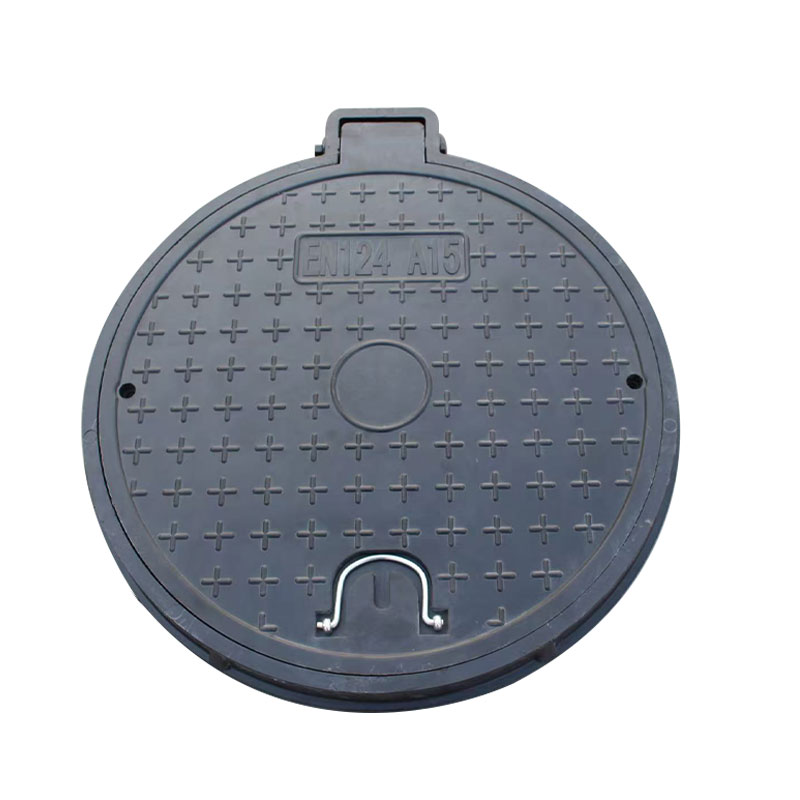
Shengxin's round composite manhole cover range provides a relevant starting point when a replacement is being considered. Send the incident account, component identification, damage map and retained frame information. Ask for the proposed complete configuration and relevant evidence for the intended installation. Do not claim that a different composite formulation or a heavier lid eliminates all impact damage without support for that specific assertion.
Also review handling and site practices that contributed to the event. A replacement component will not change an unsuitable unloading method, unprotected storage edge or equipment route. The owner should decide the appropriate process changes using its operational assessment. Keep those actions separate from the product disposition but link them in the incident record. This allows the next purchase to address a defined failure opportunity rather than merely replacing the same item after each recurrence.
Close the incident with a verifiable final state
Document what was retained, repaired, replaced or removed from service. Identify the final lid-frame arrangement and the checks performed before the owner releases it. Record limitations if a part of the original damage could not be assessed. Do not close the incident solely because a new-looking surface is present. The evidence should show how the accepted final condition relates to the technical disposition and the operational concern that began the investigation.
Retain baseline photographs and update the asset history. Future findings at the same location can then be compared with a known repaired or replaced state. If a removed component is needed for further analysis, store or dispose of it through the owner's instructions without losing identification. A practical impact response gives the owner a defensible decision and usable history, rather than a universal rule that all visible marks are harmless or that all composite products behave identically.
مناقشة متطلبات المشروع
Send Shengxin the incident record and located damage photographs with the lid and frame identification. Request a model-specific technical response or replacement proposal before concealing the finding with a surface repair.
معلومات المنتج ذات الصلة: نطاق غطاء فتحة التفتيش المركبة المستديرة Shengxin. مشاركة وثائق المشروع المعمول بها من خلال لدينا صفحة الاتصال.
أسئلة المشروع
Does a small mark prove the damage is cosmetic?
No. Describe the condition and location, then use the appropriate model-specific assessment before assigning a structural conclusion.
Should the cover be struck again to compare its response?
Do not use an improvised field impact test. Any testing needs a defined competent method and a clear purpose, while preserving the incident evidence.
Can an original impact-test report clear an in-service damaged lid?
Not automatically. Original product evidence and post-incident fitness are different questions. Review the actual event and condition.
Should filler be applied before reporting the damage?
Preserve evidence and obtain the authorized disposition first. A cosmetic repair can conceal information needed for assessment.
What should a replacement enquiry include?
Provide component identity, incident facts, a damage-location map, photographs and retained-frame details, with the intended service conditions and required assembly functions.