

جدول المحتويات
A sunken anti-settlement manhole cover creates a procurement trap: the visible casting attracts attention even when the movement starts below it. Ordering a stronger lid may leave the same uneven support in place. Before selecting a replacement, establish which parts have moved relative to the road, whether the movement is continuing, and how the installed frame transfers wheel loads into the surrounding structure. The word anti-settlement describes a design intention. It does not remove the need to inspect the pavement and chamber interfaces. This guide explains how an asset owner can turn a complaint about a depressed cover into a useful survey, a focused supplier enquiry and a repair that can be checked after the road reopens.
Begin with relative levels rather than a replacement catalogue
Take the first measurements before disturbing the surround. Establish a repeatable reference outside the visibly affected area and record the lid, frame rim, adjacent pavement and any collar at several positions. A single depth measured at one edge can hide tilt. Photograph each measuring position and identify the approach direction of traffic. Record whether the depression is confined to the casting or forms a wider dish in the pavement. The survey should allow another inspector to repeat the same observations after repair.
A frame below a stable road surface presents a different problem from a frame sitting at its intended level while nearby asphalt has heaved. If both the frame and the surrounding surfacing have moved, the investigation needs a wider boundary. Avoid treating the local high point as the design datum. Keep observed levels separate from the proposed finished levels so that a later decision to resurface the street does not overwrite the original evidence.
Separate lid movement from movement of the complete frame
A lid can sit low because its seat is worn, damaged, obstructed or incompatible with the frame. That condition can resemble frame settlement when viewed from a moving vehicle. With the opening secured under the owner's work procedure, a qualified crew can inspect the contact surfaces, hinge arrangement and any resilient insert. Note whether the lid bears consistently or pivots between isolated points. Do not grind, pack or modify the seat merely to make the inspection result look acceptable.
Movement of the complete frame usually requires examination beyond the removable lid. Look for cracking or separation at the rim, gaps below a bearing flange and changes in the surrounding collar. Where access to the support is restricted, record the uncertainty instead of declaring the bedding sound. A supplier can help interpret the intended support geometry, but photographs of the top surface cannot establish the condition of hidden material.

Trace the intended load path through the installation detail
Ask for a section drawing of the installed arrangement, not just a plan view of the casting. The section should show where the frame is intended to bear, how the road layers meet it, and which chamber elements participate in support. Some arrangements transfer load differently from a conventional frame on a chamber neck. An anti-settlement designation alone is insufficient to determine which installation detail applies. Confirm the specific model, drawing revision and approved construction method before comparing repair options.
Follow the load path down to material that can actually provide the intended resistance. A broad flange cannot compensate for a void immediately beneath it. A repaired collar may also perform poorly if the adjacent pavement edge is loose or inadequately supported. Have the responsible engineer assess the complete interface and any damaged structure. This prevents an enquiry for a new casting from silently becoming an unsupported design for the chamber beneath it.
Read cracking and water paths as evidence, not a final diagnosis
Map cracks around the surround before breakout. Note their direction, width pattern, location relative to wheel paths and whether debris or water emerges during ordinary use. A circumferential crack may identify a separation between materials, while a wider distressed area can suggest movement beyond the casting footprint. These observations help decide where to inspect. They do not, by themselves, establish a single cause or prove that the cover was understrength.
Water can travel through damaged joints and contribute to deterioration of vulnerable surrounding materials. Record staining, sediment deposits and the condition after rainfall if it can be observed safely. Keep surface runoff, leakage through the lid and water within the chamber as separate observations. Repairing one visible joint without understanding the other paths can leave the original exposure unchanged. Do not enter the chamber to pursue these observations without the owner's authorized confined-space arrangements.
| Observed pattern | What to investigate next | Premature conclusion to avoid |
|---|---|---|
| Lid low inside an otherwise level frame | Seat geometry, wear and lid compatibility | The complete chamber has settled |
| Frame and collar lower than stable surrounding pavement | Bearing and supporting structure | A heavier lid will solve the depression |
| Broad pavement depression extending beyond the frame | Wider reinstatement and ground movement | The casting is the only defective element |
| High road surface beside a stable rim | Pavement movement and finished-level design | The frame necessarily moved downward |
Choose a repair boundary that includes the failed interface
A useful repair proposal names the elements being retained, removed, rebuilt or replaced. If the casting remains suitable but its support has failed, the work may centre on resetting and reconstructing the approved support. If the frame is distorted, fractured or no longer compatible with the lid, retaining it requires a specific engineering justification. A new lid is not an automatic substitute for a complete assembly. The condition of the chamber neck and top slab must also be considered before setting the final repair boundary.
For context, the New York City Department of Environmental Protection's sewer and water specifications describe frame-and-cover replacement together with restoration of damaged supporting masonry and pavement. That is an example of an owner treating the surrounding work as part of the intervention. It is not a universal detail for another jurisdiction. Use the applicable local owner specification and the exact manufacturer's instructions to develop the project repair method.
Technical reference: NYC DEP sewer and water specifications.
Make installation hold points visible in the work order
Hidden work needs inspection before the next layer covers it. Identify hold points for the exposed chamber condition, prepared bearing area, frame position and surrounding reinstatement. At each point, name who can release the work and what evidence is required. Photographs should show enough context to locate the detail, with a scale where dimensional observations matter. A close-up of clean mortar without a view of the supporting geometry is difficult to interpret later.
Require the installer to record the materials actually used and any departure from the approved method. Follow the specified conditions for mixing, placing, compaction and return to service. Do not invent a generic curing period from the casting catalogue. The repair record should identify the document governing reopening and the person accepting that condition. If a site constraint prevents the specified arrangement, resolve the deviation before covering the work rather than explaining it after another settlement complaint.
Inspect operation and road continuity before reopening
The completed assembly should be checked as an access asset and as part of the road surface. Verify the agreed levels and crossfall at the same positions used for the original survey. Check that surrounding finishes do not bind the lid or prevent the intended hinge movement. Confirm that locking and lifting features remain accessible after reinstatement. Any apparent rocking, uneven bearing or incomplete engagement needs investigation before traffic is allowed to conceal the problem.
Record the actual lid and frame identification, not just the order number for a batch of similar products. Keep the approved drawing, delivery inspection and site record together. If the installation uses replaceable seals or inserts, list their references for maintenance. The closing inspection should distinguish accepted items from observations needing follow-up. A signature stating only that a cover was installed provides little help if a later survey shows movement.
Use the follow-up survey to test the repair hypothesis
A repair to a sunken anti-settlement manhole cover should be followed by an observation plan proportionate to the original problem. Revisit the established measurement positions after the relevant traffic and weather exposure identified by the owner. Compare the frame and surrounding pavement separately. A stable frame with movement outside the repair boundary points to a different next action from renewed movement of the entire reconstructed surround. Keep the original readings available for comparison.
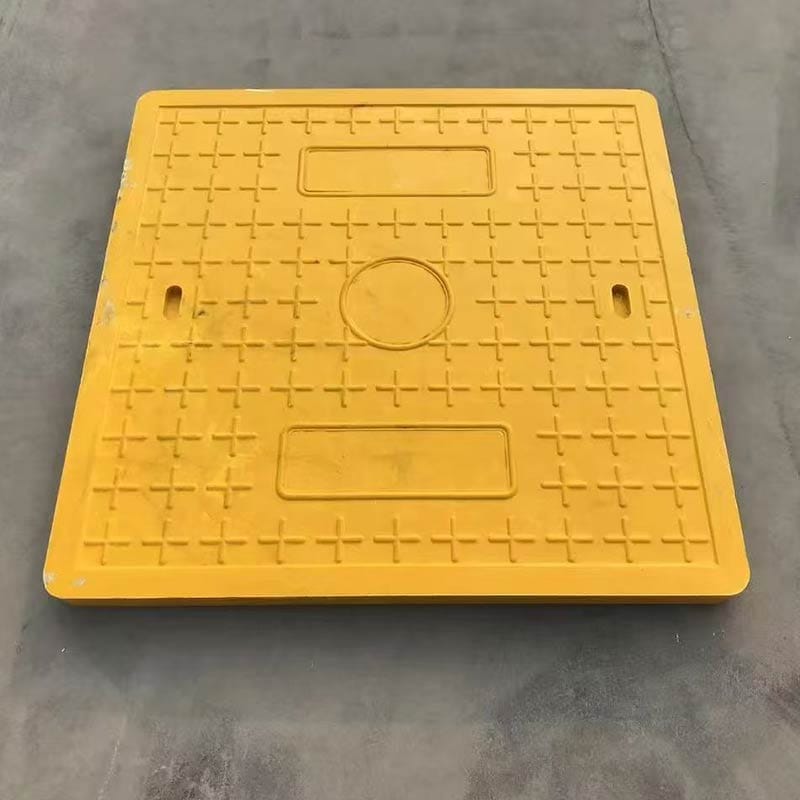
For a supplier enquiry, include the survey, exposed support photographs, traffic context and proposed interface drawing. Shengxin's anti-sagging cover product page provides a relevant starting point for discussing the assembly, while model-specific suitability still needs confirmation. Ask for the support requirements and available technical evidence for the exact proposal. This makes the conversation about a defined installation problem instead of relying on the anti-settlement name as a promise that the road will never move.
Discuss the project requirements
Planning a replacement for a depressed road cover? Send Shengxin the existing assembly photographs, measured levels, opening dimensions and proposed support detail. Request a model-specific drawing and confirm the installation requirements before placing the order. Include any unresolved chamber or pavement movement so the proposal can address the real interface.
Related product information: Shengxin anti-sagging manhole cover. Share the applicable project documents through our contact page.
Project questions
Does anti-settlement mean the cover cannot sink?
No. Performance depends on the particular frame design and its installed support. The name does not prove that bedding, pavement, chamber construction or surrounding ground will remain stable. Review the complete assembly and installation detail.
Can the depression be repaired by changing only the lid?
Only if inspection establishes a lid or seating problem and confirms compatibility with the retained frame. Replacing a lid will not rebuild failed support beneath the frame or correct wider pavement movement.
Which measurements should accompany an enquiry?
Provide relative levels at several points on the lid, rim and surrounding road, the measurement datum, clear opening and frame dimensions, and photographs showing the traffic approach and extent of visible distress.
Should the old casting be discarded immediately?
Preserve relevant identification and condition evidence until the owner has decided what investigation is required. Handle and store removed components safely. Destruction or disposal can prevent later examination of seating and damage.
What proves the repair worked?
Documented acceptance at completion and a repeat survey after the agreed exposure provide useful evidence. Compare with the original datum and note any fresh cracking, movement or operating difficulty rather than relying only on appearance.