

Table of Contents
Drain grate retaining clips can discourage unintended removal while preserving a removable surface for cleaning. Their usefulness depends on what they are designed to restrain and whether crews can release and restore them reliably. A small metal part in a photograph does not establish anti-theft performance, uplift resistance or correct engagement in a particular frame. This guide helps buyers specify the actual retention function, inspect the installed interface and integrate release into the cleaning sequence so a practical restraint does not become an obstacle that maintenance crews bypass.
State the action the clip is intended to resist
Define the retention objective using the site condition. The owner may want to discourage casual lift-out, keep a removable grate captive during handling or provide a specifically engineered restraint. Those objectives require different information. Do not combine them under an unqualified anti-theft or anti-lift label. Ask the supplier to identify the offered clip's function and the limits of any claim for the complete grate-and-frame assembly.
If the design must address hydraulic uplift or another defined load, provide the responsible engineer's conditions and request relevant evidence. A clip intended only to retain the grate during normal maintenance cannot be assumed to satisfy that requirement. Conversely, a more complex restraint may introduce release and servicing needs that the operator must accommodate. Choose the function first so the comparison focuses on what the site requires rather than how substantial the hardware appears.
Review the clip as part of the frame interface
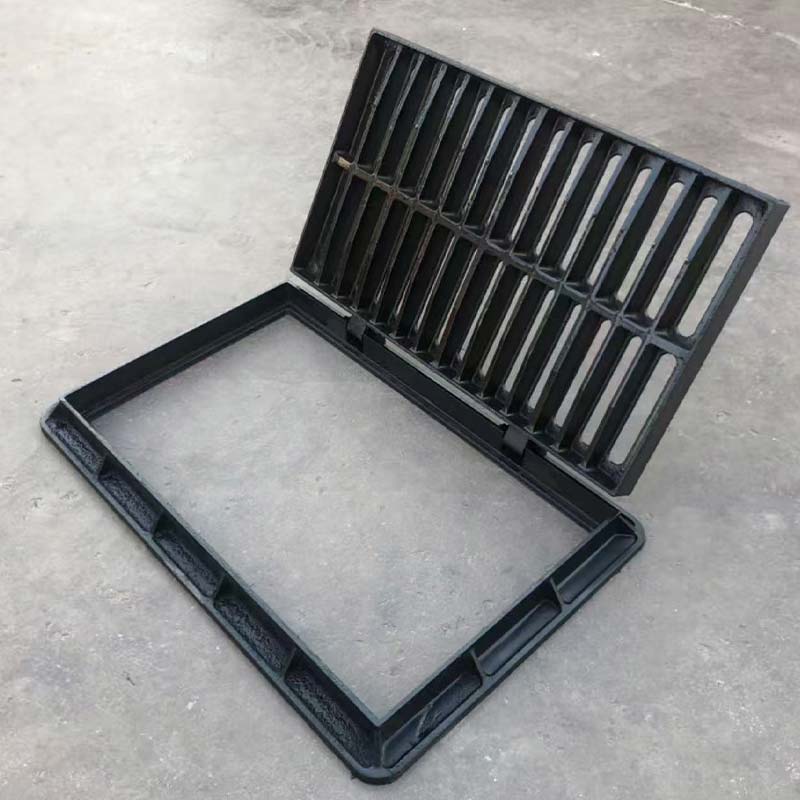
Obtain a drawing showing where the clip engages, how it attaches and what clearance it requires. Identify the frame lip, grate feature, fastener and any replaceable component involved. A clip that works with one frame profile may not fit another nominally similar opening. The supplier should confirm the complete pairing and any permitted variants. Do not purchase loose retaining hardware on size alone and expect an installer to find a convenient engagement point.
Check tolerances and the effect of the grate's permitted movement. The retention feature should not depend on an unexplained interference that holds the grate above its seat. Ask how correct engagement is recognized and which dimensions are critical. If a first article or sample is required, assess the whole assembly with production parts. A clip tested by itself does not establish how the frame connection behaves or whether the seated grate remains operable.
Make the release action visible in the maintenance sequence
Write the opening sequence from arrival at the inlet to controlled removal. Identify the tool, access position and order for releasing each restraint. Check whether the release can be reached when the grate is fully seated and surrounded by the finished pavement. A mechanism accessible on a loose sample may become obstructed by a curb, recess or adjacent feature. The operating drawing should represent those constraints rather than leave the crew to discover them during cleaning.
Confirm how the operator knows that all clips are released before lifting begins. Do not rely on force through the lifting tool to reveal an overlooked restraint. If the mechanism can remain partly engaged, ask for the prescribed check and response to a failed release. The cleaning contractor should receive the instructions and compatible tools before handover. A restraint that is frequently omitted because it delays access is an operational design problem requiring review.
Coordinate release with control of the grate
Releasing a retaining part can change how the grate is held, particularly in a sloping, hinged or constrained arrangement. Review the sequence so the grate remains controlled throughout the transition. Identify where the operator stands and how the lifting tool or equipment is engaged. Do not assume that the clip itself supports the grate safely once it is partly open unless that function is explicitly part of the design.
HSE's guidance on planning lifting operations identifies matters such as attachment, visibility, location and equipment suitability as relevant to the plan. Use the applicable workplace requirements and the owner's competent assessment for the actual grate-removal task. The clip release is one step in that task. It should be coordinated with handling and work-zone protection rather than treated as a minor fastener operation unrelated to the load about to move.
Technical reference: HSE guidance on planning lifting operations.
| Retention issue | Question to resolve | Evidence or demonstration |
|---|---|---|
| Function unclear | Is it deterrence, captivity or engineered restraint? | Defined claim and applicable assembly evidence |
| Frame engagement | Does it match the offered seat and lip? | Coordinated grate-frame-clip drawing |
| Cleaning release | Can the actual crew operate and restore it? | Finished-site sequence with intended tools |
| Service replacement | Which clip and fastener are permitted? | Part references and approved maintenance instructions |
Check interference with flow and debris removal
Locate clip projections relative to the grate openings, frame ledges and any basket beneath. Hardware can occupy a narrow space needed for extraction or collect debris where a cleaning tool cannot reach. Review these features on an installed section. Do not assume a clip is hydraulically irrelevant because it is small. Its position may matter more than its total area where it obstructs an intended relief route or forms a snag point.
Check whether routine cleaning requires the clip to be detached or merely released. If loose parts are created, define how they are retained, stored and reinstated. A small component can be lost into the inlet or omitted when the grate is replaced. Consider an approved arrangement that fits the operator's method, but do not redesign it on site without review. The final maintenance process should leave the assembly in the same approved configuration after every visit.
Specify environmental and servicing information for the hardware
Describe runoff, grit, cleaning and other relevant exposures when requesting the clip. Ask for the materials, compatible fasteners and maintenance instructions for the exact arrangement. The cast iron grate's material does not establish the properties of a separate clip or screw. A generic corrosion-resistant description should be supported by enough information for the site reviewer to assess relevance. Avoid promising maintenance-free operation under every outdoor condition.
Identify the response to seized, bent or missing parts. The supplier should state which items can be replaced and how the correct part is recognized. Do not use a similar-looking fastener or a piece cut from another material as an undocumented substitute. A replacement can change engagement and release behaviour even when it appears stronger. Keep service-part references with the asset so contractors can restore the intended arrangement rather than improvising a restraint.
Demonstrate engagement after the final surface is complete
At acceptance, use the intended tools to release, remove or open, replace and secure the grate. Verify that the clip reaches its prescribed position without interfering with seating. Include the finished pavement and any basket or accessories. Record the offered model and hardware references used in the demonstration. A photograph of a closed grate provides little evidence that a hidden clip is present, correctly fitted and actually engaged.
Ask the operator to repeat the restoration step rather than accepting only a supplier demonstration. The handover should show how completion is checked and what condition requires escalation. If the clip cannot be inspected directly, the approved method needs another defined means of verifying engagement. Do not invent an acceptance torque or force unless it comes from the applicable instructions. Use the model-specific requirement and record what was checked.
Buy retention and cleaning compatibility together
Shengxin's cast iron drain grate range offers a relevant starting point for discussing a retained grate configuration. Provide the retention objective, inlet section and maintenance method with the enquiry. Request the exact clip arrangement, pairing details, release instructions and available evidence for the claimed function. Confirm whether tools and spare parts are included. This gives procurement comparable proposals instead of several different mechanisms all described with the same short label.
Retain the accepted arrangement in the asset record and review recurring release failures or missing parts. A pattern of disabled clips may indicate tool, access, corrosion or training problems that need a specific response. Do not treat permanent omission as an informal maintenance improvement. The owner should decide any design change through the appropriate technical review. A well-selected retaining system is one that performs its defined function and can be restored reliably after the cleaning task it must allow.
Discuss the project requirements
Send Shengxin your retention objective, inlet section and cleaning procedure. Request a complete grate-and-clip proposal with compatible tools and service parts, then demonstrate release and verified re-engagement in the finished layout before acceptance.
Related product information: Shengxin cast iron drain grate range. Share the applicable project documents through our contact page.
Project questions
Does a retaining clip prove hydraulic uplift resistance?
No. Define any uplift condition separately and request evidence for the exact assembly and installation. A general retaining function may address a different action.
Can clips be added to any existing frame?
Only through an approved compatible arrangement. Check the engagement geometry, attachment and effect on seating rather than selecting loose hardware by appearance.
Should lifting force be used to release a stubborn clip?
Follow the prescribed release procedure and escalation process. Extra lifting force can damage parts or create uncontrolled movement when a restraint releases unexpectedly.
What should the cleaning crew receive?
Provide the release and restoration sequence, compatible tools, engagement check and replacement-part references, along with the owner’s work-zone and handling procedures.
How is correct reinstatement verified?
Use the model-specific inspection or operating check after the grate is seated. A top photograph alone may not show that the hidden retention feature is present and engaged.