

Table of Contents
Drain grate open area is easy to place in a comparison spreadsheet, but difficult to interpret when suppliers calculate it differently. A high percentage can describe a grate whose openings lie outside the main water path, while a lower percentage may belong to a different geometry assessed under different conditions. Neither figure alone is a hydraulic capacity. A useful procurement comparison establishes what area was measured, how water reaches it and what the installed system can convey away. This guide explains how to interrogate an open-area claim without losing sight of structural, maintenance and road-user requirements.
Ask which boundary defines the percentage
Request the numerator and denominator behind the stated percentage. The numerator may be the sum of clear slot areas, while the denominator could refer to the removable grate outline, the clear opening or the overall frame footprint. Those choices produce different percentages for the same assembly. Obtain a dimensioned drawing and a simple calculation sheet showing what was included. A rounded catalogue value without a boundary definition cannot support a fair comparison between products.
Check whether the calculation accounts for bars, hinge projections, locking features and other obstructions within the measured area. Identify how tapered slots or irregular openings are represented. Do not assume that an attractive top view shows the smallest clear passage through the casting. If the supplier uses a particular measurement convention, record it alongside the figure. Purchasing can then normalize the arithmetic or state explicitly why two quoted values should not be ranked together.
Distinguish geometric opening from hydraulic performance
Geometric open area describes physical space. Interception describes how much approaching surface flow enters under defined conditions. The relationship depends on factors beyond the percentage, including flow depth, velocity, direction and local installation geometry. Ask which performance claim is actually being offered. A drawing-based area calculation does not become a tested flow rating when it is placed beside the word capacity in a brochure.
FHWA's Urban Drainage Design Manual provides a roadway drainage reference encompassing gutter flow and inlet design. Have the responsible designer select the method appropriate to the site's inlet arrangement and local requirements. If a supplier quotes a discharge, request the associated conditions and relevant test or calculation basis. The comparison should reveal where evidence applies and where the designer is making an assumption. It should never silently convert an unspecified percentage into a guaranteed rate of water capture.
Technical reference: FHWA roadway drainage and inlet design reference.
Locate the openings relative to the approaching water
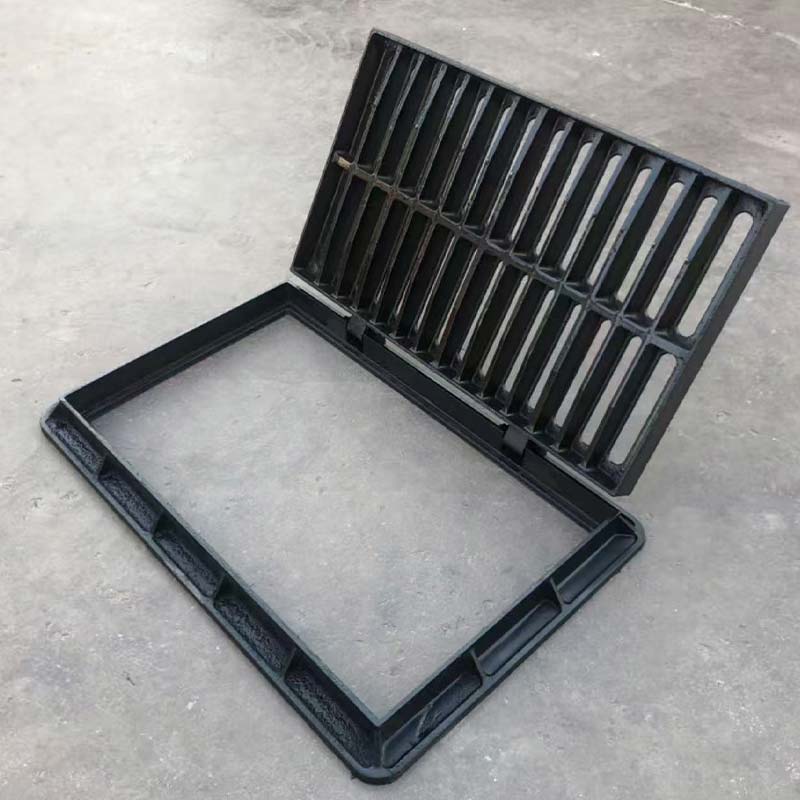
Draw the expected surface flow path across the actual grate. A broad grate can have substantial openings in a zone that the principal gutter stream rarely reaches. Conversely, a narrow line of obstructed slots at the leading edge may matter more than the total unblocked area farther away. Survey crossfall, longitudinal slope and frame elevation so the assessment describes the installed approach rather than a level laboratory surface that the project does not reproduce.
Review slot distribution as well as slot total. Two grates with the same clear area can arrange it differently relative to the curb, dominant flow and local depression. Ask whether relevant hydraulic evidence covers that layout and orientation. Avoid saying that a particular bar direction always drains better regardless of location. The engineer needs a comparison tied to the approaching water, while the procurement team needs enough dimensional detail to ensure the delivered product matches that assessment.
Check the narrowest part of the installed flow route
The grate is one part of an inlet. Water that passes the top openings must also pass any supporting ledges, basket, throat, outlet and connecting drainage. A high open-area grate above a restricted throat cannot establish overall capacity. Obtain an installed section and identify interfaces that reduce clear space. Include accessories in their normal operating positions. A basket handle or retrofit support is not absent from the hydraulic route simply because it is excluded from the grate supplier's area calculation.
Consider downstream water levels and obstruction separately. A grate may be geometrically open while the basin cannot accept more water because its outlet is constrained. Record the limiting condition used in the design review. Do not combine a surface interception rating with a favourable free-discharge assumption unless that condition is justified for the site. The outcome should be an assessment of the assembly and connection, with the grate percentage retained as one descriptive input.
| Supplier figure | What it can establish | What still needs review |
|---|---|---|
| Clear slot area | Geometric opening under a stated convention | Approach flow and installed restrictions |
| Open-area percentage | Ratio relative to a defined boundary | Comparable denominator and opening distribution |
| Quoted flow rate | Result under identified test or model conditions | Applicability to the site's geometry and water levels |
| Debris allowance | A stated obstruction assumption | Realistic patterns and maintenance delivery |
Use debris scenarios that describe what becomes covered
A uniform reduction of open area may be convenient for a calculation, but real debris can cover a particular edge, bridge slots or blanket a region. Identify the plausible debris sources and patterns at the site. Large leaves, flexible packaging and granular deposits can affect the openings differently. Ask how the adopted blockage scenario represents those conditions. The point is to make assumptions visible, not to claim that one exact pattern will occur during every storm.
Compare the inspection and cleaning access of the candidates. More slots do not help if the selected arrangement is difficult to clear with the owner's equipment or if retained debris moves into an inaccessible recess. Record features the operator must inspect and any relief route that must remain clear. If the proposed maintenance frequency is essential to the design basis, assign responsibility for delivering it. Open-area arithmetic cannot substitute for a practical plan to preserve the available flow paths.
Retain structural and accessibility constraints during optimization
Increasing clear openings can change bar geometry and the assembly that needs structural evidence. Require confirmation for the exact configuration rather than extrapolating from another grate in the same material family. Also identify pedestrians, small wheels and bicycles that may cross the inlet. The acceptable arrangement depends on the route and governing requirements. A hydraulic comparison that ignores these users may select a product the project cannot install where it is needed.
Do not instruct the installer to cut bars or widen slots to improve drainage after delivery. Such changes alter both geometry and the basis of the original assessment. Any revised proposal should return through the drawing and evidence review. Include surface texture, retention, frame support and lifting access in the same process. This prevents the open-area target from becoming an isolated purchasing objective that degrades other functions of the completed inlet.
Compare supplier submissions with one transparent worksheet
Create columns for assembly reference, dimensional boundary, clear opening calculation, installed configuration and hydraulic evidence. Separate measured geometry from calculated or tested performance. Record the test conditions rather than copying a single headline result. If information is missing, mark the gap and ask for clarification instead of estimating a favourable value. A transparent worksheet makes procurement discussions more efficient because suppliers can see precisely which assumption prevents a comparison.
Shengxin's cast iron drain grate page provides a relevant product starting point. Ask for the exact grate-and-frame drawing and any available supporting data with the proposed accessories included. Use the same questions for each candidate. Do not infer drainage capacity from a photograph or treat an unspecified marketing claim as a verified design result. The useful supplier response explains the product geometry and the scope of its evidence in terms that the project designer can assess.
Verify the delivered geometry and the finished inlet
At delivery, confirm model identification and the principal dimensions that link the grate to the reviewed submission. Check for a substituted bar pattern, different locking projection or accessory arrangement. Use an inspection method proportionate to the project; a detailed geometric review may be appropriate for a first article, while production acceptance follows the agreed plan. Keep evidence of discrepancies and obtain a disposition before placing an unreviewed variant in service.
After installation, inspect the approach transition and the clear route below the openings. Confirm that pavement, bedding or jointing has not filled slots or reduced an agreed passage. Retain the installed photographs with the hydraulic assessment and supplier drawing. If later complaints arise, those records allow the team to distinguish geometry changes, obstruction and drainage conditions from an error in the original percentage. That is far more useful than knowing only that the purchased grate had a high advertised open area.
Discuss the project requirements
Send Shengxin the inlet geometry and your comparison requirements. Request a defined open-area calculation and exact assembly drawing, then assess any available hydraulic data against the actual site conditions before selecting a grate.
Related product information: Shengxin cast iron drain grate. Share the applicable project documents through our contact page.
Project questions
Is a higher open-area percentage always better?
No. Confirm the calculation boundary, opening distribution and site flow conditions. The project also needs structural, user-safety and maintenance requirements to be satisfied.
Can open area be converted directly to drain capacity?
Not without an appropriate hydraulic basis and defined conditions. Open area is geometric information; captured flow depends on the approach and the rest of the drainage route.
Why do suppliers quote different percentages for similar grates?
They may use different denominators or account for tapered slots and accessories differently. Request the drawing and calculation convention before ranking the values.
Should accessories be included in the review?
Yes. Baskets, rails, handles and frame projections can affect the installed passage even when they are absent from the grate-only calculation.
What is the best evidence to request with a quotation?
Ask for a model-specific dimensioned drawing, the area calculation definition, relevant hydraulic data with conditions, and structural evidence for the complete offered assembly.