

Table of Contents
Introduction

A manhole cover installed in a landscaped pedestrian area and one installed beneath a busy truck lane may look similar from above, but the engineering requirements are very different. Roads, logistics yards, industrial plants, ports, transportation hubs, and other high-load environments expose underground access systems to repeated wheel loads, impact, vibration, pavement movement, moisture, and long-term structural stress.
In these conditions, selecting a heavy duty manhole cover involves much more than choosing a thick or heavy casting. Engineers and procurement teams need to consider the cover material, load class, cover-and-frame structure, chamber dimensions, traffic pattern, installation method, surface conditions, corrosion exposure, and applicable project standards.
A properly specified heavy-duty cover should transfer vehicle loads safely into the surrounding structure while remaining stable under repeated traffic. An incorrectly selected or poorly installed system can develop rocking, settlement, cracking around the frame, excessive noise, deformation, or premature failure even when the cover itself appears strong.
This guide explains what makes a manhole cover suitable for demanding applications and how to select heavy-duty solutions for roads, industrial facilities, ports, and airport-related infrastructure.
What Is a Heavy Duty Manhole Cover?
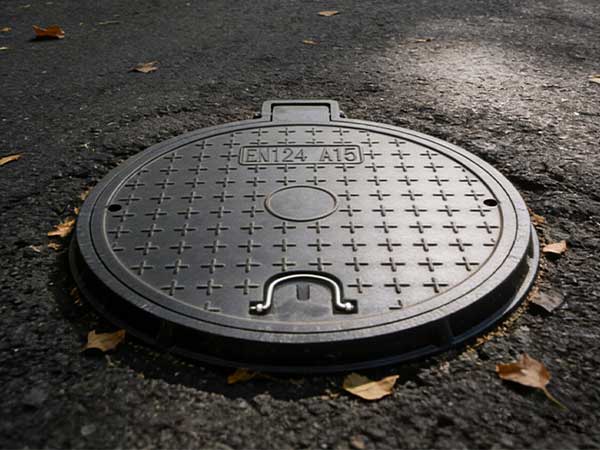
A heavy duty manhole cover is an access cover and frame system engineered for environments where significant vehicle or equipment loads may repeatedly pass over an underground chamber.
Unlike light-duty covers used mainly in pedestrian or landscaped locations, heavy-duty products need to resist both high loads and continuous dynamic stress.
Typical applications include:
- municipal roads and highways;
- industrial parks;
- factories and production facilities;
- logistics centers;
- truck loading areas;
- ports and container terminals;
- transportation hubs;
- heavy-vehicle parking areas;
- selected airport infrastructure.
The term “heavy duty” should not be treated as a vague marketing description. A professional specification should identify the required load classification, material, dimensions, installation position, and applicable testing standard.
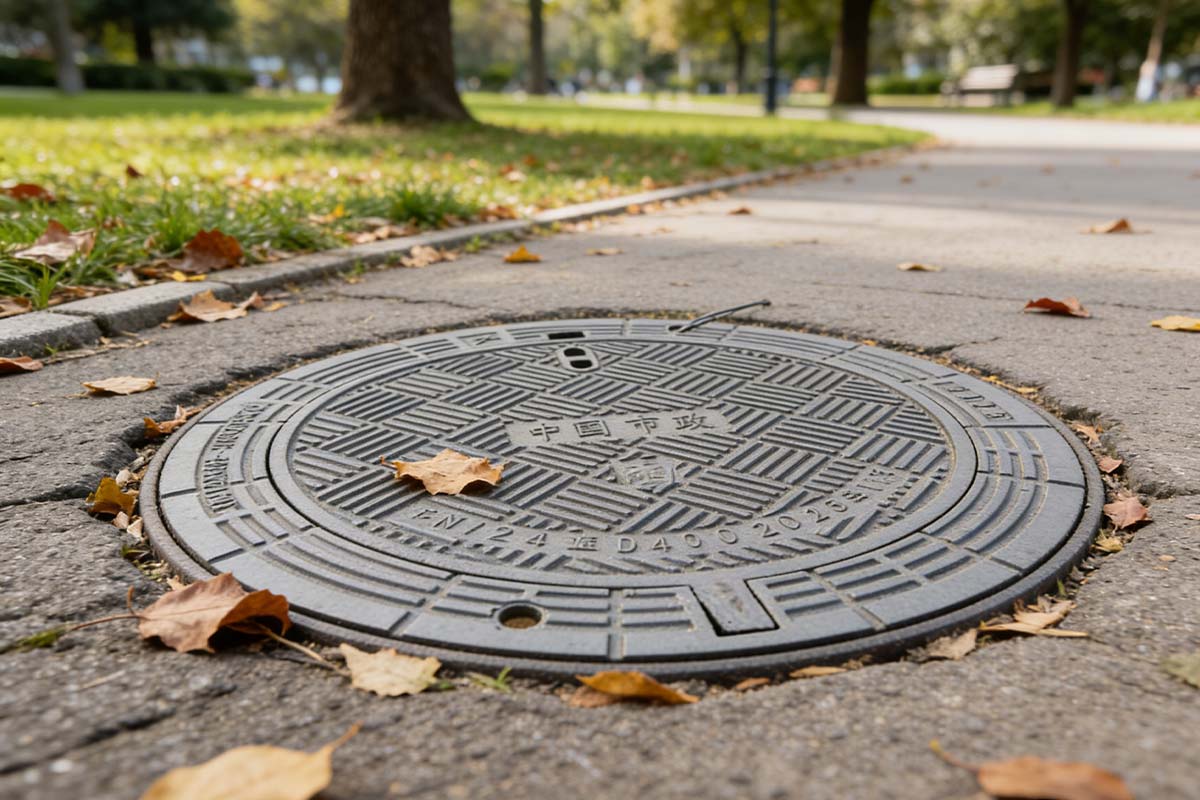
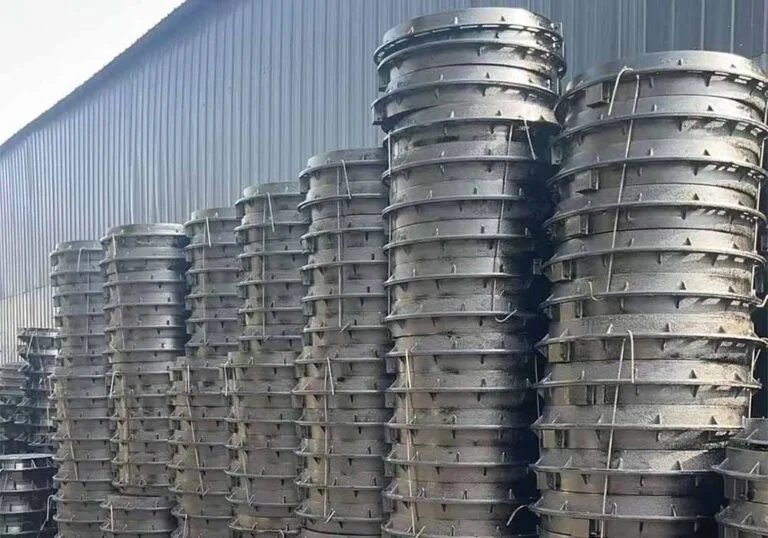
For demanding municipal road applications, Shengxin Foundry’s spheroidal graphite cast iron anti-sagging manhole cover is manufactured from QT500-7 ductile iron and incorporates a widened flange support structure intended to distribute traffic loads into the surrounding road base. The product is available in C250, D400, and E600 configurations for different traffic environments.
Why High-Load Applications Are More Demanding
Heavy traffic does not apply force to a cover in one simple direction.
When a truck, forklift, container handler, or other vehicle passes over a manhole, the cover and frame may experience a combination of vertical force, impact, vibration, bending, repeated stress cycles, and uneven loading.
The severity of these forces changes according to:
- vehicle type;
- axle loading;
- wheel position;
- vehicle speed;
- traffic frequency;
- pavement condition;
- cover location within the traffic lane.
This is why the heaviest vehicle on a site is only one part of the selection process.
For example, a truck moving slowly over a well-supported cover may create a different structural condition from a similar truck striking a cover positioned slightly below the surrounding pavement at higher speed.
A heavy duty manhole cover therefore needs both sufficient structural capacity and stable integration with the surrounding pavement.
Static Load Is Only Part of the Problem
A common mistake is evaluating a manhole cover only according to the maximum load it can withstand once.
Real infrastructure is exposed to repeated loading.
A cover on a busy road may be crossed thousands of times over its service life. Each individual load may remain within the product’s rated capacity, but repeated stress can gradually affect the cover, frame, bedding, and surrounding pavement.
High-load product selection should therefore consider:
load capacity + impact resistance + fatigue behavior + installation stability
This is particularly important for roads, logistics yards, ports, and manufacturing sites where heavy vehicles repeatedly follow the same route.
Why Ductile Iron Is Widely Used for Heavy Duty Covers
Ductile iron is commonly selected for heavy-duty access covers because it combines high strength with better toughness and deformation behavior than traditional gray cast iron.
In ductile iron, graphite forms mainly as rounded nodules rather than flakes. This structure reduces stress concentration within the material and improves its ability to tolerate impact and repeated mechanical loading.
For infrastructure projects, these properties are useful because a cover needs to resist more than simple compression.
Ductile iron can provide:
- high tensile strength;
- good impact resistance;
- strong fatigue performance;
- good wear resistance;
- structural stability under repeated traffic;
- reliable casting performance for complex cover and frame shapes.
Material quality alone, however, does not determine the final load class. Cover geometry, reinforcement ribs, frame structure, bearing area, dimensions, and manufacturing quality all contribute to performance.
Heavy Duty Does Not Simply Mean Heavy Weight

A physically heavy cover is not automatically a heavy-duty cover.
Weight is easy to understand, so it is sometimes used as a shortcut when evaluating manhole covers. However, structural capacity depends on how effectively the material is used.
Consider two covers with similar external dimensions. One may achieve load resistance through optimized reinforcement ribs and a properly designed frame, while another may simply contain more material without distributing loads as efficiently.
Important structural factors include:
- rib layout;
- material thickness;
- bearing surface;
- cover geometry;
- frame stiffness;
- flange width;
- seating design;
- material grade.
Buyers should therefore evaluate certified or specified load capacity rather than making purchasing decisions based only on kilograms.
Understanding Heavy Duty Manhole Cover Load Classes
Many infrastructure projects classify access covers according to required loading and installation environment.
A commonly encountered sequence is:
| Load Class | Test Load | Typical Application Context |
|---|---|---|
| A15 | 15 kN | Pedestrian and very light-duty locations |
| B125 | 125 kN | Footways and selected parking areas |
| C250 | 250 kN | Kerbside and moderate traffic environments |
| D400 | 400 kN | Road carriageways and regular vehicle traffic |
| E600 | 600 kN | Heavy industrial and terminal areas |
| F900 | 900 kN | Extremely demanding transportation environments |
This table should be used as a general engineering reference rather than a substitute for the specific project standard.
Shengxin Foundry’s manhole cover product range spans A15 through F900 classifications across ductile iron and composite products, with applications including urban roads, industrial parks, ports, and transportation hubs.
D400 Heavy Duty Manhole Covers for Roads
For road infrastructure, D400 is one of the classifications commonly associated with carriageways exposed to regular vehicle traffic.
Potential applications include:
- municipal streets;
- arterial roads;
- bus routes;
- commercial access roads;
- truck traffic areas;
- road-based drainage inspection chambers.
However, selecting D400 should not become automatic simply because the installation is near a road.
The exact position matters.
A cover installed directly in the vehicle wheel path experiences a different loading pattern from one installed behind a kerb or within a protected verge.
Road engineers should therefore consider both the nominal load classification and the actual placement of the cover.
Why Road Drainage Safety Matters
Manhole covers, drainage grates, catch basins, and similar components form part of the broader road drainage environment.
The U.S. Federal Highway Administration explains in its guidance on roadway drainage features and safety that drainage systems are integral to roadway safety and help protect the pavement structure by removing runoff and reducing erosion and subbase saturation.
This has an important implication for heavy-duty covers.
The cover should not be treated as an isolated metal product. Its height, stability, drainage interaction, surrounding pavement condition, and maintenance requirements all influence road performance.
A structurally strong cover installed poorly can still create an undesirable roadway condition.
Settlement Is a Major Issue in Road Applications
One of the most common long-term problems around road manholes is differential settlement.
The pavement surrounding the manhole may settle differently from the chamber or frame. When this happens, the cover may become:
- lower than the road surface;
- higher than the road surface;
- tilted;
- unstable.
Each condition can increase wheel impact.
Repeated impact may then accelerate damage to:
- the cover;
- frame;
- bedding material;
- surrounding asphalt or concrete.
This can create a cycle in which increasing pavement damage produces stronger impact, which then produces additional structural deterioration.
For high-traffic road projects, an anti-settlement or load-distribution design can help address this issue.
The Shengxin anti-sagging ductile iron manhole cover uses a widened flange support surface intended to transfer vehicle loads over a broader area of the pavement base rather than concentrating stress immediately around the chamber.
Why the Frame Is Critical Under Heavy Loads
A heavy duty manhole cover should always be considered together with its frame.
The basic load path is:
Vehicle → Cover → Frame → Bedding → Chamber → Ground structure
If the frame does not seat correctly or lacks adequate structural support, the cover cannot perform as intended.
Frame-related problems may include:
- rocking;
- deformation;
- uneven bearing;
- frame settlement;
- cracking around the installation;
- abnormal cover movement;
- traffic noise.
For high-load projects, the frame should provide a stable bearing surface and distribute forces effectively into the surrounding structure.
This is also why simply placing a higher-rated cover onto an existing weak frame is not necessarily a safe upgrade.
Heavy Duty Covers for Industrial Parks
Industrial areas create a different loading environment from ordinary municipal roads.
A factory or industrial park may contain:
- forklifts;
- heavy trucks;
- tankers;
- lifting equipment;
- mobile machinery;
- specialized production vehicles.
Vehicle routes may also be highly repetitive. A loading dock access road, for example, may direct hundreds of trucks across the same underground chamber.
Industrial facilities may introduce additional environmental factors such as oil, chemicals, moisture, dust, temperature variation, or process contamination.
A suitable heavy duty manhole cover should therefore be selected according to both mechanical and environmental conditions.
Important questions include:
- What vehicles will cross the cover?
- How frequently will they pass?
- Is the cover directly within a wheel path?
- Are chemicals present?
- Is the area continuously wet?
- Is corrosion protection required?
- Will forklifts or solid tires create concentrated loading?
These factors can materially affect product selection.
Heavy Duty Covers for Logistics Centers
Modern logistics centers combine high traffic frequency with heavy vehicle loading.
Truck routes often remain fixed because vehicles repeatedly travel between entrances, loading docks, warehouses, and staging areas. An access cover located within one of these routes can experience repeated loads throughout every working day.
In such conditions, procurement teams should pay particular attention to:
- frame stability;
- impact resistance;
- fatigue performance;
- cover seating;
- anti-vibration features;
- pavement integration.
Maintenance accessibility also matters. A cover may need to remain removable for underground inspections without creating unnecessary operational disruption.
Heavy Duty Manhole Covers for Ports and Terminals
Ports and container terminals are among the most demanding infrastructure environments for access covers.
These facilities can combine:
- heavy trucks;
- container handling equipment;
- high traffic frequency;
- concentrated wheel loading;
- vibration;
- salt spray;
- high humidity;
- standing water.
The challenge is therefore not simply load capacity.
Corrosion exposure can become an important design consideration, particularly in coastal environments.
A heavy-duty cover used near marine infrastructure should be evaluated for:
- structural class;
- material selection;
- surface protection;
- drainage;
- cover-to-frame stability;
- long-term corrosion resistance.
Shengxin’s product center identifies ports and terminals as one of the intended application environments for its higher-load manhole cover solutions.
Airport Manhole Covers Require Special Engineering Attention
Airport infrastructure should not be treated as an ordinary road application.
Aircraft can impose extremely high concentrated wheel loads, and different zones of an airport may have very different loading requirements.
For example, a cover located in a landscaped service area is not exposed to the same conditions as one positioned where aircraft wheels may pass directly over it.
The U.S. Federal Aviation Administration’s Airport Pavement Design and Evaluation guidance specifically addresses structures subject to direct aircraft loading. Its guidance states that covers such as manhole covers exposed to direct heavy aircraft loads must be designed for the relevant aircraft loading conditions.
This illustrates an important procurement principle:
An ordinary road-rated heavy duty manhole cover should not automatically be assumed suitable for direct aircraft loading.
Airport projects require engineering evaluation according to the applicable aviation authority, pavement design criteria, aircraft fleet, wheel loads, and installation location.
F900 Does Not Automatically Mean “Suitable for Every Airport”
F900 is frequently associated with extremely high-load applications, and airport environments are often mentioned when describing this class.
However, this can be misunderstood.
Airport infrastructure includes:
- terminal roads;
- parking areas;
- service roads;
- aprons;
- taxiways;
- runways;
- maintenance areas.
These zones experience fundamentally different loading conditions.
A product suitable for airport vehicle traffic is not necessarily suitable for direct aircraft wheel loading.
For direct aircraft loading, project-specific structural design requirements should take priority over general product descriptions.
This distinction is especially important for international procurement, where different standards and aviation authorities may apply.
Dynamic Impact Matters More Than Many Buyers Expect
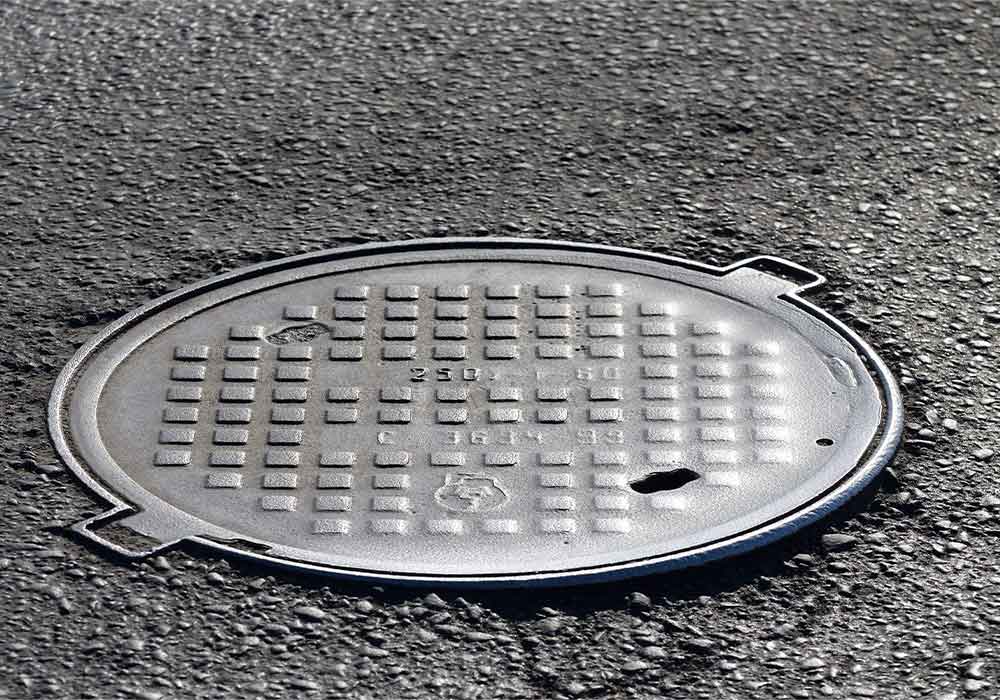
A manhole cover located exactly level with smooth pavement experiences relatively controlled wheel loading.
The same cover installed 20 mm below the road surface may be subjected to repeated impacts whenever a wheel passes over it.
Dynamic impact can increase because of:
- road speed;
- wheel load;
- height difference;
- suspension response;
- pavement irregularity.
This is one reason anti-settlement design and installation quality can be as important as increasing nominal cover strength.
The objective should be to create a stable, flush-running surface rather than relying on an oversized cover to absorb continuous impact.
Anti-Jump and Anti-Vibration Features
Heavy traffic can sometimes cause a poorly seated cover to move vertically or laterally inside its frame.
This can create:
- metallic impact noise;
- vibration;
- accelerated wear;
- cover displacement;
- deterioration of seating surfaces.
Engineering solutions may use:
- locking systems;
- elastic buffers;
- rubber rings;
- precision seating;
- anti-jump structures.
Shengxin’s anti-sagging ductile iron cover combines a locking and elastic buffer structure with a rubber sealing ring to reduce movement, vibration, and traffic-generated noise.
For urban roads and residential areas near heavy traffic, this can be particularly important because infrastructure performance includes both structural stability and acoustic behavior.
Anti-Slip Performance Is Essential
Heavy-duty does not only refer to structural strength.
The surface must also provide adequate interaction with tires and, where relevant, pedestrians.
Rain, mud, oils, industrial contaminants, and other materials may reduce surface friction.
Raised anti-slip patterns can help increase traction, but surface design should be integrated with:
- drainage behavior;
- traffic direction;
- material wear;
- environmental exposure.
For road and industrial applications, anti-slip performance should therefore be considered a functional safety requirement rather than a decorative feature.
Cover Shape: Round or Square?
Heavy-duty covers are available in different geometries.
Round Heavy Duty Manhole Covers
Round covers are common in municipal roads and drainage infrastructure. Their geometry allows convenient handling and avoids orientation issues when replacing the lid.
A properly dimensioned round cover also cannot fall directly through its circular opening.
Square Heavy Duty Manhole Covers
Square covers may better match:
- rectangular chambers;
- utility vaults;
- paved grids;
- industrial layouts;
- equipment access requirements.
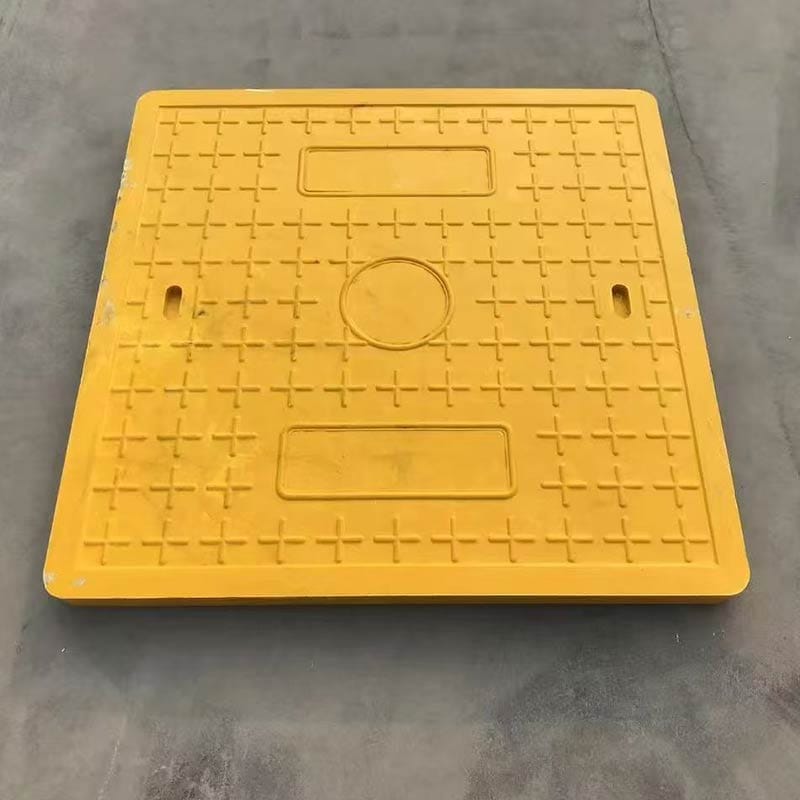
Shengxin Foundry also produces a square cast iron manhole cover for municipal, parking, roadway, and inspection-well applications.
The correct shape should be determined by chamber geometry and access requirements rather than appearance alone.
How to Select the Right Heavy Duty Manhole Cover
A reliable selection process should begin with the installation environment.
Step 1: Define the Exact Installation Position
Identify whether the cover is installed in:
- pedestrian space;
- parking area;
- road shoulder;
- traffic lane;
- truck route;
- factory floor;
- port terminal;
- airport service area.
Do not specify only the general project type.
“Industrial project” is not enough information because a cover beneath a walkway and one beneath a container truck route require different performance.
Step 2: Identify Traffic Type
Determine which vehicles or equipment can cross the cover.
Examples include:
- passenger cars;
- buses;
- delivery trucks;
- articulated trucks;
- forklifts;
- construction equipment;
- container handlers.
Step 3: Determine Traffic Frequency
Repeated loading can be as important as peak loading.
A road carrying a heavy vehicle once per week may create different fatigue conditions from a logistics lane carrying trucks every few minutes.
Step 4: Confirm the Required Standard and Load Class
Do not select the classification only from a supplier’s catalog.
Check:
- engineering drawings;
- tender requirements;
- local infrastructure codes;
- project standards;
- transport authority requirements.
Step 5: Confirm Chamber and Frame Dimensions
The specification should include:
- clear opening;
- cover dimensions;
- external frame dimensions;
- frame depth;
- seating dimensions;
- chamber geometry.
Step 6: Evaluate Environmental Exposure
Check for:
- salt spray;
- continuous humidity;
- chemical exposure;
- oil contamination;
- high temperature;
- freeze-thaw cycles where relevant.
Step 7: Define Safety Features
Depending on the project, requirements may include:
- anti-slip design;
- anti-theft locking;
- anti-jump system;
- sealing;
- noise reduction;
- fall protection.
Heavy Duty Manhole Cover Selection Matrix
| Environment | Main Engineering Concern | Typical Selection Focus |
|---|---|---|
| Urban road | Repeated vehicle traffic | Load class, fatigue, frame stability |
| Highway | Speed and dynamic impact | Heavy-duty structure, installation stability |
| Industrial park | Trucks and machinery | Load capacity, impact resistance |
| Logistics yard | Frequent truck movement | Fatigue performance, anti-vibration |
| Port terminal | Heavy equipment and salt exposure | High load class, corrosion protection |
| Airport service road | Heavy road vehicles | Project-specific road classification |
| Aircraft operating area | Direct aircraft wheel loads | Aviation-specific engineering design |
The final product specification must follow the applicable project standard rather than relying solely on a general application table.
Common Heavy Duty Manhole Cover Selection Mistakes
Choosing by Weight Alone
A heavier product is not necessarily stronger. Structural geometry and tested load capacity are more meaningful.
Choosing the Highest Load Class Without Analysis
Over-specification can increase material consumption, handling difficulty, and project requirements without improving practical performance.
Ignoring the Frame
A strong cover installed on an unsuitable frame remains a weak system.
Ignoring Pavement Settlement
Road movement can create impact loading even when the cover originally met the required specification.
Assuming All Heavy-Duty Applications Are Similar
Industrial trucks, highway vehicles, container equipment, and aircraft produce different loading conditions.
Ignoring Installation Quality
A correctly rated cover can still experience early problems if the frame lacks proper support.
Installation Quality and Long-Term Performance
A heavy duty manhole cover should be installed as part of a complete structural system.
The frame should receive uniform support and be aligned correctly with the finished surface. Poor bedding or unsupported areas beneath the frame can create stress concentration.
After installation, the system should be checked for:
- rocking;
- uneven elevation;
- incomplete seating;
- abnormal clearances;
- surface damage;
- debris in the frame.
Periodic inspection is especially important in high-traffic environments because pavement settlement and wear can change the load conditions over time.
The Federal Highway Administration also emphasizes the importance of maintaining roadway drainage infrastructure to preserve both road safety and pavement service life in its roadway drainage maintenance guidance.
What Information Should Buyers Send to a Manufacturer?
A professional inquiry should contain enough technical information for accurate product matching.
Instead of writing:
“Need heavy duty manhole covers for road.”
A stronger inquiry would specify:
“Ductile iron manhole cover and frame for a municipal truck route, D400 required, 600 mm clear opening, anti-slip surface, noise-reduction structure, project drawings available.”
Useful information includes:
| Information | Why It Matters |
|---|---|
| Installation location | Defines operating environment |
| Required load class | Establishes structural requirement |
| Clear opening | Determines chamber access |
| Frame dimensions | Ensures installation compatibility |
| Vehicle type | Helps evaluate loading conditions |
| Traffic frequency | Indicates fatigue demand |
| Material requirement | Defines product type |
| Applicable standard | Establishes compliance basis |
| Surface requirement | Affects safety |
| Environmental exposure | Influences protection needs |
| Drawings | Reduces dimensional errors |
Providing this information before production can significantly reduce specification misunderstandings.
When Customization Is Necessary
Standard products work for many infrastructure projects, but custom designs may be required when:
- replacing older non-standard infrastructure;
- working with unusual chamber dimensions;
- integrating project-specific locking systems;
- matching special load requirements;
- adding municipal or utility markings;
- adapting frame depth to pavement construction;
- requiring unusual shapes.
Shengxin Foundry’s manhole cover product center includes ductile iron and composite solutions with customizable dimensions, specifications, branding, and appearance for different infrastructure projects.
Custom engineering should focus first on functional requirements. Decorative markings or branding should come after load capacity, fit, safety, and structural performance have been established.
How to Evaluate a Heavy Duty Manhole Cover Supplier
For major infrastructure projects, supplier evaluation should extend beyond comparing product dimensions.
Procurement teams should examine whether the manufacturer can control:
- raw material quality;
- casting consistency;
- dimensional tolerances;
- spheroidization for ductile iron;
- structural design;
- surface treatment;
- finished-product inspection;
- load testing;
- packaging for international transport.
Technical communication also matters.
A supplier should be able to understand drawings, identify missing specifications, and discuss the relationship between application environment, load class, material, and dimensions.
For customized infrastructure requirements, project teams can provide technical drawings and operating conditions through the Shengxin Foundry contact page for product matching.
Conclusion
A heavy duty manhole cover is not simply a thicker or heavier version of an ordinary access cover. It is a structural component that must operate as part of the road, industrial floor, terminal pavement, or other surrounding infrastructure.
Reliable performance depends on the interaction between material strength, load classification, cover geometry, frame support, traffic frequency, installation quality, pavement stability, surface safety, and environmental exposure.
For normal road traffic, a properly specified ductile iron system may provide the strength, toughness, impact resistance, and fatigue performance required for long-term operation. Industrial parks and ports may require additional consideration of repeated heavy loads, chemicals, moisture, and corrosion. Airport environments require even greater care because direct aircraft loading must be evaluated according to applicable aviation engineering requirements rather than ordinary road assumptions.
The most effective procurement process therefore begins with the actual operating environment—not simply a catalog size or product weight.
For projects requiring high-load solutions, the Shengxin anti-sagging ductile iron manhole cover provides C250, D400, and E600 options with structural features designed for road stability, load distribution, anti-vibration, and long-term infrastructure use.
Frequently Asked Questions
What is considered a heavy duty manhole cover?
A heavy duty manhole cover is designed for environments exposed to substantial vehicle or equipment loads. Professional selection should be based on a specified load class and installation environment rather than only the cover’s weight or thickness.
Is D400 suitable for road traffic?
D400 is commonly associated with carriageway applications under EN 124-style classification. The final requirement should always follow the applicable project specification, installation position, and local standard.
Are E600 manhole covers suitable for industrial areas?
E600 products may be appropriate for high-load industrial and terminal environments, but actual selection depends on vehicle types, wheel loading, traffic frequency, installation structure, and governing standards.
Can F900 manhole covers be used at airports?
F900 may be specified for extremely demanding environments, but “airport use” is too broad to determine suitability by itself. Covers subject to direct aircraft wheel loading require project-specific aviation engineering assessment. FAA guidance, for example, provides separate design requirements for structures exposed directly to aircraft loads.
Is a heavier manhole cover always stronger?
No. Weight alone does not determine structural capacity. Material properties, rib configuration, thickness distribution, frame geometry, bearing area, casting quality, and load testing all influence performance.
Why do heavy duty manhole covers sometimes become noisy?
Noise commonly develops when the cover moves or strikes the frame under vehicle loading. Possible causes include excessive clearance, poor seating, frame deformation, pavement settlement, debris, or worn contact surfaces. Anti-vibration structures and correct installation can help control the problem.
What material is commonly used for heavy duty manhole covers?
Ductile iron is widely used because it combines high strength with toughness and impact resistance. However, the correct material should still be selected according to the load requirement, environment, applicable standard, and complete cover-and-frame design.