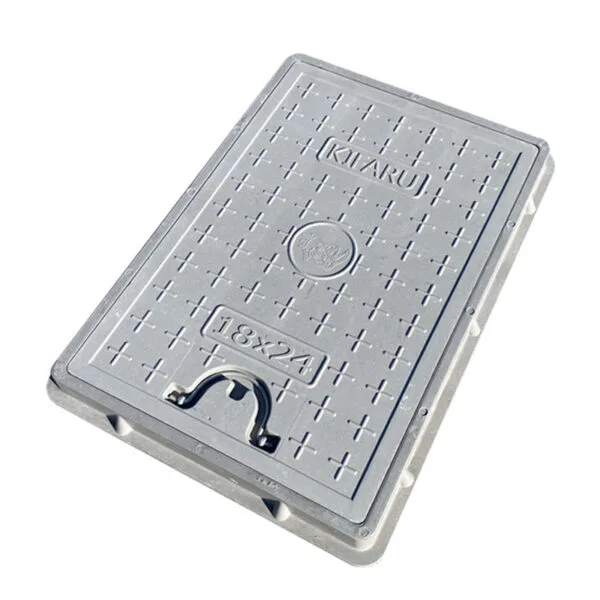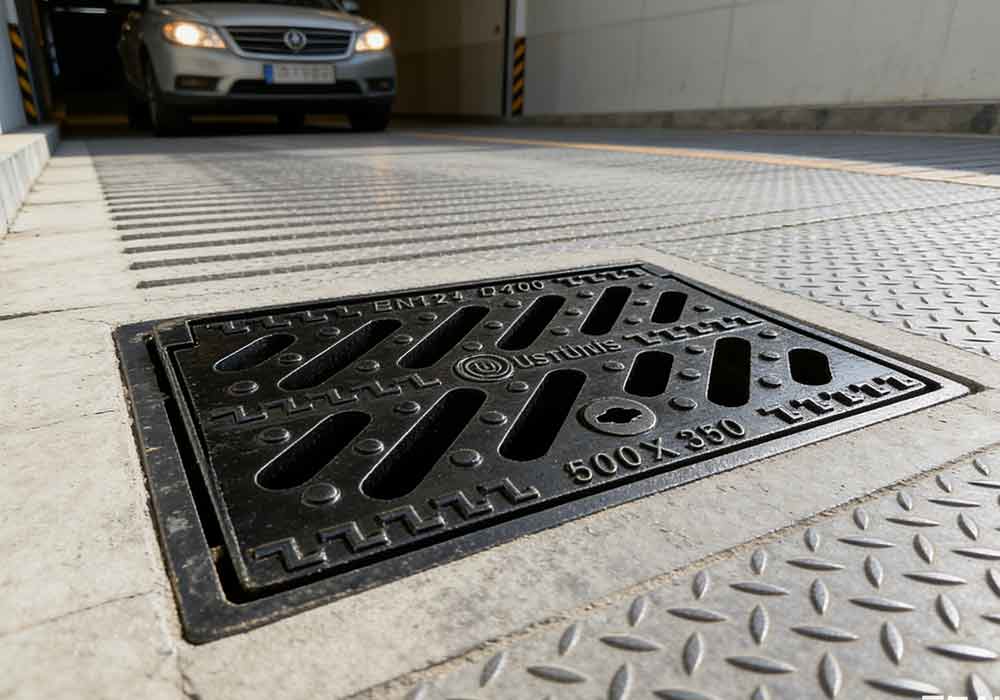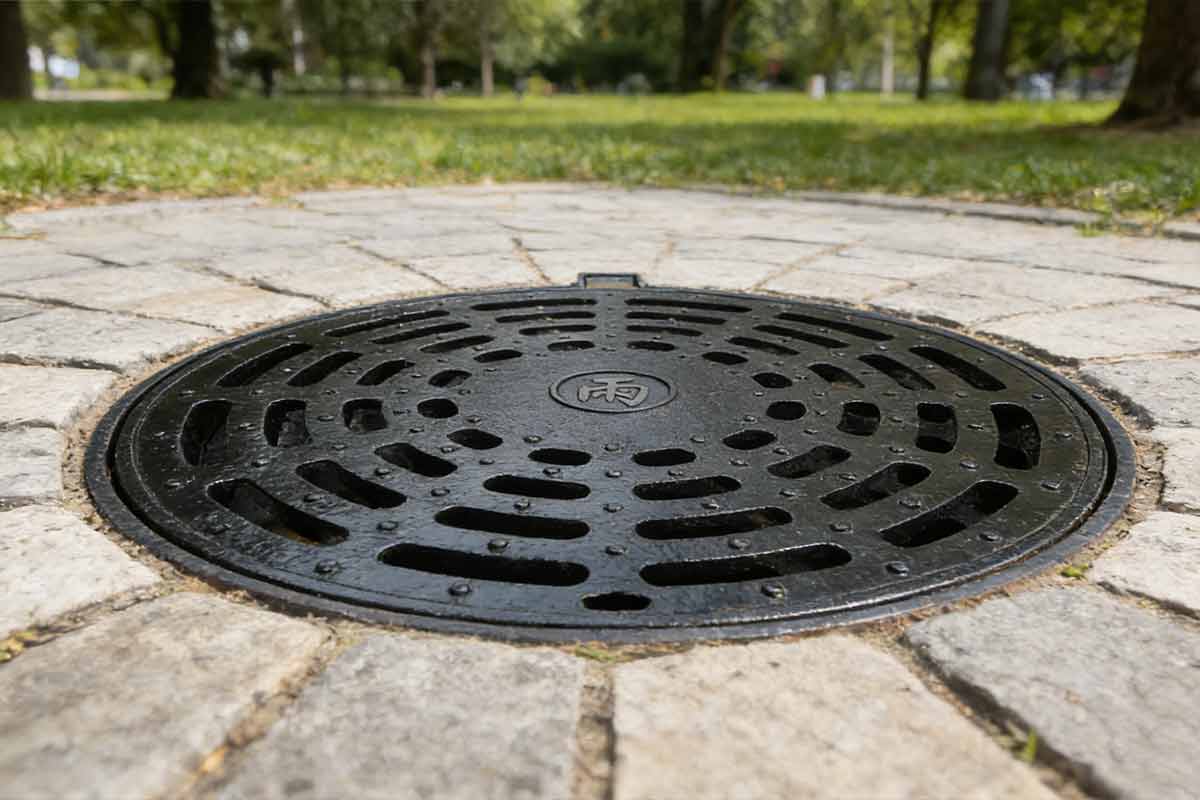


Welcome to our blog. We are a professional manufacturer of ductile iron and composite resin manhole covers, supplying infrastructure products for municipal and industrial projects worldwide.
- 👉 Follow us on Facebook for the latest product updates, industry news, and project cases.
- 👉 If you have any project requirements or need a quotation, feel free to contact our team directly for fast support and customized solutions.
Please continue reading our blog for more industry insights and product information
Table of Contents
Key Takeaways
- Choosing the right manhole cover grating improves drainage efficiency and public safety
- Different materials offer unique benefits in strength, corrosion resistance, and lifespan
- Load rating standards such as EN124 are essential for proper selection
- Grating systems perform better than solid covers in water management scenarios
- Smart material selection can reduce maintenance costs and extend service life
Introduction
In modern cities, drainage systems are under increasing pressure due to urbanization and extreme weather. Heavy rainfall events have become more frequent, and poor drainage design often leads to flooding, traffic disruption, and infrastructure damage.
One often overlooked component is the surface drainage cover. While small in size, it plays a major role in water flow, safety, and long-term durability. Poorly selected or low-quality grating systems can lead to clogging, structural failure, or even accidents.
This is why understanding different types of manhole cover grating is critical—not only for engineers but also for contractors, distributors, and procurement professionals looking for reliable solutions.
Understanding Drainage Grating Systems
What Is a Manhole Cover Grating?
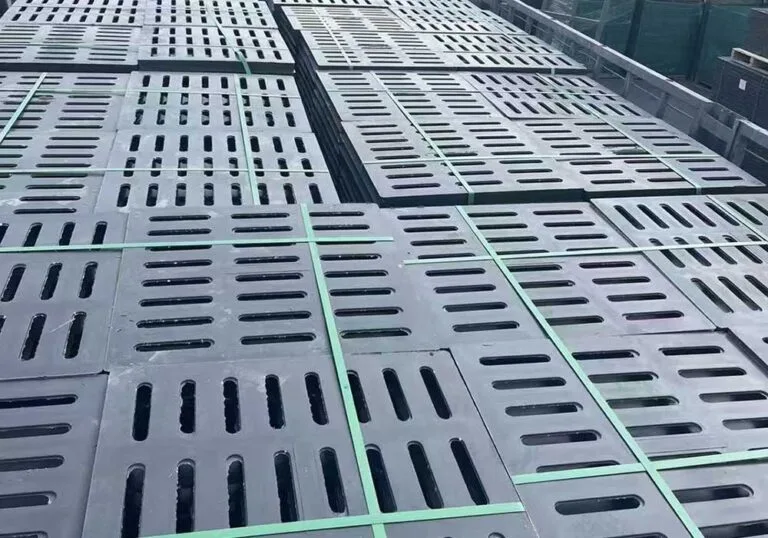
A manhole cover grating is a load-bearing structure designed with openings to allow water flow while preventing large debris from entering underground systems. It is commonly used in stormwater drainage, sewer systems, and industrial facilities.
Why It Is Essential in Infrastructure
Drainage grates help manage surface water effectively. They reduce the risk of flooding and protect underground pipelines. At the same time, they provide a safe surface for pedestrians and vehicles.
Key Concepts Behind Grating Selection
Load Rating and Safety Standards
Load capacity determines where a grating can be installed. Standards such as EN124 define categories from pedestrian zones to airport runways. Selecting the correct class prevents structural failure.
Water Flow Efficiency
The design of openings directly affects drainage performance. Wider slots improve flow but may compromise safety. Balanced design ensures both efficiency and protection.
Material Performance
Material choice impacts durability and resistance to corrosion. Some environments require specialized materials. Long-term performance depends heavily on this factor.
Main Types of Manhole Cover Grating
Cast Iron Grating
Features
Cast iron is known for its high strength and durability. It has been widely used in infrastructure for decades. It performs well under heavy loads.
Applications
Common in roads, highways, and urban drainage systems. Suitable for areas with frequent traffic. Ideal for long-term installations.
Steel Grating
Features
Steel offers flexibility in design and moderate weight. Galvanized steel improves corrosion resistance. It is often used for customized solutions.
Applications
Widely used in industrial plants and drainage channels. Suitable for medium to heavy-duty environments. Popular in construction projects.
Composite Grating
Features
Composite materials are lightweight and resistant to corrosion. They do not rust and are less likely to be stolen. They provide long service life with minimal maintenance.
Applications
Ideal for residential areas, parks, and coastal environments. Suitable for humid or chemically exposed locations. Increasingly used in modern projects.
Stainless Steel Grating
Features
Stainless steel provides excellent corrosion resistance and a clean appearance. It is durable and easy to maintain. It is often used where hygiene is important.
Applications
Used in food processing plants, hospitals, and decorative urban areas. Suitable for environments requiring both performance and aesthetics.
Comparison Table of Common Grating Materials
| Material Type | Strength | Weight | Corrosion Resistance | Cost Level | Typical Use |
|---|---|---|---|---|---|
| Cast Iron | Very High | Heavy | Medium | Medium | Roads, highways |
| Steel | High | Medium | Medium-High | Medium | Industrial sites |
| Composite | Medium | Light | High | Medium-High | Residential areas |
| Stainless Steel | Medium | Medium | Very High | High | Specialized environments |
Grating vs Solid Covers: Which One to Choose?
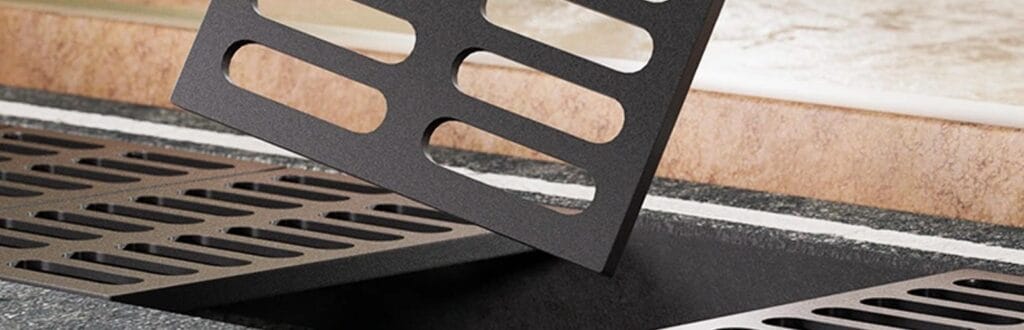
Open Grating Systems
These designs allow water to pass through easily. They are ideal for drainage applications. They reduce water accumulation on surfaces.
Solid Covers
Solid covers completely seal the opening. They prevent water entry and are used for inspection points. They are not suitable for drainage.
Practical Insight
If water management is required, open grating is the better choice. For sealed access points, solid covers are more appropriate. Selecting the wrong type can lead to performance issues.
Standards and Specifications You Should Know
EN124 Load Classes
- A15: Pedestrian areas
- B125: Parking zones
- C250: Road edges
- D400: Main roads
- E600: Industrial zones
- F900: Airports
Why Standards Matter
Standards ensure safety and reliability. They help buyers match products with application requirements. Certified products reduce risk.
Factors That Affect Performance
Environmental Conditions
Exposure to moisture, chemicals, and temperature changes affects durability. Materials must be selected accordingly. This ensures long-term performance.
Installation Quality
Improper installation can cause instability and noise. Correct fitting improves safety and lifespan. Professional installation is recommended.
Maintenance Practices
Regular cleaning prevents clogging. Inspection helps detect damage early. Proper maintenance extends service life.
Real-World Case: Drainage Upgrade Project
A city in Southeast Asia faced recurring flooding due to outdated drainage covers. After upgrading to modern composite grating systems:
- Flood incidents reduced by 40%
- Maintenance costs decreased by 25%
- Water flow efficiency improved significantly
This demonstrates how proper selection can improve infrastructure performance.
Cost and Long-Term Value
Initial Cost vs Lifecycle Cost
Higher-quality materials may have a higher upfront cost. However, they reduce maintenance and replacement frequency. This lowers total ownership cost.
Example Cost Distribution
- Material: 50%
- Manufacturing: 20%
- Logistics: 15%
- Installation: 15%
ROI Insight
Durable products can last over 20 years. This significantly improves return on investment. Long-term value outweighs initial expense.
Safety and Design Considerations
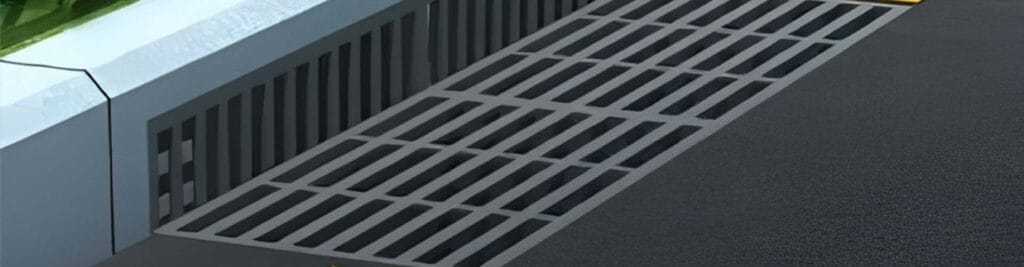
Anti-Slip Surface Design
Textured surfaces improve grip. This reduces accident risk. It is essential for public safety.
Noise Reduction Features
Modern designs include rubber pads or locking systems. These reduce vibration and noise. They improve user experience.
Theft Prevention
Composite materials and locking systems reduce theft risk. This is important in urban areas. It improves infrastructure security.
Emerging Trends in Drainage Grating
Smart Monitoring Systems
Sensors can detect load and structural conditions. This allows predictive maintenance. It reduces unexpected failures.
Sustainable Materials
Eco-friendly materials are becoming popular. They reduce environmental impact. This aligns with global sustainability goals.
Modular Designs
Modular systems allow easy replacement. They reduce downtime. This improves operational efficiency.
How to Choose the Right Product
Step 1: Identify Load Requirements
Determine traffic conditions. Match them with the correct load class. This ensures safety.
Step 2: Evaluate Environment
Consider corrosion, humidity, and temperature. Choose suitable materials. This ensures durability.
Step 3: Balance Cost and Performance
Compare initial cost with long-term benefits. Durable options provide better value. This improves ROI.
FAQ
What is a manhole cover grating used for?
It is used to cover drainage openings while allowing water flow. It protects underground systems and improves safety in public areas.
Which material is best for long-term use?
Cast iron is ideal for heavy loads, while composite materials are better for corrosion resistance. The best choice depends on the environment.
How do I choose the correct load class?
Select based on expected traffic. Pedestrian areas require lower ratings, while roads require higher ones.
How long does a drainage grating last?
High-quality products can last 10–25 years depending on material and environment. Maintenance also affects lifespan.
Is open grating better than solid covers?
Open grating is better for drainage applications, while solid covers are used for sealed access points. Each serves a different purpose.
Conclusion
Choosing the right drainage solution requires a clear understanding of materials, load requirements, and environmental conditions. Different types of grating systems offer unique advantages, and selecting the right one ensures safety, efficiency, and durability.
By focusing on performance, standards, and long-term value, buyers can make smarter decisions and build more reliable infrastructure systems.